A Black Agenda Radio commentary by Glen Ford
White racists have always been known to “cut off their own noses to spite a Black man's face.” In a variation on that theme, rural white farmers in Alabama and Georgia elected the racist lawmakers who passed the anti-immigrant legislation that scared away the Hispanic agricultural workers the farmers depended on to harvest their crops. They might as well have burned their own fields. But southern-fried racism is making Alabama's foreign automakers nervous. “They like Alabama’s anti-union environment, but they don’t want to be associated too closely with white supremacists.”
White Supremacists: Hating Themselves Into Bankruptcy
A Black Agenda Radio commentary by Glen Ford
“Two upset big-shot foreigners beats 33 imprisoned Black American citizens any day, in Alabama.”
Alabama’s anti-immigration law, like similar legislation in Arizona, Georgia and elsewhere, reveals a truth that racists always seem to forget. When you set out to create circumstances that hurt other people, you are liable to wind up harming yourself, as well. Arizona got its wish, creating an environment so ugly and hostile to human intelligence that 100,000 Hispanics left the state
In generations past, the fathers and grandfathers of these Dumb Ole Boys treated their Black workers so badly, many of them left the state, too. Others stayed, but swore never to work for white people of that kind, again, especially not in the dirt. So, when the white Georgia farmers attempted to get Black folks to do their stoop labor, despite the poor economy, few volunteered. Then, the farmers tried to figure out how to coerce mostly Black people on probation to work in the fields. However, the white farmers soon discovered that simply being born Black doesn't prepare a person to efficiently harvest crops. Stoop labor isn’t really in the blood, although it seems that moral depravity and an inability to get along with people of other races and cultures is often passed from one generation to the next, judging by the behavior of the white Georgia farmers and their ancestors.
“These redneck farmers might as well have burned the crops, themselves, since it was their Republican lawmakers who passed the bills that drove the immigrant workers into hiding or out of state.”
Alabama, whose resident racists are proud of having passed an even more draconian anti-immigration bill than neighboring Georgia, has suffered much the same problems of unpicked crops. The state has also managed to imprison 66 American citizens
But, the problem is deeper. Multinational corporations that sell expensive consumer goods tend to be protective of their reputations
For Black Agenda Radio, I’m Glen Ford. On the web, go to BlackAgendaReport.com.
BAR executive editor Glen Ford can be contacted at Glen.Ford@BlackAgendaReport.com .

 Marco Rubio's Munich speech was a declaration of war wrapped in nostalgia for the old white "supremacist" world order.
 The U.S. and Israel are rogue states whose existence threatens international peace and security.
 The difference between the responses to the U.S. and Israeli bombings of Iran by grassroots Chavista organizations and the Venezuelan government demonstrates the importance of people's movements,…
 The media cycle has moved on, but the family of Wali ‘Grillz’ Bey is still waiting for answers after his murder by Newark Police.
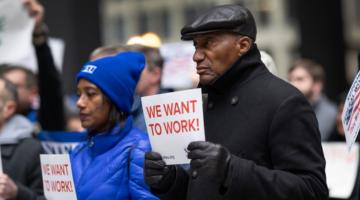 Black workers built a strong U.S. labor movement. They now endure plant closings, deindustrialization, and low-wage work as a result of neo-liberal policies.


