A Black Agenda Radio commentary by Glen Ford
President Obama has succeeded in putting his mark on Afghanistan and Pakistan, in ways that will come back to haunt the U.S. Two million people have been displaced by the Pakistiani army's scorched earth campaign against the Taliban - actions demanded by the Obama administration. "The Pakistani people are universally aware that their army was browbeaten, bullied and coerced, superpower-style, to launch a scorched earth attack on Taliban-influenced regions." The administration is destabilizing Pakistan, and deepening its people's hatred for the U.S.
Obama’s “Af-Pak” War: Destabilizing a Nuclear Nation
A Black Agenda Radio commentary by Glen Ford
“Humanitarian disaster will lead inevitably to a profound political crisis and even greater Pakistani hatred of the United States.”
No one can deny that the Afghanistan/Pakistan theater of war now belongs to President Obama. He campaigned for the privilege to put his own theories of war into action in the region, which the White House and Pentagon now refer to as “Af-pak.” It’s doubtful that Afghans or Pakistanis think of themselves as living in Af-Pak – but, it’s all the same to the Americans. Obama, the candidate, vowed to make Afghanistan and Pakistan the focus of his efforts, and to disengage from Iraq. There is no evidence that Obama ever intends to leave Iraq, but he has put his stamp on Afghanistan and created a humanitarian disaster in Pakistan. That humanitarian disaster will lead inevitably to a profound political crisis and even greater Pakistani hatred of the United States. When people whose government has a hundred or so nuclear weapons get mad at you, that’s a serious problem.
Two million people have been displaced from the Swat region of Pakistan. That’s in addition to the hundreds of thousands previously uprooted in the border regions with Afghanistan. The latest exodus is the largest forced movement of people since Pakistan was formed out of the old British India, in 1947. Americans may think that the two million Pakistani refugees – the entire population of Swat – are more angry at the Taliban than they are at the Pakistani government, and not upset at all at the United States. Nothing could be further from the truth. The people of Swat were ordered to leave their homes to create a free-fire zone for the Pakistani army. Anything that moves in the region is considered to be Taliban. Refugees in the camps tell stories of whole extended families being wiped out by government airpower and artillery. The Pakistani army isn’t winning any hearts and minds in Swat, just as it has few friends in the border regions, which the army treats as “Injun Territory,” in the Old West American sense of the term.
“Pakistanis will at some point overthrow a government that is subservient to the country they hate most in the world,
besides India: the United States.”
But that’s no sweat off Obama’s back, right? Pakistanis will blame their own government for mistreating millions of citizens, right? Wrong. The Pakistani people are universally aware that their army was browbeaten, bullied and coerced, superpower-style, to launch a scorched earth attack on Taliban-influenced regions. In other words, the Pakistani army is following United States orders. And this public perception is correct.
The end result is that U.S. policy is destabilizing the Pakistani nation – which has enough problems keeping control of diverse peoples thrown together within British-drawn borders. The U.S. and its corporate media justify bullying Pakistan by invoking a kind of “White Man’s Burden.” The Pakistanis refused to understand that the Taliban were destabilizing the Pakistani state, the Americans said. Actually, it is the Americans that are destabilizing Pakistan by making its government and army look like tools of foreigners in the eyes of the people. The Taliban could never take over Pakistan. But Pakistanis will at some point overthrow a government that is subservient to the country they hate most in the world, besides India: the United States. What will the Americans do, then? Invasion of a nuclear state of 170 million people, is not an option. For Black Agenda Radio, I’m Glen Ford. On the web, go to www.BlackAgendaReport.com.

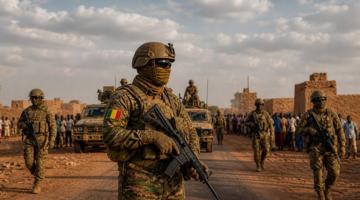 The attack on Mali was a coordinated international destabilization campaign, but as is usually the case, any coverage from the Western press hides the full story.
 The spectacle of major sporting events does not simply distract from a city's crackdown on the working class. It is a mechanism through which it is normalized and accelerated.
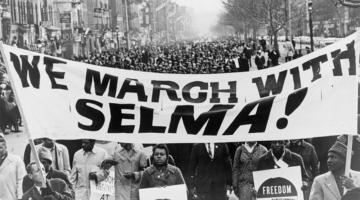 The Louisiana v. Callais Supreme Court decision has given state legislatures the green light to break up Black and Native voting districts.
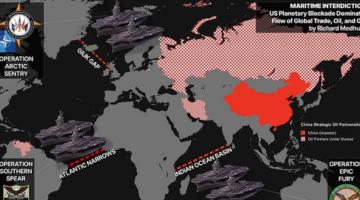 A forensic investigation into how Washington leveraged the war in Iran to replace Nord Stream, save the dollar, and establish total command over the world’s fuel from the Arctic to the Indian Ocean.
 The South has always been the region where the most exploitative labor practices are tested first.


