A Black Agenda Radio commentary by Glen Ford
In the media euphoria at news that Blacks were leaving the cities en mass for the suburbs and the South, corporate media seemed to make a collective decision to eliminate gentrification from the equation. A huge reverse migration and suburban exodus was depicted as wholly voluntary, having nothing to do with a crescendo of Black push-out from the whitening inner cities. “It is no wonder that 17 percent of Blacks that relocated to the South in the past decade were New Yorkers, far more than from any other state.”
Not a Word About Gentrification as Black Urban Population Declines
A Black Agenda Radio commentary by Glen Ford
“It is also assumed, against all relevant evidence, that this mass movement of Black people is totally voluntary.”
The corporate news media greeted new census data detailing the drastic and general decline of Black populations in center cities as if the phenomenon were, somehow, a vindication of the American dream – a cause for celebration. The dramatic increase in the movement of African Americans back to the South, which actually began decades ago, is held up as proof positive that America’s racial conflicts will soon be a thing of the past. Newsrooms seemed filled with jubilation, that the nation’s cities will soon be liberated from two generations of concentrated Black presence. Underlying the upbeat news coverage is the assumption that a diffusion of Blacks is, by definition, a good thing for the nation as a whole, and for Black people, themselves.
It is also assumed, against all relevant evidence, that this mass movement of Black people from New York City, Chicago, Philadelphia, Los Angeles, Detroit, Oakland, and so many other cities is totally voluntary – that economic push-out has played no major role in emptying the cities of Blacks, and sending hundreds of thousands down to Dixie. It is an absurd assumption, by journalists whose elation at the Black exodus compels them to ignore gentrification as one of the main factors.
People who are priced out of the cities by gentrification cannot be considered voluntary migrants. Gentrification has become an overarching fact of Black urban existence, making life less tenable every day. – especially in New York. It is no wonder that 17 percent of Blacks that relocated to the South in the past decade were New Yorkers, far more than from any other state. When gentrification places the monthly rent hopelessly out of reach, there is no choice but to leave – and why not South, where it’s cheaper, and there are so many people who look like you, some of whom are related.
“It is not only the poor who are pushed out, but also better off families and singles for whom city life is no longer viable.”
Those who would characterize the Black southward movement as overwhelmingly voluntary and non-economic, speculate that folks are going South to be near family. But “family” has always been there. Why the big rush to join them now? There is literally no statistical basis in the U.S. Census data to conclude that the urge to strengthen family ties is an important factor in reverse Black migration. But white corporate media – and the types of Black folks that work for it – have no problem substituting their own favorite scenarios for real data and facts.
Black movement from inner cities to the suburbs is also intertwined with gentrification. It is not only the poor who are pushed out, but also better off families and singles for whom city life is no longer viable. But all suburbs are not alike. Study after study shows that Blacks more often wind up just outside the borders of the central city in older suburbs, many of which have the characteristics of inner city ghettos, without the conveniences and urban amenities. Such suburbs hug the edges of Washington, Chicago, and Detroit. Other suburbs may appear to be racially “integrated” today – but that is only a snapshot in time. These places will be much Blacker or browner tomorrow because of white flight – the root source of segregation in America.
Whites are also in flight from the truth: that the deeply racial dynamic of gentrification is forcing Black folks to cheaper suburbs and the lower-cost South – including many Blacks that claim the move is strictly voluntary. For Black Agenda Radio, I'm Glen Ford. On the web, to to www.BlackAgendaReport.com.
BAR executive editor Glen Ford can be contacted at Glen.Ford@BlackAgendaReport.com.

 Black memory is a muscle trained, flexed, and disciplined by colonialism, enslavement, and racial terror, as well as collective Black struggle.
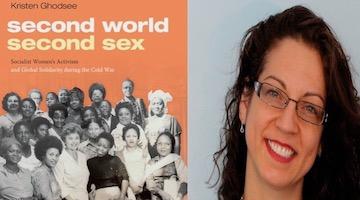 Socialist ideas about the inextricable links between class, race, and gender predate the concept of intersectionality.
 The struggle against systemic racism and the police state in the US is integral and linked to the struggle against US wars of aggression overseas.
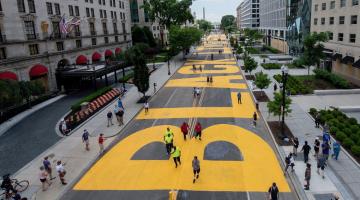 Community control of police and prison abolition have been completely removed from the conversations dictated by a mainstream and complacent narrative.
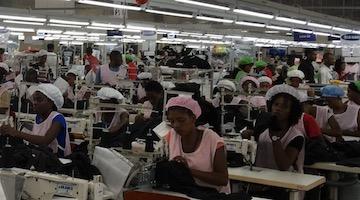 Global Displacements is an examination of the impact of the global organization of capitalist accumulation and exploitation on the life and labor of Haitian and Dominica



