A Black Agenda Radio commentary by Glen Ford
The pace of protest in Haiti is accelerating, with demonstrations in every large city and town. Haitians demand jobs and government services, and the departure of United Nations occupation forces. “Washington’s goal is to keep Haitians desperately poor, so that they will take any job, at any wage.”
Haiti: The Streets Come Alive
A Black Agenda Radio commentary by Glen Ford
“The liberation of Haiti does not depend on the United Nations, but on the Haitian people.”
The people of Haiti are in motion, and the U.S.-installed government is responding with tear gas and bullets. Demonstrations have erupted across the country, denouncing the regime of “Sweet Mickey” Martelly for corruption, demanding jobs at livable wages and the basic services that states are supposed to provide, and calling for an end to the eight-year occupation of the country by the United Nations.
UN soldiers took over from U.S. Marines after Washington’s coup against the democratically elected president, Jean Bertrand Aristide, in 2004. Since then, Aristide’s party has been effectively banned. Former U.S. president Bill Clinton holds no public office in his own country, but he rules like a viceroy as the UN’s Special Envoy to Haiti. The country has been reduced to a kind of protectorate of the UN – which, for all practical purposes, translates as a colony of the United States.
Because Aristide’s Lavalas party was excluded from the voting, most Haitians did not even go to the polls in April of last year, allowing “Sweet Mickey” Martelly to win the presidency with the support of only a small fraction of the Haitian population. That means politics in Haiti is mainly the politics of the street. And the streets of virtually every large Haitian city and town have been alive with demonstrations
“The whole country is standing up.”
Haitians and their supporters demonstrated last week at the United Nations, in New York, asking the UN Security Council to pull its troops out of their country. Instead, the Council voted to extend
Senator Moise is known for riding a white horse at anti-Martelly demonstrations. He says the liberation of Haiti does not depend on the United Nations, but on the Haitian people. “The whole country is standing up,” he said, “so I had to come into the street, with the people. You have to be with the people when they are in motion.” Then the senator rushed to the airport to rejoin the protests.
Bill Clinton and the multinational corporations he represents have other plans for Haiti. Clinton says Haiti’s greatest advantage is its low wages, to better attract foreign capital. In other words, Washington’s goal is to keep Haitians desperately poor, so that they will take any job, at any wage. But Haitians are determined to win back their national sovereignty, and set the terms of their own development.
For Black Agenda Radio, I’m Glen Ford. On the web, go to BlackAgendaReport.com.
BAR executive editor Glen Ford can be contacted at Glen.Ford@BlackAgendaReport.com .

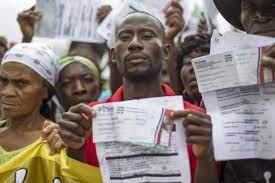 In the Dominican Republic, Haitian migrants or any dark-skinned Black person can be arrested, have their belongings seized, and be deported from that country. Anti-Haitian sentiment and legislation…
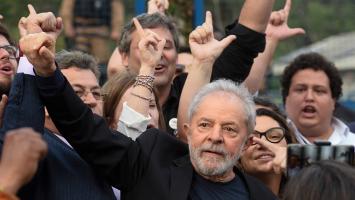 Lula da Silva's return to the Brazilian presidency is seen as a victory for the left. But he will have to struggle against forces who want to continue neo-liberal policies.
 The Black Alliance for Peace AFRICOM Watch Bulletin #43 includes an interview with a representative of the Revolutionary Socialist League of Kenya and as always, the latest analysis and reporting on…
 Frantz Fanon was a fierce critic of the U.S., but he spent the last weeks of his life in Washington DC, where he hoped to be treated for leukemia. Medical care can be used as a political weapon.
 The electoral process furthers the interest of capital and subverts what the people want. A manufactured crime panic enhances the power of the police and perpetuates racist politics.


