BdF spoke with Carlos Ron, former Venezuelan vice foreign minister and the country’s chief negotiator in Washington. - Sul 21
He stresses, however, that the atmosphere is not one of panic despite the possibility of military aggression.
Originally published in Brasil de Fato.
Since late August, the Caribbean Sea near Venezuela’s coast has become a stage of tension. With a significant military presence, the United States has attacked vessels navigating international waters. At least 27 people have been killed in what President Donald Trump claims are operations against drug cartels, classified by him as terrorist organizations, and he has accused Venezuelan President Nicolás Maduro of leading the drug trade.
None of these accusations have been supported by concrete evidence. Venezuela has responded by mobilizing troops along its borders and arming civilians to resist a possible U.S. advance. Caracas maintains that Washington’s real goal is to overthrow the government and install opposition figure María Corina Machado as head of state.
BdF spoke with Carlos Ron, former Venezuelan vice foreign minister and the country’s chief negotiator in Washington. He described the atmosphere in Caracas as “normal, but cautious,” and explained Venezuela’s defense plans and the likelihood of a U.S. attack.
BdF – What is the atmosphere like in Caracas amid these threats from Donald Trump?
Carlos Ron – For now, the country is functioning normally. There’s no panic in the streets; people are trying to live their daily lives, even though everyone is aware that we are under U.S. siege. Venezuelans have lived under hostility from Washington for 26 years, and we know its record of violence and intervention in Latin America.
We hope no invasion happens, but if it does, the Venezuelan people are ready to resist and defend the country. There’s no panic, this is also part of Washington’s psychological warfare, a method to spread fear and confusion. People understand well the nature of the enemy we face.
Is it possible that this is just another U.S. pressure tactic rather than a real threat? Is there still room for a negotiated solution?
We’ve seen this kind of military mobilization before. Something similar happened in Brazil in 1964 with Operation Brother Sam, when the U.S. threatened military intervention to back a coup against President João Goulart. What we’re witnessing now is a modern version of that strategy, an attempt to create the conditions for a coup from within Venezuela’s own armed forces rather than a direct invasion.
But this is unrealistic. The Venezuelan military is loyal to the Constitution and national defense, not to coup plotting. Trump today is different from the Trump of his first term: his current team, including Secretary of State Marco Rubio, is even more aggressive toward Venezuela, Cuba, and the region. Their goal remains regime change, though they still prefer to provoke internal chaos before resorting to an invasion.
How was María Corina Machado’s recent Nobel Peace Prize received in Venezuela?
It’s seen as part of a broader regime-change strategy. The Trump administration is using the so-called war on drugs as a pretext to escalate pressure on Venezuela, and giving this award to María Corina, someone who has openly called for sanctions and even foreign military intervention, fits perfectly into that plan.
She’s one of the most divisive figures in Venezuelan opposition politics, constantly undermining national dialogue and questioning the entire democratic system. Supporting someone who congratulated Netanyahu amid the genocide in Palestine and calling her a “peace” figure exposes the political nature of this prize, it’s about legitimizing a potential replacement for President Maduro.
How representative is she of the opposition? Are there anti-Bolivarian forces that still reject imperialist influence?
Absolutely. The opposition is diverse. In the last parliamentary elections, several opposition parties performed better than María Corina’s extremist faction. Some leaders have criticized Trump’s military threats and the U.S. operations in the Caribbean.
A new National Council for Peace and Sovereignty has been created, bringing together people from sports, business, media, and even opposition governors, like the one who won the most votes in the last regional elections, who reject foreign intervention. Historic opposition parties such as Acción Democrática, though anti-Bolivarian, also oppose any U.S. military action. There’s broad consensus in Venezuela that interventionism is unacceptable.
The U.S. claims its military presence in the Caribbean is to combat drug trafficking, even though most cocaine to the U.S. travels through the Pacific, not the Caribbean. How is that seen in Venezuela?
Everyone here sees it for what it is: a pretext for regime change. Venezuela doesn’t cultivate coca or produce cocaine, nor does it traffic fentanyl, as Trump claims. The attacks on civilian vessels are alarming, fishermen have been detained or harassed by U.S. forces.
This violates international law: ships are being bombed or intercepted without any due process. Many of the victims weren’t even Venezuelan, some were from Trinidad and Tobago, Colombia, or Ecuador. The narrative of “Venezuelan terrorists” or “drug traffickers” doesn’t hold up. Even the United Nations has condemned these covert U.S. operations for violating human rights and risking regional escalation.
Is Venezuela taking this issue to the UN or other diplomatic channels?
Yes. Our ambassador has already taken the matter to the UN Security Council, and several UN experts have condemned Washington’s actions as illegal and dangerous. They warned that these covert operations threaten international peace and violate the UN Charter.
There’s also domestic pushback inside the U.S., lawyers and some members of Congress are questioning Trump’s policy for breaking both U.S. and international law. President Maduro continues to advocate for dialogue, but the U.S. government has shut down communication channels.
There’s growing discomfort even within Trump’s own base, including MAGA supporters, who historically opposed endless foreign wars. International pressure, legal criticism, and calls for diplomacy could help de-escalate the situation.
Could Trump be bluffing to strengthen his negotiating position, as he often did in his first term?
Unlikely. What’s really happening is a broader geopolitical move: the U.S. is losing influence to China and Russia and wants to reassert control over Latin America, its resources, governments, and strategic alliances.
Look at the pattern: intervention in Haiti, sanctions on Brazil’s Supreme Court, the expulsion of President Petro from the UN General Assembly, and renewed hostility toward Cuba and Venezuela. It’s all part of a regional strategy to reestablish dominance over the hemisphere. That’s why dialogue is difficult right now.
We remain cautious. Not panicked, but vigilant.
What is the current state of Venezuela’s Armed Forces? How is the volunteer enlistment working?
It’s not conscription, it’s voluntary. In the first round, eight million Venezuelans enlisted to join the defense forces; now that number has reached 15 million. These volunteers form a reserve militia ready to act if the nation faces external threats.
The Venezuelan army has diversified its military technology, moving away from dependence on U.S. equipment. Ours is a peaceful country with over 200 years without war, but the people are ready to defend their homeland and families.
This isn’t about defending Maduro, it’s about defending Venezuela. Internal issues are for Venezuelans to solve, not foreign armies.
How are these militias trained?
Training takes place across the country, usually on weekends, and includes basic weapons use as well as logistics and medical support. The mobilization has also fostered a sense of unity, external threats often strengthen internal cohesion.
Do Venezuelans expect stronger support from President Lula and Brazil?
Yes, many hope for a firmer stance from Lula and other Latin American leaders. So far, Brazil’s position, that Venezuela’s sovereignty must be respected and foreign intervention is unacceptable, has been important.
If the situation escalates, it will be crucial for all regional presidents to take a clear stand against U.S. intervention. Latin America must act as a united bloc to address shared challenges, but Washington will always try to sow division to maintain control over the continent.
Edited by: Luís Indriunas
Translated by: Giovana Guedes
Read in Portuguese

 In this week’s segment, we hear about the ongoing uprising in France against neo-liberal austerity, colonialism, and white supremacy. But first, we discuss a new report that reveals a 25% decline in…
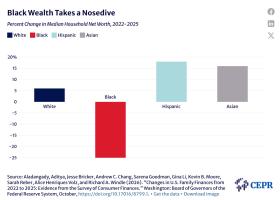 The Center for Economic and Policy Research (CEPR) recently reported on Federal Reserve data indicating that Black people in the U.S. have lost 25% of their wealth between 2022 and 2025. Whites,…
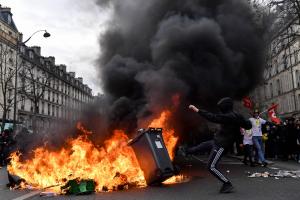 Bouna Mbaye is an activist, writer, and a member of the Pan-African League-Umoja, the Pan-African Brigade for Palestine, and the US Out of Africa Network. He joins us from Paris to discuss the…
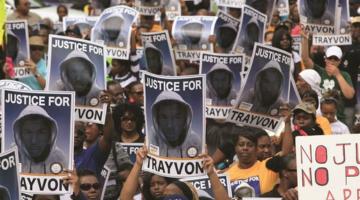 As Black Agenda Report is poised to celebrate its 20th anniversary, we reprint Glen Ford's commentary on the killing of Trayvon Martin and the impunity provided to his killer in a criminal justice…
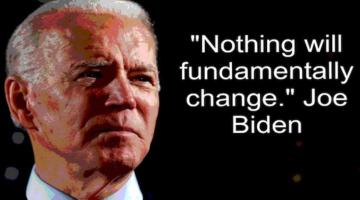 The Democratic Party is terrified of even small liberal reforms and will not abide left leaning democrats thwarting their plans for austerity and neoliberal orthodoxy.


