We must struggle for a radical peace in the Caribbean. Maurice Bishop offers us a guide.
Originally published in Anti-Imperialist Scholars Collective.
The Caribbean Sea has once again become a theater for the renewed geopolitical ambitions of a waning US empire, which is strategizing to bolster its last bastion of hegemony. The arrival of the nuclear-equipped USS Gerald R. Ford on November 15, 2025—the largest and most advanced aircraft carrier, spearheading the most intense military deployment in the region in decades- signals a stark attempt to reaffirm US domination. It reminds us of the Caribbean’s central position in the history of empires and why our only option is to resist these machinations through the pursuit of a radical peace and working-class unity.
Just as imperialist powers brutally acquired and fought over the region’s resources and territories from its inception, cruelly enslaving and violently establishing their political and economic domination, these same forces continue to collide, fomenting political and economic chaos and fragmentation. In 1914, recall the US Navy invaded Haiti to confiscate its gold reserves valued at $500,000 on behalf of City Bank, re-enslaving Haitians through the corvée system. In 1983, fearing the pan-African appeal of Maurice Bishop’s socialist Grenada and his new Jewel Movement, the United States used CIA operatives to support a coup against the revolutionary government that led to his assassination. Now, in 2025, the US has set its sights on regime change in Venezuela to secure control over the world’s largest oil reserves. The declining US empire is accompanied by the global machinations of imperialist war and a return to the tenets of the Monroe Doctrine.
At the time of writing, the Trump Administration had conducted 21 illegal military strikes on fishing vessels, killing 83 working-class people in the Caribbean and Pacific—individuals whose identities, histories, and lives are deemed expendable by the current white supremacist in chief. The spurious claim that these strikes protect the ‘homeland’ against ‘foreign threats,’ ‘narco-terrorists’ or ‘enemy combatants’ (i.e. Black, Brown and working-class inhabitants of the Caribbean and South America) only further exposes the racist character of a white supremacist rubber baron and his intervention. This racism also explains why the current US president has found willing collaborators in the Caribbean. More on this later.
In asserting its revived Monroe cum Trump Doctrine, the United States has acted with impunity and contempt for so-called ‘international law,’ defying the UN and accelerating the collapse of multilateral norms. For two decades in Haiti, the US has recklessly flouted international norms and militarily occupied the country with impunity and full endorsement of the United Nations. Haitians have had no legal recourse in the face of US-supported mercenaries killing its people, a cholera outbreak that killed thousands, and ‘peacekeepers’ who have only worsened the political situation. These current criminal strikes by the US regime not only execute fishers and instill fear within their working-class communities, but they ultimately seek to annihilate the Bolivarian Revolution in Venezuela and deliver a death knell to any alternatives to US hegemony in the region. This can be labeled an apocalyptic ‘War on Terror’ that reignites long-held views by a US-led transnational ruling class of the region as the US ‘backyard’, all in a bid to secure hydrocarbons and enrich its lethal military enterprise. These aggressive assaults on sovereignty in the region must be resisted. We must appreciate why these threats are significant, historically and in the present. To effectively resist and make this idea mean more than a hollow slogan, we must expose the contradictions, vacuousness, and fragility of the current calls for a Zone of Peace especially coming from current Caribbean leaders that stand on the whims and machinations of the US acting as a ‘Big Stick’ force.
Current attempts at ousting Nicolás Maduro and capitalize on the largest oil reserves in the world, and its mineral wealth—buttressed by a massive military buildup—exposes the enduring colonial nature of US policy. It also reveals why the Caribbean’s comprador class offers no viable alternative. This dynamic has may yet prove fatal for CARICOM, dividing its leaders into willing and unwilling collaborators in the US regime change agenda. Despite the untold misery neoliberalism has inflicted on working-class communities, Caribbean politicians remain fully committed to the US imperialist economic project that has dominated the region for almost 50 years. CARICOM’s stance on Haiti exemplifies this neocolonial bind: its support for the US-led, 20-year military occupation and a new UN Gang Suppression Force (GSF) represents a multi-cultural, and black-faced defense of imperialism. This subservience was evident in 2019 when CARICOM fractured over whether to recognize Maduro or the US-backed Juan Guaidó. Five nations (Bahamas, Jamaica, St. Lucia, Guyana, and Haiti) supported to recognize the latter; three (St. Vincent and the Grenadines, Dominica, and Suriname) recognized the former; and five others (St. Kitts and Nevis, Trinidad and Tobago, Antigua and Barbuda, Barbados and Belize) abstained. This division occurred despite the immense benefits the region derived from Venezuela’s Bolivarian Alliance for the Peoples of Our America (ALBA) and Petrocaribe initiatives, which were established by Hugo Chávez and continued under Maduro to support energy security and development.
These current machinations can be seen as a form of comeuppance for CARICOM fractured approach and its tacit and open embrace of US imperialism. These events have had severe and fortuitous consequences, exposing significant cracks in the neocolonial CARICOM project: the limited effectiveness of its regional security apparatus, the bankruptcy of its current economic and political initiatives, and the powerlessness and cowardice of its leaders in the face of US imperialist aggression.
Even before Jamaica was bracing for the devastating Hurricane Melissa, which visited untold disaster on the island’s western and southern parishes—including some of its most vulnerable working-class communities, Prime Minister Andrew Holness was signaling the need for help from Trump and the US. Since, he has shown enthusiasm to collaborate with the US military in disaster relief and recovery efforts. Undoubtedly, salivating at the potential financial windfall for himself and his real estate business class, Trump pledged support for Jamaica’s reconstruction. After the near complete destruction of Black River on the island’s southwestern coast, which the Holness' administration was merely three months before in July 2025, had earmarked for redevelopment. Just weeks before Melissa, Holness, as current chair of CARICOM, had delayed an urgent meeting on the Venezuela situation, while tacitly endorsing US actions there.
On the surface, it appears that most Caribbean leaders have defended the 2014 CELAC declaration of the Caribbean as a ‘Zone of Peace’—a declaration that was ironically signed, endorsed and later discarded by Trinidad and Tobago’s current prime minister. Upon closer examination, however, these stances pale in comparison to the stronger enunciations of the term’s progenitor, Maurice Bishop. US actions expose not only the frailty of the Zone of Peace declaration under these current leaders but also the reality that all CARICOM countries have ongoing military cooperation arrangements with the United States shows the hypocrisy and weakness of the current CARICOM position.
This situation reveals the ongoing imperialist nature of the region’s relationship with the US, expressed not only through imposition but by the compliance and complicity of regional leaders. Trinidad and Tobago’s Kamla Persad Bissessar, Guyana’s Irfaan Ali, and Jamaica’s Andrew Holness have shown themselves as vociferous and compliant partners of the US’ latest threats to the region’s fragile sovereignty, while Barbados’ Mia Mottley has repeatedly supported incursions on Haiti’s sovereignty.
It is important to note that the ‘Zone of Peace’ was first championed by Grenada’s Prime Minister Maurice Bishop in September 1979, years before his assassination in a CIA-backed coup that prompted the US invasion four years later. At the UN General Assembly and in a co-sponsored Organization of American States (OAS) Resolution that year, he stated:
We join with our sister Caribbean nations in re-emphasizing our determination to preserve the Caribbean as a zone of peace, free from military intimidation. We demand the right to build our own processes in our own way, free from outside interference, free from bullying and free from the use or threat of force.
In this resolution, Bishop emphasized mutual respect, neighborly cooperation, sovereignty, and anti-imperialist solidarity over military conflict. The initiative was rooted in a broader anti-imperialist and anti-colonial stance, supporting the independence of all colonial countries and peoples and the sovereignty of revolutionary movements in the Caribbean and Latin America. Bishop also called for a ban on nuclear weapons, an end to aggressive military maneuvers, and the dismantling of foreign bases in the region. This enunciation of a ‘Zone of Peace’ must be read alongside Bishop’s radical politics and his affirmation to end the misery of the Caribbean people and embrace the dignity of working people’s dreams, aspirations, needs and labor.
The current crop of leaders has betrayed the radical spirit of this declaration by deepening security and economic ties with the US. They have presided over worsening living conditions and rising inequality for many in the region, failing to deliver on the post-independence promises to transform the lives of working people. For generations, they have contributed to the region’s unequal development, deepened security and economic dependence on the US, and have stood time and again against Haiti’s sovereignty, the region’s first Black republic. We must also recall Eugenia Charles’ outright alignment with President Ronald Reagan. As prime minister of Dominica and chair of the Organization of Eastern Caribbean States (OECS), she publicly appealed to the United States for military intervention and appeared on television with Reagan to justify the Grenada invasion on October 25, 1983.
While the US’ stance is predictable, given its ongoing role in Haiti, this is precisely why a radical ‘Zone of Peace’ remains more relevant than ever. Such an affirmation stands in stark contrast to the weak, liberal utterances of lackey Caribbean leaders like Mia Mottley and Ralph Gonsalves, who have repeatedly served as watchdogs of US imperialism. Their rhetoric pales in comparison to Maurice Bishop’s declaration, which was a comprehensive anti-imperialist stance aimed at liberating the Caribbean from external pressure and asserting the right of regional states to sovereignty and self-determination. The contemporary ‘Zone of Peace’ amounts to tacit support for the broad and extensive imperialist stranglehold the US maintains over the region, ensuring that little fundamentally changes.
That Kamla Persad-Bissessar has broken ranks with CARICOM, publicly feuding with the body, only reveals the further fracturing of a weak, inconsistent and neocolonial leadership class in the Caribbean. These leaders agree on the broad contours and inner workings of the imperialist relationship with the US but are driven by a ‘not-in-my-backyard’ anxiety over the prospect of a more direct, potentially regionwide conflict. These contradictory positions conceal the perpetual harm caused by the long history of imperialist and neocolonial forces in the region. In this case, the minor comprador requires the ‘Big Stick’ power of the US military, reflected in its actions for regime change and resource theft.
Kamla Persad-Bissessar, who became the first female prime minister of East Indian heritage of Trinidad Tobago and led her United National Congress to a second term victory in 2025, has enthusiastically endorsed the US bombing campaign commenced in September, urging to ‘kill them violently,’ despite the suspected deaths of two Trinidadian citizens in one of these strikes. Her government has also presumably sunk the Dragon Gas deal with Venezuela, an arrangement previously negotiated with the United States Office of Foreign Assets Control (OFAC), US Treasury, to bypass the very sanctions and economic warfare that her government now supports. This deal was crucial to Trinidad and Tobago’s economic fortunes in the gas and petrochemical industries, making Venezuela’s potential withdrawal immensely detrimental.
Riding on a wave of considerable unpopularity of the previous government due to rampant crime, Persad Bissessar has provided tacit and material support for regime change in Venezuela through supporting various joint exercises between the Trinidad and Tobago Defence Force and the Marine Expeditionary Unit of the US Navy, claiming to fight drug trafficking. Her government approved the docking of the USS Gravely for five days at the height of these attacks in late October and has committed to active collaboration with the US military in ‘exercises’ on Trinidadian territory just 7 miles away from Venezuela at the country’s southernmost point.
In Trinidad and Tobago’s politics, the two main political parties draw their primary support from the country’s two main ethnic constituencies, East Indian and African, who are mobilized through appeals to race, in terms of affiliation with the leadership, representation, racist political discourse, and outright patronage. Persad-Bissessar’s support for US actions not only demonstrates her right-wing disposition and complicity in Trump’s imperialist ambitions but also reveals ideological contradictions and a leaning towards a form of white supremacy with a Hindu/Indian face. Since retaking office, her domestic political decision-making has reified a sort of Hindu/Indian nationalism, first by courting and funding a million-dollar state visit for Narendra Modi, India’s right-wing leader. Her party has promoted a revisionist version of Trinidad and Tobago’s post-independence history, claiming erroneously the country’s first prime minister was not Eric Williams. Then, by stoking xenophobia against Venezuelan migrants, her government has issued public threats of mass deportation and stricter immigration enforcement.
This is occurring in a context of dwindling revenues from natural gas and petrochemical industries and limited foreign exchange due to a precipitous forty-percent decline in gas output since 2010. The recent elections therefore represented an intense battle for control of a weakened state. Persad-Bissessar appears to be battling not only for her legacy but to be seen as the legitimate leader for her base and party elites, as well as to redistribute dwindling resources to political supporters, while excluding certain sections of her working-class voters. Despite her populist campaign rhetoric, her policies and decisions since taking power have shown a glaring bias towards a form of Hindu nationalism and Indian supremacy, shaping governance and unequal wealth distribution. Although more than 50% of voters did not vote in these recent elections, and having been elected by just 29% of the voting population, Persad-Bissessar has pursued several controversial, dictatorial and dubious decisions.
To understand Persad-Bissessar’s pro-imperialist, aggressive stance and full compliance with Trump’s white supremacist agenda, her domestic actions must be considered. Her exploitation of racial politics aligns directly with her support for the US regime-change agenda. Her brand of Hindu nationalism in the context of a morbid neoliberal era allies her perfectly with the “Big Stick” white supremacy in the North.
Since taking office, Persad-Bissessar has brought to life her party elites’ ‘our time now’ mantra—a racialized epithet referring to a claimed solidarity among her party supporters, demand for control of the economic spoils upon return of the United National Congress (UNC) after a decade. Her government has retrenched thousands of workers from public works programs traditionally associated with Black working class communities, defunded opposition-controlled regions, as well as several social and youth programs in Black, opposition-held districts. Furthermore, the UNC-led government amended the constitution to allow people born abroad to acquire citizenship through their grandparents. While framed as an expansion of rights, the 2025 Constitution (Amendment) (Citizenship) Bill is glaringly seen as a tool to gerrymander elections by granting citizenship to potential overseas UNC supporters based on racial affiliation. These actions represent just a few of the government’s more blatantly racist political maneuvers.
Her government’s extension of a State of Emergency, justified as a measure against rampant crime, is in fact a tool to further suppress a local and transnational anti-imperialist movement and protests in support of peace. Her minister of homeland security has also called for what he terms ‘China-style’ social media control policies and new laws to police and punish dissent. This should concern all who oppose US imperialism and its regime change agenda and stand for popular democracy in the Caribbean and Venezuela. As a true neocolonial puppet, the Prime Minister has stoked public divisions, undermined unity and created an atmosphere where misinformation and tacit support for US intervention thrive. She is fostering a false sense of security among her supporters, obscuring the extremely lethal realities of US imperialism. The US empire pursues its goals regardless of how many people are killed in its wake, as the recent examples of Iraq, Afghanistan, Haiti, Somalia, Yemen, and Palestine clearly demonstrate.
This moment must propel us to organize for a radical peace and finally sever the insidious tentacles of US imperialist aggression from our region. History has proven that ‘Big Stick’ white supremacy—now allied with subordinate Hindu supremacist ideology—will only ever deny justice, peace and a dignified existence to the working class and marginalized communities of Our Americas. Despite the political complexities of the current conjuncture, we must stand in solidarity with our Venezuelan relatives and brethren to reclaim the Caribbean as a radical Zone of Peace in the spirit and tradition of Maurice Bishop. This means building a transnational, anti-imperialist working-class movement. To do so, we must revisit Bishop’s political project, understand its failures, and revise its lessons for our own future liberation. The road will be difficult, but we hope that this moment radicalizes enough of us to work to put an end to US empire’s perilous misadventures in our region.
Keston Perry is a member of AISC.


 In this week’s segment, we discuss student protests by Black and brown youth in France against austerity measures and race-based inequality in the education system. But we begin with a discussion of…
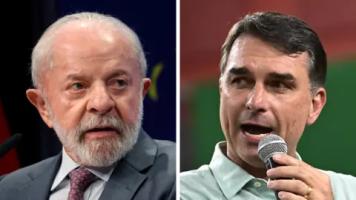 Brazil's incumbent president Lula da Silva finished second behind Flavio Bolsonaro in the first round of the presidential election. Because neither man received at least 51% of the vote, a run-off…
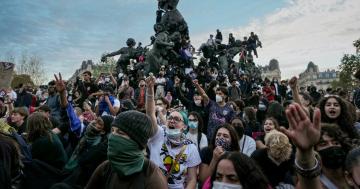 Students in France are engaging in mass protests. Hundreds of them have been arrested and injured by police, and many schools are closed. Annick Metefia joins us from Paris. She is a member of the…
 Ajamu Baraka of the Black Alliance for Peace joins Dimitri Lascaris on BettBeat Media for a conversation about something Western publics have not yet come to terms with — the fact that resistance to…
 Progressive candidates rarely remain so after winning public office. Zohran Mamdani is no exception, but his capitulation to New York zionists angered his supporters, and the people he hoped to…


