by Chandre Gould
The author studied the lives of South African men that had been jailed for violent crimes – and discovered the abused and forsaken child at the core of each of them. “Preventing and reducing stubbornly high levels of violence in South Africa can only be achieved if the country focuses on ensuring that children are not exposed to violence or toxic stress at home, and that they are warmly cared for.”
South Africa Study: Why Societies Must Protect Children if They Want Fewer Criminals
by Chandre Gould
This article previously appeared in Pambazuka News.
“They all shared an early and overwhelming sense of loss resulting from feelings of physical and/or emotional separation from parents, carers, professionals and responsible adults.”
What drives and sustains high levels of violence in a society? This question has preoccupied researchers and policymakers for decades. A common thread in a great deal of the research is that early childhood experiences play a vital role. Violent beginnings of a child’s life very often lead to violent behavior in later life.
The question is particularly acute in countries with exceptionally high levels of violence. This is true of South Africa where the homicide rate of 34 per 100 000 people compares to the homicide rates of Honduras, Colombia and El Salvador, and places the country among the 20 countries globally with the highest rates of homicide.
Between 2010 and 2015 I undertook a study of the life histories of 20 men in prison. The intention was to improve understanding of recidivism, to inform sentencing policies, enable the early detection of indicators for repeat offending, and inform rehabilitation programs and interventions.
I concluded from my research that preventing and reducing stubbornly high levels of violence in South Africa can only be achieved if the country focuses on ensuring that children are not exposed to violence or toxic stress at home, and that they are warmly cared for. It is equally important to ensure that children are protected from violence at school.
Violent Histories
The men I interviewed had been jailed for multiple violent offences. They came from a range of socio-economic backgrounds and different areas in the country. In all cases their criminal behavior was clearly linked to multiple adversity from early in their lives.
None of them is blameless. The crimes they committed were cruel and often brutal. But their personal, familial and contextual circumstances had a significant impact on their criminal careers.
They all shared an early and overwhelming sense of loss resulting from feelings of physical and/or emotional separation from parents, carers, professionals and responsible adults. Sometimes this loss was experienced as betrayal. In some cases this betrayal happened by omission and in others it was deliberate.
Their loss was exacerbated by experiences of neglect and abuse at the hands of family members and the staff of state agencies and institutions from whom they were entitled to expect care and support, if not love.
Ryan, a white man incarcerated for the brutal murder of his brother, started his life as an unwanted child. His mother told me:
“I became a mother with him at age 17 years. I did not want him but my mother forced me to keep him. I was very hard on him; I slapped him around a lot. I never took to him. I did not like him.”
Beatings at home were repeated at school where he was bullied daily. His stepfather, the only adult who ever showed him any love and warmth, died when he was 12 -- a turning point in his life. From this point Ryan, who was deeply traumatized by the loss, began a trajectory that resulted in him being jailed, first in a brutal reformatory and later spending more time in prison than out.
There were plenty of warning signs and professionals who could have responded. The educational psychologist who assessed Ryan after the death of his stepfather could have used it as an opportunity to refer the family for further support. That did not happen.
Zibonele was the son of a farm worker on a racist Free State farm. He was left at two with his uncle who already had eight children. His life was hard. Like Ryan, he was bullied at school and beaten by his teachers. “At school there would be somebody who would like to ill-treat you for the fun of it. It was just like in prison…the older boys wanted to ill-treat me. We ended up fighting horribly. We were later beaten, given seven lashes by a teacher.”
He had an early experience of brutality and injustice at the hands of the criminal justice system. He and his co-workers were lashed by policy after eating more mealies for lunch than the farmer thought they deserved.
Zibonele would go on to strangle and murder three young girls. No one took any notice of the early signs that he was in trouble. Teachers who could have seen the signs were instead complicit in his abuse.
Loss and Violence
For most of the men I interviewed, their routine use of violence was both necessary for survival and a means to acquire symbols of status. Over time they adopted the hyper-masculine identities that were necessary to secure that status, at least among their peers.
Once they had dropped out of school they found peer groups who were equally alienated from adults and structures of authority.
Several of the men seemed to have had difficulties learning at school. These possibly stemmed from undiagnosed problems that were left unattended. Dropping out of school signaled an untethering from relationships that could have built resilience and increased opportunities to reverse their destructive trajectories.
All of them experienced stress and trauma from early in their lives, and several turned to alcohol and drugs as a form of self-medication. This led not only to more violence, but also to a deepening of their personal crises.
In their adult lives two factors in particular seem to have had a significant impact on their criminal trajectories. One was where they lived. The men who lived in urban areas were more likely to follow a trajectory from petty crime, such as shoplifting, to more serious and violent property crime.
The other was gun ownership. Having a gun did not necessarily initiate their criminal trajectories. But it did have an effect on the nature and severity of the crimes they committed. Gun ownership signaled an increase in the violence of their crimes, and the value of their crimes – they were able to rob more effectively with a gun than without.
Breaking the Cycle of Violence
Interventions at the family and relationship level need to be supported by change at societal level, in particular through addressing working and childcare conditions for parents. Accessible and safe early childhood development centers and after-school care facilities are essential, as is parental leave -- for both parents -- after the birth of a child. Parenting programs have also been shown to reduce stress and improve the relationships between parents and their children.
But these need to be pursued alongside other interventions such as improving gun control, and targeted interventions to support individuals and families living in poor, high-violence environments.
The foundations for violence and criminality are laid between 10 and 20 years before the effects are felt by society. In other words, the way the state and a society respond to children who witness and experience violence, neglect and abuse in 2016 will determine whether we will see the same levels of violence in 2026.
Chandre Gould is Senior Research Fellow at the Institute for Security Studies and research associate, Durban University of Technology. This article previously appeared in The Conversation.

 USAID is a front for U.S. imperialism. In Haiti its creation of "civil society" projects will be used in service of the next plan for occupation.
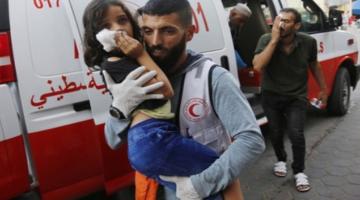 A No-Fly Zone over Gaza would prevent the Israeli Air Force from continuing its war crime against the Palestinian people.
 Most of the world's people are in solidarity with Palestine, but Black people in this country have a special bond born of common struggle.
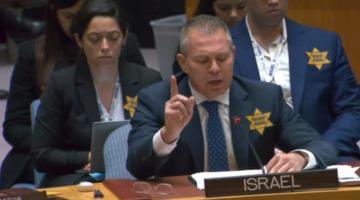 After 120 members of the 193 members of the UN General Assembly called for an immediate ceasefire in Gaza, Israel demonstrated its increasing isolation by declaring the UN illegitimate and irrelevant.
 Any public statement which questions Israel's war against Gaza is potentially met with personal attack and punishment but the stamp of approval from the Biden administration is the real cause of the…


