by Danny Haiphong
Capitalism is the scourge of the planet. “The basis of solidarity, then, should ultimately derive from an internationalist perspective. It means mutually working together with the peoples of the world in the struggle against the common enemy of imperialism.” Malcolm X understood that Vietnamese and Algerian freedom fighters provided “a great service to Black people in the US by weakening the international influence of the US capitalist state.”
Why Solidarity in the 21st Century Means Understanding Race and Class as One Entity, not Two
by Danny Haiphong
“White supremacy justifies such oppression through the dehumanization of ‘non-white’ life and the humanization of ‘white’ life.”
White supremacy and capitalism were constructed for the same purpose: to exploit humans, turn them into commodities, and enrich private owners of capital. This remains true in the 21st century. The Black working class of this era's post-industrial, crisis-ridden US capitalism has been made disposable by a system that once required its free, slave labor to develop and thrive. Endless neo-colonial wars rage throughout the planet. These wars are justified by the same white supremacist ideology that preconditions Black life to the economic margins. On this basis, solidarity between oppressed peoples can only be achieved when a movement strikes against race and class as one entity, not two.
The question of solidarity must be approached from an objective analysis of present day society. The US is a class society. It is ruled by dictates of capitalist profit and private property. Large US monopoly corporations and banks accumulate exorbitant profits from the labor of workers all over the world. At the same time, the majority of people in US society suffer from impoverishment due to capitalist exploitation. This cuts across racial lines.
However, the US is also a racist society. Black Americans, indigenous Americans, and self-identified Latinos are the most impoverished communities in the country. These communities also face levels of repression, segregation, and state violence that White Americans do not experience. White supremacy, as the ruling ideology of US capitalism, justifies such oppression through the dehumanization of "non-white" life and the humanization of "white" life. This permeates throughout every social, political, and economic institution in US society.
“All forms of exploitation are ultimately ruled by the class that controls the dominant political economy of this period: capitalism.”
So while it is important to understand the layers of US society, it is just as important to possess consciousness of the source of the oppression. All forms of exploitation are ultimately ruled by the class that controls the dominant political economy of this period: capitalism. The extreme concentration of wealth, where 62 individuals alone own more capital than half of the planet's population combined, lays bare just what is responsible for the disease of capitalism. And the capitalist class that owns all of this wealth has built a global system of Empire to facilitate large-scale theft.
What unites all oppressed people, then, is their relationship to the capitalist state. The state mitigates and manages the affairs of the US capitalist class. For example, it is Washington that ultimately enforces "free trade" deals such as NAFTA to create a more friendly "investment" environment for multinational corporations. Washington also facilitates arms deal contracts with countries like Saudi Arabia to ensure that its allies continue to fund terrorism and repress independent development throughout the world to the benefit of oil and arms corporations. Everything the capitalist state does thus revolves around enriching the capitalist class at the expense of oppressed and working class people.
This does not mean that Black workers in the US have the same experience as workers in Bangladesh or Somali workers fending off starvation from US-sponsored sanctions. There are variations to how workers experience exploitation based on their social and economic relationship to capital in a given moment of history. However, all of them face the same enemy in one degree or another. This is what Malcolm X realized after his travels throughout the African continent just prior to his assassination in 1965. Malcolm X identified with the national liberation struggle in Algeria because he saw the Algerians (and Chinese, Vietnamese, Cubans among others) as providing a great service to Black people in the US by weakening the international influence of the US capitalist state.
“There are variations to how workers experience exploitation based on their social and economic relationship to capital in a given moment of history.”
The basis of solidarity, then, should ultimately derive from an internationalist perspective. It means mutually working together with the peoples of the world in the struggle against the common enemy of imperialism. This will take work and much education. While much of the world is no stranger to white supremacy and colonialism, some may not completely understand the intricacies of racism against Black people in the US. At the same time, many Black Americans and oppressed peoples of color may not fully understand the importance of standing with Libyans, Cubans, and all oppressed people against US-backed imperial warfare. Eight years of the Obama era and nearly a generation of counterinsurgency does have its negative consequences, after all.
But this should not deter us from upholding a banner of internationalism and solidarity in our day to day work. Reactionary conditions should harden and strengthen our orientation to these important principles. Millions of people continue to perish or starve because of the US and its imperial allies. And the system of capitalism that dictates what this alliance does abroad continues the assault on Black people and peoples of color within its artificial borders. Solidarity will make us stronger in the quest for political power. The question shouldn't be whether people around the world elevate the struggle of Black Americans, but how we can organize on an internationalist basis to confront our common enemy.
Danny Haiphong is an Asian activist and political analyst in the Boston area. He can be reached at wakeupriseup1990@gmail.com.

 In this week’s segment, we discuss student protests by Black and brown youth in France against austerity measures and race-based inequality in the education system. But we begin with a discussion of…
 Brazil's incumbent president Lula da Silva finished second behind Flavio Bolsonaro in the first round of the presidential election. Because neither man received at least 51% of the vote, a run-off…
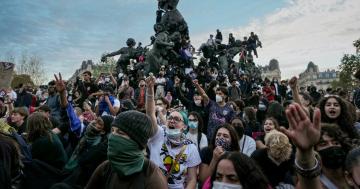 Students in France are engaging in mass protests. Hundreds of them have been arrested and injured by police, and many schools are closed. Annick Metefia joins us from Paris. She is a member of the…
 Ajamu Baraka of the Black Alliance for Peace joins Dimitri Lascaris on BettBeat Media for a conversation about something Western publics have not yet come to terms with — the fact that resistance to…
 Progressive candidates rarely remain so after winning public office. Zohran Mamdani is no exception, but his capitulation to New York zionists angered his supporters, and the people he hoped to…


