Protest against US assets theft in Kabul, Afghanistan December 21, 2021. Photo: Agence France Presse
The U.S. claims the right to sanction, to steal from other nations, with one-third of humanity suffering from these crimes. Sanctions are war by other means and cause great suffering around the world.
The word “sanctions” emerged in the Middle Ages, meaning ecclesiastical decrees. Today it’s a sanctimonious word for economic warfare, including even outright theft. Despite all the terror about what could happen in Ukraine next, Afghans are still facing freezing cold and starvation and the US has seized—not just frozen but seized—their $7 billion in assets on deposit at the Federal Reserve. And Ethiopia and Eritrea face brutal sanctions in House Resolution 6600.
The US has imposed sanctions on roughly a third of the world’s population, most famously now on Russia, but more on developing nations than not. In mid-February a bill to impose new sanctions on Ethiopia and Eritrea, House Resolution 6600, moved out of the House Foreign Relations Committee onto the House floor. Then President Biden shocked the world by announcing that the US will keep the seven billion dollars on deposit with the Federal Reserve that it had seized from Afghanistan, distributing half of it to 09/11 victims who had sued the Taliban for damages and another half to humanitarian relief agencies in Afghanistan.
An estimated two billion to three billion dollars more of Afghanistan’s cash reserves are now frozen in central banks in Germany, Switzerland, the UK, and the United Arab Emirates, and the US may have set a precedent that those nations’ governments will follow.
Experts speaking on Aljazeera said that this will make it impossible for Afghanistan to back its domestic currency with dollars, make it impossible for it to have a fully functional economy, and thereby make it wholly dependent on aid.
Back in January, while the funds were frozen but before Biden’s announcement, Senator Bernie Sanders, who is rarely radical on US foreign policy, tweeted, “Afghanistan is facing a humanitarian catastrophe. I urge the Biden administration to immediately release billions in frozen Afghan government funds to help avert this crisis, and prevent the death of millions of people.”
The New York Times Editorial Board also felt compelled to respond to the freeze on Afghanistan’s cash reserves at the Fed with their own op-ed, “Let Innocent Afghans Have Their Money.”
After the seizure, on February 14, the Washington Post published an editorial by Tufts University professor Daniel W. Drezner, The United States is stealing Afghanistan’s money, in which he wrote, “The United States has essentially forced everyone to witness the firepower of its fully operational machinery of coercive financial statecraft.”
With even the empire’s papers of record recoiling in shock, I asked Jean-Claude Maswana, Congolese economics professor at Ritsumeikan University in Japan, to explain how this financial firepower works, and how it’s rapidly changing because of the new sanctions on Russia.
Ann Garrison: How could this happen, the US freezing $7 billion of Afghanistan’s assets, then actually seizing it to spend at will?
Jean-Claude Maswana: One should remember that the US government sanctioned the Taliban as a terrorist organization and did not recognize it as the legitimate government of Afghanistan after it took over in August 2021. Since the US controls the international monetary system, this move should not surprise anyone.
Ann Garrison: They seized Libyan assets and haven’t given them back. The Bank of London seized all of Venezuela's gold there, valued at $1.95 billion, and the US seized all their oil properties here in the US, all in the name of sanctions. The US captured four Iranian oil tankers on their way from Iran to Venezuela, both sanctioned nations, then sold the $40 million worth of oil they were carrying and said the money would go to US victims of terrorism. But actually seizing Afghanistan’s $7 billion may still be the most brazen of these outright robberies yet.
Usually Western capitalists steal the resources of developing nations, or entrap them in debt, then give a small fraction back in the form of “aid,” but this time they’ve gone straight for the cash.
JCM: Those practices have always been part of what superpowers do.
For a long time the US and UK have set the rules of how international trade and finance work. They granted themselves great privilege and the results are what we are seeing. Now the US has banned Russia from international banking transactions for invading Ukraine, and blocked it from the SWIFT (Society for Worldwide Interbank Financial Transactions) system, which allows banks to rapidly relay information about financial transactions to one another. Without this, banks in one country have been only minimally able to do business with the rest of the world, but now, in response, the Russian and Chinese governments are escalating the development of their own financial information networks, Russia’s SPFS (System for Transfer of Financial Messages) and China’s CIPS (Cross-Border Interbank Payment System). And Iran particularly, but also Russia and China, have engaged in some forms of barter.
The US’s own misuse of power is at the same time making the US government nervous about the possibility that China may move ahead in a few decades and use similar tactics against US interests.
AG: Isn't China already ahead? In Africa, they seem to have all the cash, while the US has all the guns. And wouldn't it be a disaster for the US if China withdrew from US securities?
JCM: No, China isn’t ahead yet. China can’t withdraw from its investments in US securities. That would be more damaging to China than to the US.
AG: How so?
JCM: China has a trade surplus, which means they hold excess US dollars. They can’t hold those excess dollars, aka international reserves, unused. It makes most sense for them to invest it to earn interest, the same way we do with fixed term savings accounts. US securities are the only option available for China since their reserves are huge and interest rates provided by the US are highest. By earning extra money from US securities, China, which is still a developing country, can invest this extra income instead of borrowing the same amount from the IMF or World Bank, as most nations of the Global South do. China can’t turn its back on such a great opportunity.
AG: So the US keeps China relatively happy inside the US dominated financial system by servicing its debts in dollars at the best interest rate China can get.
JCM: Yes, but because it services debt to China in its own currency, it’s not the burden that it would be for other countries servicing their debt to China with currencies—first exchanged for dollars—that may be undervalued and/or volatile.
AG: So China benefits from the highest interest rate it can get by holding US securities, but at the same time joins Russia in hastening dedollarization by developing an alternative to the SWIFT system.
JCM: That’s true for now.
AG: The US imposed new sanctions on Ethiopia and Eritrea at the beginning of this year, and now there’s a bill on the US House floor that would impose even more. So, given that the US just stole $7 billion from Afghanistan, I’m wondering whether Eritrea or Ethiopia have assets in the US that are vulnerable to similarly shocking asset seizure. I inquired and determined that Eritrea has no assets here aside from its community centers and I’m hoping that Ethiopia is no more vulnerable. I’ve inquired but without answer yet, and I’m not sure it’s a question they’d want to answer.
JCM: All countries have some international reserves that the US can freeze. Ethiopia and Eritrea trade with other countries and international trade is conducted in US dollars via the same international financial system currently used by the US to execute its sanctions on Afghanistan’s current government. Therefore, nothing would prevent the US from freezing assets of Eritrea or any country out of international trade for that matter, should they feel the need.
Both countries have the International Monetary Fund’s SDRs (Special Drawing Rights), which can also be frozen. In Afghanistan’s case, there are about $370 million SDRs (Special Drawing Rights) not made available to the Taliban government.
AG: This is what I thought was true without understanding the precise mechanisms—that in order to trade internationally, a country has to have cash reserves in dollars somewhere or convert its own currency to dollars in the amount it wishes to transact a sale or purchase in.
JCM: The reserves that a country needs to have for trade are held by banks in any country. Since they’re in US dollars, the United States has the right to prevent any bank or country from using its currency outside that country. Any bank that disobeys will lose their right to transact in US dollars. In the case of Afghanistan, international financial institutions are refusing to wire money to Afghanistan, even in dollars, as payment for goods and services or whatever reason, because they fear that the US Treasury could sanction them for doing so.
AG: So if Ethiopia wanted to pay a million birr to a Japanese corporation for products of an equivalent value in yen, the US would then ban the transacting bank from further exchanges in dollars?
JCM: Right. The Japanese bank would never engage in such a transaction. Period. It is difficult even for a large Japanese or EU bank to bypass the long arm of US enforcement, but Japan has been particularly subservient to the US since it was defeated in World War II. It is less likely than other nations to take that chance, even as Russia’s SFPS and Chinas CIPS become more usable.
AG: But the US didn't just freeze Afghanistan's assets. It froze them, then announced that they’d spend them on 09/11 victims and “aid” to Afghanistan. Isn't that different and newly shocking?
JCM: Yes, that’s right. There are 2 separate operations there: freezing and then stealing or spending at will.
AG: How did the Bank of England seize $1.95 billion of Venezuela's gold?
JCM: Venezuela’s gold was held at the Bank of England, like Afghanistan’s $7 billion were held at the Federal Reserve. That made it easy for the UK to seize it for any dubious reason they could come up with.
AG: Why didn’t Venezuela store their gold in a Venezuelan bank?
JCM: Store several billion dollars worth of gold in a Venezuelan bank? Venezuelan banks could not provide the minimum security for such huge gold reserves. They could be stolen by a band of armed men.
Most developing countries have their gold reserves in the Bank of England. In part because of the colonial heritage, as part of those gold reserves were already in London, or because London was the financial center of the world before it was superseded by New York City.
AG: Well, it obviously wasn’t any more secure at the Bank of England. They seized it and gave control to Juan Guaidó, the US-appointed flunkey pretending to be the President of Venezuela. He and Nicolás Maduro, the legitimate President of Venezuela, went to UK courts about it and a lower court decided in favor of Maduro, but the UK Supreme Court then agreed to hear Guiadó’s appeal and ruled in his favor at the end of January.
It seems that possession is now 9/10ths of the law, to use the legal phrase. Even perpetrators of outright theft escape indictment and prosecution.
JCM: As I said earlier, the US practice of imposing its own rules in the international arena has always been part of what superpowers do. And the US and UK work together in this.
Ann Garrison is a Black Agenda Report Contributing Editor based in the San Francisco Bay Area. In 2014, she received the Victoire Ingabire Umuhoza Democracy and Peace Prize for her reporting on conflict in the African Great Lakes Region. She can be reached on Twitter @AnnGarrison and at ann(at)anngarrison(dot)com.

 Progressive candidates rarely remain so after winning public office. Zohran Mamdani is no exception, but his capitulation to New York zionists angered his supporters, and the people he hoped to…
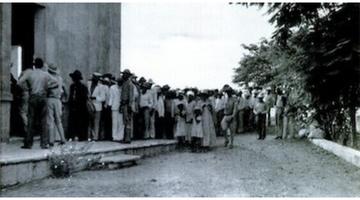 “Between October 2 and October 8, 1937, between 15,000 and 40,000 Haitians and Black Dominicans were slaughtered by Dominican troops…”
 The GSF renewal is part of a wider hemispheric project to reassert military control across the Americas. Caribbean leaders who invoke a Zone of Peace while supporting the occupation of Haiti are…


