The CDC Advisory Committee on Immunization Practices meets in Atlanta on Dec. 5 to consider changes to hepatitis B vaccine recommendations for infants. (Ben Gray/AP)
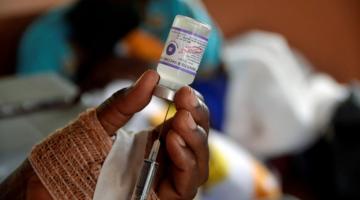
U.S. funding for a study on the timing of hepatitis B vaccine doses in infants in Guinea-Bissau violates accepted standards of medical ethics.
Originally published in the Washington Post.
A U.S.-backed study set to examine the overall health effects of hepatitis B vaccine dose timing on some 14,000 infants in the West African country of Guinea-Bissau has raised ethics concerns among scientists and former officials — and confusion amid conflicting reports on whether the research will proceed.
The U.S. Centers for Disease Control and Prevention last month awarded Danish researchers a $1.6 million grant, absent a competitive process, to conduct the study, in which some infant participants are to receive a vaccine dose at birth and others at six weeks, according to a statement from the University of Southern Denmark’s Bandim Health Project. The study is set to track participants over five years, documenting early-life mortality, morbidity and long-term developmental outcomes, according to the researchers.
The award raised concerns among top experts and former officials over apparent violations of accepted ethics for medical research, with potential to erode trust in immunization in one of the world’s poorest countries and elsewhere.
Hepatitis B is relatively common in Guinea-Bissau. While the country’s current policy is to give the initial dose at six weeks, it is set to transition to a birth dose, the standard recommended by the World Health Organization — a change driven in large part by the efficacy of the early timing in preventing transmission, including from mother to child.
Critics of the study have argued that it would be unethical to randomize children to an inferior treatment protocol, even one that aligns with a yet-to-shift local norm.
Amid the controversy, the study’s fate has come into question: The Africa Centers for Disease Control and Prevention, an arm of the African Union with no relation to the U.S. agency, said this week that the study had been canceled, citing an undated document attributed to Guinea-Bissau’s new government, following a military coup last year. But the U.S. said otherwise: The research is set to proceed, Department of Health and Human Services spokesman Andrew Nixon said Friday.
“Africa CDC shared weeks-old communications unrelated to the trial as part of a public relations campaign aimed to shape public perception rather than engaging with the scientific facts,” he said.
The researchers and Guinea-Bissau’s government did not respond to queries about the study’s status in light of the claims by the Africa CDC. The Africa CDC did not respond to questions about its cancellation claim.
The research grant comes amid changes to the U.S. childhood vaccine schedule and domestic scrutiny of the hepatitis B birth dose, despite broad agreement among medical experts that it is safe and effective. Earlier this month, federal health officials stopped recommending every child be immunized for rotavirus, influenza, meningococcal disease and hepatitis A, instead advising the shots for high-risk babies and children or if a doctor recommends it, in an effort to align the country’s immunization schedule with Denmark’s. In December, a vaccine advisory panel lifted its recommendation that all newborns receive hepatitis B vaccines at birth, citing Denmark’s model, which recommends the vaccine only for those at high risk.
The hepatitis B birth dose is a “long-established, proven vaccine,” said Jerome M. Adams, who served as surgeon general under the first Trump administration. He called the U.S. funding of the Bandim Health Project’s study a “post hoc justification of recent domestic policy changes.”
“Ethical standards have historically prohibited randomizing participants to inferior care when a safe, effective intervention is the global standard,” he said.
Researchers involved in the study have said that infant trial participants in the control group are merely subject to the country’s current vaccine schedule and claimed that much of the controversy around the study is the result of “false assertions that children would be deprived of vaccines they would otherwise receive.”
But other scientists say this does not resolve the ethical problems. That’s because the country’s lack of birth dose reflects “implementation failure,” not “uncertainty about benefit” of the infant dose, Boghuma Kabisen Titanji, an infectious-disease expert at Emory University wrote in a Substack post.
The dose timing protocol for the study is still being finalized, a Department of Health and Human Services official said, speaking on the condition of anonymity because the official was not authorized to reveal the details.
The Bandim Health Project’s research has drawn scrutiny in the past, Adams said. In 2017, the group published a study linking the diphtheria-tetanus-pertussis (DTP) combination vaccine to increased infant mortality. The study was cited by Health and Human Services Secretary Robert F. Kennedy Jr. when he suspended U.S. contributions to the global vaccine alliance GAVI in June. Former CDC director Tom Frieden called the 2017 study “fundamentally flawed” in an opinion piece for Stat News in July, arguing that the way the group analyzed death records probably led to “spurious findings.” In an email, Frieden raised concerns about the hepatitis B study grant, including its issuance without a competitive process.
“Issuing a no-bid contract for this amount of money is a violation of fundamental transparency and accountability requirements,” Frieden said.
The Trump administration has defended the project. Department of Health and Human Services press secretary Emily G. Hilliard said in a statement that the study would “answer important questions about the broader health effects of the hepatitis B vaccine.”
But the findings of the study cannot be extrapolated to the United States because its health landscape is vastly different from that of Guinea-Bissau, Titanji said.
A virus that attacks the liver, hepatitis B can lead to complications such as chronic liver disease, cirrhosis and liver cancer. Roughly 90 percent of infants infected at birth develop chronic infection, according to the American Academy of Pediatrics. Among them, 25 percent die prematurely from the disease. In Guinea-Bissau, nearly 1 in 5 people live with the virus, according to the World Health Organization.
Researchers with the Bandim Health Project have said they are studying the secondary effects of the birth dose in Bissau-Guinean children, such as mortality and morbidity. The study “fills an important gap in scientific knowledge” about the overall health effects of the hepatitis B vaccine birth dose, Christine Stabell Benn, head of the Bandim Health Project, said in an email.
But the primary benefit of the birth dose — to prevent hepatitis B infection — is “settled science” and does not justify randomizing “kids to not receive a proven intervention,” said Titanji, the infectious-disease expert at Emory University.
Compounding environmental, social and contextual factors in Guinea-Bissau — such as poverty, political instability, high disease burden, high infant mortality and low access to health care — can also impact the results of the study. “It just makes it really, really hard if you do see something to be able to pin it on the birth dose of the hepatitis B vaccine,” Titanji said.
In addition, by running a study on a vaccine that has been proved to be effective and is “very desperately needed” in Guinea-Bissau, Danish researchers risk increasing vaccine mistrust, Titanji said.
Vaccine studies on human subjects that run afoul of ethics guidelines risk touching on a long, dark history of episodes that continue to adversely affect how vaccines are seen today, said Adams, the former surgeon general.
In the notorious Tuskegee syphilis study, a 40-year experiment ending in 1972, hundreds of impoverished Black men in Alabama were allowed to go untreated for syphilis as officials with the U.S. Public Health Service tracked the progression of the disease. None had given informed consent, and up to 100 men died.
“It recalls Tuskegee by exploiting a marginalized population while avoiding full U.S. oversight, violating Declaration of Helsinki standards for best proven care and protection of vulnerable groups,” Adams said, referring to an international set of ethical precepts for medical research involving human subjects.
During a 1996 meningitis outbreak in northern Nigeria, researchers with pharmaceutical giant Pfizer ran a clinical trial on 200 children and infants at a makeshift medical camp without the consent of their parents. Over two weeks, researchers gave about half of the group an experimental antibiotic called Trovan — which was not yet approved in the United States — and the other group a low dose of a comparison drug. Eleven children died, and others were left deaf, paralyzed, blind or with brain damage.
The experiments continue to drive vaccine fears across Africa and among Black communities in the United States.
The Guinean National Ethics Committee green-lit the Guinea-Bissau study in November, the Bandim Health Project said. Guinea-Bissau’s government did not respond to a request for comment on the project. That the trial wasn’t approved by an ethical board in Denmark, where the researchers are from, or the United States, which awarded the grant, raises additional questions about the exploitation of a vulnerable group of people who — due to the country’s poor vaccine infrastructure — have limited access to the hepatitis B shot, scientists said.
The study in Guinea-Bissau “is a sham,” said Jessica Malaty Rivera, a member of Defend Public Health, a group of public health researchers, health care workers and advocates.
“No ethical board in the U.S. would ever approve of something like this,” Rivera said. “Of course they would go to a place where they can get away with it.”
Tobi Raji is a breaking news reporter on The Washington Post's International desk. She joined The Post in 2021. Follow on X@tobiaraji



 The American's lawyers, led by Baltasar Garzón, denounce a "political persecution" by Trump for his support of Palestine. The government will have to decide whether to extradite him.
 The Supreme Court ruled in favor of the Trump administration cancellation of Temporary Protected Status (TPS) for more than 350,000 Haitians in the U.S. TPS holders can no longer work legally, are…
 In this week’s segment we discuss how the U.S. controls other nations in the hemisphere such as Guyana, which become de facto US colonies and assist in imposing imperial policies in the region. But…
 Gerald Perreira is chairperson of the Organization for the Victory of the People in Guyana. He discusses the America’s Counter-Cartel Coalition (ACCC) known as Shield of the Americas, the latest…
 The Democratic Party will recalibrate its messaging after its well-funded senate candidate in a Michigan primary lost to Abdul El-Sayed, who by his own admission is a capitalist, not a socialist, and…


