by Neal Shirley
When people claim they have a plan to abolish prisons, make sure they are not hawking some techno-analytic, biometric, genetic mapping, computer-based or electronic ankle bracelet alternative designed to ensnare us all. Rather than abolishing incarceration, they would democratize it. When it comes to phony prison “abolition” schemes, “the president and his opposition all sound an awful lot like Angela Davis.”
Prisons are for Burning: On Abolition and Dystopia
by Neal Shirley
This article previously appeared in Hampton Institute.
“The praise singers of electronic monitoring are also re-surfacing.”
A century and a half ago, a huge social struggle was waged over the question of slavery on this continent. Slave uprisings and mass escapes were increasingly common, and conflicts internal to the ruling class over what kinds of colonial and industrial expansion should take place added to the tension. The American Civil War was a product of the state intervening in this struggle, and it resulted in new regimes of bondage and control.
The loophole in the 13th amendment, which abolished slavery "except as a punishment for crime whereof the party shall have been duly convicted," made this abundantly clear, and the politics of Reconstruction even more so. While occupying the former Confederacy, the Union Army itself enforced labor contracts by which Black people were often made to work for their former masters. Former slaves were evicted from lands they had taken over, industrial projects increased in number and scope, and the wage labor and convict lease systems favored by northern capitalists solved the labor problem created by the absence of slavery. Bondage was not destroyed by slavery's abolition – it was democratized.
Today, we witness an unprecedented renewal of the discourse of "abolition," now with the idealistic gaze firmly set upon the massive prison-industrial complex that has come to define our lives, in particular those of young men of color. This rhetorical framework, by which "radical" reforms, activism, and technological development will replace prisons and even policing, has emerged not just in the usual mish-mash of liberal and leftist scenes, but in the very heart of the capitalist State. Fueled by the financial collapse of 2008 and subsequent budget crises, everyone from Democratic hopefuls to right-wing judges can be heard sounding the call: We need to shrink prisons, move away from "mass incarceration," and develop "alternatives" to prison. All of a sudden, the president and his opposition all sound an awful lot like Angela Davis.
The vanguard of this political development is also a technological one: emergent technologies in population analytics, biometrics, genetic mapping, and computing systems suddenly make prison abolition a real possibility for 21st century state and capitalism. Take the booming technology of ankle bracelets, for example.
“One pair of enthusiasts envisions a smartwatch to control the movement of entire populations.”
North Carolina has tripled the use of electronic monitors since 2011. California has placed 7,500 people on GPS ankle bracelets as part of a realignment program aimed to reduce prison populations. SuperCom, an Israeli-based Smart ID and electronic monitor producer, announced in early July 2014 that they were jumping full force into the US market, predicting this will be a $6 billion-a-year global industry by 2018. The praise singers of electronic monitoring are also re-surfacing. In late June 2014, high-profile blogger Dylan Matthews posted a story on Vox Media, headlined "Prisons are terrible and there's finally a way to get rid of them." He enthusiastically argued that the most "promising" alternative "fits on an ankle."
The techno-utopian vision here is boundless. One pair of enthusiasts even drafted a document, "Beyond the Bars," that envisions a world where "advanced risk modeling, geospatial analytics, smartphone technology, and principles from the study of human behavior" allow for a smartwatch to control the movement of entire populations.
Maybe this sounds like conspiracy theorist nonsense – like a scene from Hollywood's renewed obsession with dystopian settings – but think about all the developments we've already accepted into daily life that could make this totalizing reality possible: metal detectors at public schools, drug tests at public housing, breathalyzer machines in our cars, police body cameras, mass data collection via cell phones, GPS, halfway houses, community policing substations and permanent police checkpoints at the entrances to certain neighborhoods, city planning courses at universities, DNA mapping... The list is pretty endless, and it doesn't take a paranoid wingnut to start to understand how prisons might actually be abolished. Instead of prison being a discrete, physical place, a "state of exception" from normal life that houses only a small minority of the population, prison would become a nameless normality, something a plurality if not majority of people are interacting with, in some version, every day. Like slavery, imprisonment would not be destroyed – it would be democratized.
“It offers the state a crucial escape route through already existent strategies and technologies of profit, punishment, and control.”
None of this goes to say that we shouldn't destroy prisons. Prison and police are the absolute enemy of all liberatory efforts in the 21 st century, by desire and necessity. But we would do well not to fall into the same limitations as did slavery's critics in the antebellum United States. However broad its proponents may declare their concerns to be, prison abolitionism, in its name, scope, and vision, is primarily limited to reforming one aspect of domination and oppression in this society, not destroying that form of control. And it offers the state a crucial escape route through already existent strategies and technologies of profit, punishment, and control.
We would do better to reject every reform and technological solution offered by the economy, confront rather than accept the gradualism of activist policy makers, and participate uncompromisingly in active revolt wherever it occurs. Developing our own communities of care and solidarity as we rebel against the world around us, offers the only real "alternative to prison." As a discourse, "abolition" has immediate appeal, but the fruit it will most likely bear can already be seen in the reflection of a body camera or heard in the quiet beeping of an ankle bracelet.
This article was originally published at Mask Magazine.

 For 76 years, Gaza has been has been the defiant heart of Palestinian resistance. Today, as Israel’s genocidal war lays bare the brutal dead end of Zionism, Gaza’s struggle transcends geography,…
 Betar U.S., a far-right Zionist organization with ties to violent extremism, is quietly shaping Trump administration policy, compiling lists of pro-Palestine activists for deportation while openly…
 The Dominican far-right’s violent march on Friusa collapsed in disarray, exposing weakness in the movement as racist mobs failed to overrun a working-class community. However, the threat remains.…
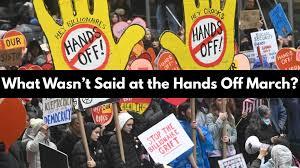 Tens of thousands filled the streets this weekend—marching, chanting, fists raised in defiance. It looked like a movement powerful enough to shake the earth. But beneath the banners and speeches,…
 In this week’s segment we discuss Secretary of State Rubio’s visit to Guyana and other nations, and U.S. efforts to control resources and interfere in the Caribbean region.


