Aleida Guevara, director of Che Guevara Studies Center; Henry Boisrolin,Haitian Democratic Committee in Argentina Coordinator; Rula Shaheed, director of the Palestinian Institute for Public Democracy; Marcelo Dias, member of the Front of Black Jurists
The People’s Summit vs. G20 and the International People’s Tribunal recently took place in Rio de Janeiro, Brazil, to counter the G20 Summit that occurred in the same city. Black Agenda Report Contributor, Claudia O’Brien Moscoso reporting from Rio, joined Margaret Kimberley for a discussion about the summit within the context of the increased imperialist focus on South America.
Margaret Kimberley: This is Margaret Kimberley, executive editor of Black Agenda Report. On November 19 I spoke with Claudia O'Brien Moscoso, who is a Black Agenda Report contributor, and a member of the Black Alliance for Peace Haiti/ Americas team. Clau is in Rio de Janeiro where the G20 Summit is taking place. She also attended the People Summit versus G20 and the People's Tribunal Against Imperialism, and she will talk to us about why these events are significant.
Thank you, Clau.
Claudia O’Brien Moscoso: Thank you so much for having me on Margaret.
MK: So tell us what the G20 Summit is.
COM: The G20 Summit, and this year, is being hosted in Brazil with a special focus on food insecurity. The G20 is a summit of the leaders of the top 20 economies around the world coming together to discuss issues around, as I said this year, food sovereignty. Well, they don't necessarily call it food sovereignty, but food insecurity. Also there are climate change trade deals, including Mercosur, which would be essentially like a free trade deal package with the European Union and other European countries, which is being heavily protested by a lot of the social movements, not just from Brazil, but throughout Nuestra America (Our America) that have been present for the past week or so.
So the G20 summit began November 18 and 19, those two days of country leaders speaking to each other, having bilateral meetings, etc. But two days prior, from November 14 to 16 there was a summit of social movements and mass based organizations, mostly from Brazil, but a lot of organizations throughout the region, throughout North America, discussing issues around the state of favelas. Or what we consider slums here, around women's issues, around race and colonialism, around as I said the Mercosur and free trade deals and indigenous rights. This past week has just been a lot of conversations with not just country leaders and economic leaders, but also social movement leaders and mass based organizations. A big theme this past week has been solidarity with Palestine. So in every event, there was either a speaker from Palestine or just reference to the genocide that's going on, and of course, US and Western role in the genocide.
MK: And you're a member of Black Alliance for Peace and of its Haiti/Americas
Team. Tell us a little about the Haiti/Americas team and why it's important for it to be represented at the People's Summit?
COM: The Haiti Americas Team has existed for four years now actually, and as it had started out as part of the Africa team, but as our other co-coordinators like to say, we became emancipated and became our own committee, and then developed into a team. And a lot of the work that we have been doing has been, I think, really pushing folks to understand that, especially right now, there's a huge push to make the multi security support mission in Haiti a full out UN peacekeeping mission. The Organization of American States (OAS) a day or two after Trump was elected, came out with a statement saying that it is important and necessary to make the Multinational Security Support (MSS) Mission now a United Nations peacekeeping mission and permanent military presence. And of course, Haitians have consistently rejected this notion and have consistently pointed to the fact that the “gang crisis,” is a crisis of imperialism. Because Haiti doesn't have arms manufacturers. The ports are owned by the elites. We see that a lot of arms and weapons are coming through the border with the Dominican Republic, and coming from Miami.
So this is very much a manufactured crisis to get a UN peacekeeping mission, and really, as Dr. Jemima Pierre says, who's one of the Team co-coordinators, to get a permanent military presence into Haiti, a permanent occupation. So a lot of the work that we do, not just Haiti, but throughout the region, is really organizing and building relationships with organizations in the region to struggle against our common enemy.
Last year, we launched the Zone of Peace campaign in three locations, Haiti, Cuba, and Washington, DC. And we’re still working on that campaign. In fact, one of the main reasons that I came to Rio and engaged in all of this work was to make contacts with organizations, particularly in the Global South, that understand the primary contradiction being US and Western and EU and NATO domination. For example, the U.S. Southern Command (SOUTHCOM) right now is expanding all throughout the region, but particularly along the Pacific Ocean and the Lithium Triangle. So building up unity in opposition to that in those areas is crucial.
There's a number of bases that are exploding up and down the Pacific Ocean and into the Amazon in Ecuador and Peru and Chile and Argentina. Right actually, one of the last articles I wrote for Black Agenda Report was explaining how SOUTHCOM currently is encircling the lithium triangle, and of the four countries that make up the lithium triangle, SOUTHCOM has a heavy presence in three of them, Bolivia being the only one that it doesn't have presence in, but certainly is trying to make its inroads. So part of the work that we do in the Haiti/Americas team is building out this network, and the struggle against US imperialism and Western imperialism in Nuestra América, understanding that both internal and external, imperialism and colonialism affect us in very similar ways and build unity around that. We also do movement support where we are asked to. For example, the Movimiento Afrodescendiente Nacional Ecuatoriano, a network of AfroEcuadorian organizations, is putting together a two day popular assembly of organizations and palenques (villages founded by the escaped enslaved throughout South America) in Ecuador and the region in early December to discuss issues of concern and how to consolidate national and regional organizing to move towards collective objectives. We’ve been asked to participate as members of the Haiti/ Americas Team to provide movement support in what organizations on the ground might need to facilitate moving towards unity.
I've said this often in conversation with comrades, that what we see in “cop cities” being built throughout the US are almost an internal expression of what the SOUTHCOM bases that are proliferating down here. I've seen it in Lima, Peru, and I've seen the way that these back to back joint military exercises have been used against people protesting. There's a huge security crisis in Peru, very similar to what's happening in Haiti, in fact, and not unsurprisingly, it is, you know, this violence is erupting at a moment when the SOUTHCOM bases are proliferating throughout the country when there's back to back SOUTHCOM military exercise, not just with SOUTHCOM, but with NATO forces. They call it interoperability. So that they are able to carry out their objectives even if there are no US troops on the ground, necessarily. They're practicing the same tactics and strategies to repress the population, to get control of our resources, and to continue this neo-colonialism and imperialism into our lands. I believe it was last year that the Monroe Doctrine turned 200 years old, we see that it's still ongoing, right? This is maybe just a new iteration of it, but it is ongoing.
MK: Just to let readers know this, SOUTHCOM is the US Southern Command, one of the command structures that the US has used to claim a right to have military control everywhere in the world, having divided up the world into these various military structures such as SOUTHCOM, AFRICOM, CENTCOM and so forth. But the Zone of Peace, that term came about as a result of a CELAC conference. Can you tell us briefly what CELAC is and when this idea of a zone of Zone of Peace developed?
COM: So CELAC is the Community of Latin American and Caribbean States but in Spanish. It is a formation of Latin American and Caribbean leaders whose structure was formed to sort of get away from US influence, and to have this regional structure that unlike the OAS is supposed to be a regional structure, but it is very much dominated and controlled by the US. So CELAC is an alternative version of that.
And so in 2014 in Havana, Cuba at one of the CELAC summits, it was declared that Latin America and the Caribbean should be seen and respected as a Zone of Peace. But since that state centered call for a Zone of Peace, we didn't necessarily see that translate at the grassroots level. So part of that Black Alliance for Peace sort of building out this campaign, and not just with us, but with various other organizations, and predominantly in Latin America and Caribbean, so in the Global South, we've developed this campaign that, among other demands, is in solidarity with Haiti and an end to the US intervention in Haiti, ending and expelling all 76 SOUTHCOM bases, and those are just the ones that we know of. Right.
Like I said that there are more bases being built even as we speak. So certainly that number, I'm sure, is outdated, ending colonialism and returning Guantanamo to Cuba and independent Puerto Rico, Guam and Hawaii. So a lot of the campaign is being built up through the bottom up right to actually uphold that state centered call that CELAC issued back in 2014 because we understand that, you know, change doesn't necessarily come from the top down, but exactly in reverse, bottom up.
And so really this is a call to mass based organizations and the grassroots to make the region a Zone of Peace and to expel nefarious forces that obstruct peace, like imperialism, like patriarchy, like colonialism, and so we see these, these forces in our region that explicitly stamp down on any kind of self determination or sovereignty. So it really is an effort throughout Our America/Nuestra América to really build that Zone of Peace and defend it as such.
MK: Thank you so much.
Margaret Kimberley is the author of Prejudential: Black America and the Presidents. You can support her work on Patreon and also find it on the Twitter, Bluesky, and Telegram platforms. She can be reached via email at margaret.kimberley@blackagendareport.com.
Clau O'Brien Moscoso is an organizer with the Black Alliance for Peace in the Haiti/Americas Team. Originally from Barrios Altos, Lima, she grew up in New Jersey and now lives between both countries.

 In this week’s segment, we discuss student protests by Black and brown youth in France against austerity measures and race-based inequality in the education system. But we begin with a discussion of…
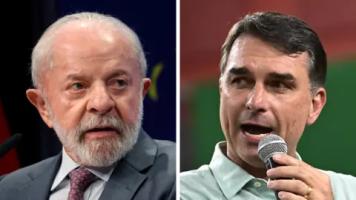 Brazil's incumbent president Lula da Silva finished second behind Flavio Bolsonaro in the first round of the presidential election. Because neither man received at least 51% of the vote, a run-off…
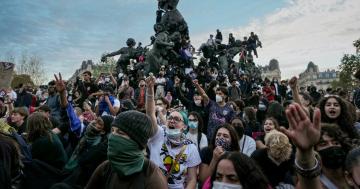 Students in France are engaging in mass protests. Hundreds of them have been arrested and injured by police, and many schools are closed. Annick Metefia joins us from Paris. She is a member of the…
 Ajamu Baraka of the Black Alliance for Peace joins Dimitri Lascaris on BettBeat Media for a conversation about something Western publics have not yet come to terms with — the fact that resistance to…
 Progressive candidates rarely remain so after winning public office. Zohran Mamdani is no exception, but his capitulation to New York zionists angered his supporters, and the people he hoped to…


