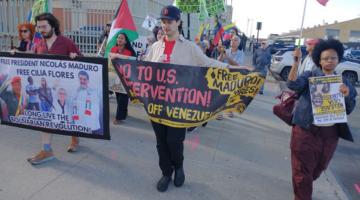
At a rally in California, activists demand that the U.S. lift sanctions against countries like Cuba and Venezuela. (Photo: Midia Ninja)
Venezuela's Vide Minister of Foreign Affairs, Carlos Ron, recently met with representatives from various organizations and social movements to discuss the latest U.S. effort to destabilize the Venezuelan government.
The United States has had a long history of domination in Latin America and the Caribbean, whether referring to the region as its backyard or front yard through policies like the 200-year-old Monroe Doctrine or the communist purge of Plan Condor in the 1970s and 1980s. US interference in Venezuela, especially since the triumph of Chavismo in 1999, has been largely focused on the country’s oil riches but also on defeating a popular socialist project so close to home. In a country that is home to millions of Africans, the need for a white supremacist settler colony like the US to squash any government whose political project gives power to the largely African, indigenous, and poor, working-class masses is a direct threat to its “international rules-based order.” From Cleveland interfering in the 1895 boundary dispute between Venezuela and neighboring Guyana (which has current day implications) to the 2002 3 day coup attempt that was turned by the people and restored Chávez to power, the US has had Venezuela in its crosshairs for centuries. In more recent history, the US launched what the late Glen Ford argued is a racist, imperialist war against Venezuela in recognizing opposition party leader Juan Guaidó as president and seizing Citgo and other assets to an unelected and largely unknown puppet leader, Juan Guaido. While Guaidó is largely yesterday’s news, the US has not stopped its interference in Venezuela’s internal affairs.
On February 8, Carlos Ron, Venezuela’s Vice Minister of Foreign Affairs for North America, met with representatives from social movements and grassroots organizations at The People’s Forum in New York, to discuss recent developments in the country and region, and to exchange in a true peoples to peoples dialogue, in which social movements across borders in Nuestra América have a rich tradition. After the United States announced plans to reimpose sanctions on Venezuela, it is necessary for those supporting self-determination for governments resisting US and Western domination to engage in such exchanges. US economic warfare imposed in the past decade did not result in regime change but is in use again. Popular organizations and social movements inside the US must resist their government’s latest interference effort.
On January 30, the US announced it would impose sanctions on the socialist government of Venezuela, impacting the country’s mining, oil, and gas sector, after Venezuela’s Supreme Court upheld a ban on opposition leader Maria Corina Machado holding political office. The ruling was expected, including by opponents of the government, but was the excuse needed for Washington to reimpose sanctions. As Roger Harris notes here, “Even the US business magazine Forbes expressed surprise at the reimposition of US sanctions on Venezuela’s gold sales and its threat to do the same with oil.”
Why would the US impose sanctions when they have failed in the objective of regime change and have instead imposed mass suffering and a wave of migration out of the country, also leading to the “crisis” now occurring at the border of the United States and Mexico? At the meeting, Carlos Ron spoke of the issue of Machado as being a potential trigger point for the US to once again intervene in Venezuela’s internal affairs and create conditions for another regime change attempt, except this time the face of the US-backed opposition will be Machado, instead of Juan Guaidó. In what Caracas calls “blackmail” US sanctions are a direct violation of Venezuela’s democratic process and interference in its internal affairs, simply for daring to pave a new path forward. The Barbados Agreements between the Venezuelan government and opposition forces, which saw the easing of sanctions, was never meant to “forgive crimes” as governor of Miranda state and member of the Dialogue Commission, Héctor Rodriguez said in a press conference on January 27th. It also never specified any one particular candidate to be reinstated and initially, Machado was not going to contest her ban until told otherwise by Washington.
In a time of US-backed crises in neighboring Latin American countries such as Ecuador, Perú, and a lawfare campaign in Colombia, what happens in Venezuela has regional and global implications. As Iranian Foreign Ministry Spokesman Nasser Kanaani said on February 1 in condemning this move, “It amounts to direct interference in other countries' internal affairs and (is) in violation of the United Nations Charter.” The imposition of sanctions from the past several US administrations proves there is no “lesser evil” for Venezuela in US politics. Iran and Venezuela have strengthened relationships as have many other countries that are targets of US and Western economic warfare have done to ease the effects of these sanctions. On February 8, Russia’s ambassador to Caracas told Sputnik that Venezuela has been able to stave off the worst of the effects of the sanctions on the people because of increased cooperation and coordination between Venezuela’s allies, including Russia. "Thanks to the government's timely action and, of course, to the expert assistance provided by its friends, specifically Russia, Venezuela has gradually minimized the negative effect of unilateral restrictions and achieved sustainable growth," Sergei Melik-Bagdasarov told Sputnik.
During the conversation with local organizers, Vice Minister Ron stated:
“Because of the sanctions, we’ve actually increased our food production tremendously and it’s even clean production. Not being able to import fertilizer, chemicals, GMOs (etc), we actually have clean food production. We went from a country that imported 80% of what it ate to 80% of food grown in Venezuela now.”
It is achievements and advances like this that Venezuela wants to highlight, and what the interests of ExxonMobil and other US imperialists want to stop.
Throughout the evening, Ron returned to the issue of supporting a government that is so readily demonized by the West and its lapdog media and affirming and celebrating the very real gains being made by a country that has a “political process and project that gives power to the people and they are the protagonists of that transformation.” He added, “I think the best way to defeat that (US/Western) narrative is to say what has happened, what has been positive.”
During the Q&A portion of the evening, the issue of a zone of peace in the region was raised, specifically what Vice Minister Ron thought was the relationship between grassroots organizations throughout Nuestra América (including those in internal colonies within the US) and revolutionary governments in supporting what CELAC called for in 2014. Referring to the territorial dispute over the Essequibo region between Venezuela and Guyana, Ron contends that a zone of peace and any grassroots-led campaign in support of that must deal with the issue of SOUTHCOM in a territorial dispute at the behest of oil giant ExxonMobil.
Certainly, a campaign whose first demand is to dismantle SOUTHCOM understands the role of the US and the collective west in impeding the self-determination of the peoples of Venezuela and Guyana (and the region as a whole) through militarism. If they cared about the people of Venezuela, they would not be imposing sanctions meant to harm them or using this tension point to push imperial and capitalist interests. What is clear is that the US wants the recently discovered oil off the coast of the Essequibo and does not intend to respect bilateral dialogue between the two governments to mediate the dispute. Simply put, it is only the people of Venezuela and Guyana that should have a say in what happens in the Essequibo region mediated through diplomatic means, not the US or ExxonMobil.
As Washington escalates its failed economic war on Venezuela via the reimposition of sanctions, popular organizations, particularly in the imperial core, must oppose their government’s attempts to interfere in the sovereign affairs of any country in Nuestra América. The past four months in Gaza have laid bare the horrors of the US and the collective West aiding its Zionist puppet “Israel” to carry out this genocide against the Palestinian people. Those in the imperial core and collective West arguably have a duty and responsibility to oppose their own government’s imperialism, and allow the people of countries constantly in the west’s crosshairs to build their own political projects and settle their disputes diplomatically without the interference of the US/west.
Clau O'Brien Moscoso is an organizer with the Black Alliance for Peace in the Haiti/Americas Team. Originally from Barrios Altos, Lima, she grew up in New Jersey and now lives between both countries.

 In this week’s segment, we hear about the ongoing uprising in France against neo-liberal austerity, colonialism, and white supremacy. But first, we discuss a new report that reveals a 25% decline in…
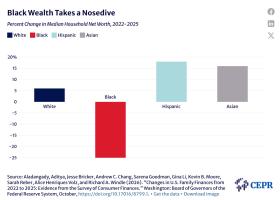 The Center for Economic and Policy Research (CEPR) recently reported on Federal Reserve data indicating that Black people in the U.S. have lost 25% of their wealth between 2022 and 2025. Whites,…
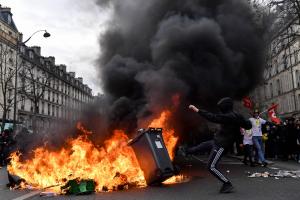 Bouna Mbaye is an activist, writer, and a member of the Pan-African League-Umoja, the Pan-African Brigade for Palestine, and the US Out of Africa Network. He joins us from Paris to discuss the…
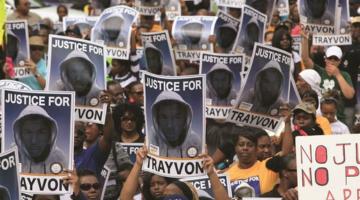 As Black Agenda Report is poised to celebrate its 20th anniversary, we reprint Glen Ford's commentary on the killing of Trayvon Martin and the impunity provided to his killer in a criminal justice…
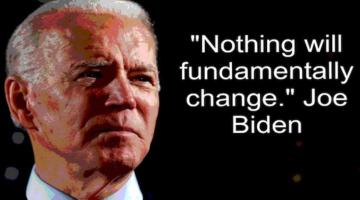 The Democratic Party is terrified of even small liberal reforms and will not abide left leaning democrats thwarting their plans for austerity and neoliberal orthodoxy.


