The engraved revolvers Erdogan handed out in Ankara showed that NATO has stopped pretending to be a defensive alliance and embraced its new role as the West's premier weapons trade fair.
“One year ago in The Hague, Allies committed to invest a lot more in defence – 5% of GDP by 2035. We’re already making remarkable progress. And they agreed to ramp up defence production and innovation. And here we are now, one year later in Ankara, already delivering results.
Throughout the day, Allies and industry, from both sides of the Atlantic, will reveal new major projects and sign contracts worth billions, literally billions of dollars. These are billions that are invested in our security, boosting our economies and supporting hundreds of thousands of new jobs. It’s money well spent.” — Mark Rutte, NATO Secretary General at the inauguration of NATO Defence Forum.
The North Atlantic Treaty Organization gathers every year in one of their eloquent summits with various heads of states flying in private, highly securitized jets, polluting the earth, to scheme for world dominance under the guise of the necessity of protection from enigmatic evil cloaked in Red, Green, and Yellow (namely, communism, Islam and China). This year’s summit, held in Ankara, Türkiye (no longer Turkey since it wants to disassociate from the North American animal), drew more trolling attention from spectators than actual material analysis of the summit. For example, MSNBC (MS NOW) and other mainstream liberal media fixate on Trump. The laughable behavior of the US president at the summit included calling Iranians “Scum” and referring to Japan as the Islamic Republic of Japan. What this caricaturing of Trump does is the reduction of the politics of the empire to the person heading the state. For example, many people voted for Trump instead of Kamala Harris, thinking that he would cease involvement in wars (e.g., he would end the war in Ukraine, end the genocide in Palestine, save American lives from dying in useless wars, etc.). So, the media fixates on his low ratings and unexpected behavior to lure voters into thinking that Trump is the issue and not the duopoly, or the empire for that fact. But analysing the summit beyond the trope of Trump, the supposedly feminist Nordic female leaders with distaste for Trump’s rhetoric á la Greenland, and so forth is crucial.
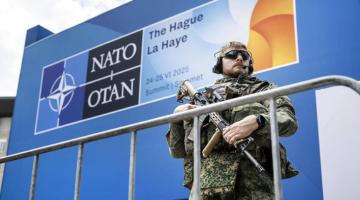
In 2024, at the three-day summit in Washington DC, we reported how NATO plans crimes to legitimize its existence. In 2025’s two-day summit, we wrote how NATO also legitimized its existence by promising to expand its military spending of each NATO country to 5% of GDP, with that money going to what we termed militarized industrialization. In 2026, the affair was similar — frantic Europeans trying to give their populations a modicum of comfort that they are sovereign countries while appeasing the diktats of Trump, who is threatening to increase the burden of US imperialism in Europe by bluffing that he would cut funds to NATO unless member states increase their GDP contribution to defence. In this year’s summit in the Euro-aspirant Türkiye, there is a certain dark poetry in the fact that when NATO's thirty-two heads of state gathered in Ankara this July, their host saw fit to send them home with engraved revolvers. Each leader received a vintage .357 Magnum — a Turkish-made Gümüşay, complete with live ammunition, their names etched into the barrel like trophies at a hunting club. The Belgian prime minister had to hand his over to airport police. The Canadian leader joked that his maple syrup gift “undermatched" the Turkish present. The EU Commission president announced she would donate hers to a military museum.
The revolver, six bullets, and the wooden box bearing the NATO compass rose: this was a statement of what the alliance has become in its eighth decade — a gun club for the declining West, where the weapons are real, the threats are manufactured, and the only growth industry is fear itself.
The Theater of Deterrence
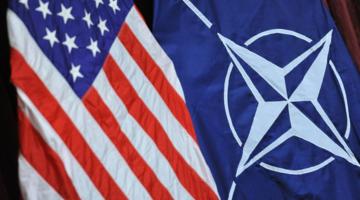
NATO Secretary General Mark Rutte opened the Ankara summit with a phrase that has become the organization's secular prayer: “an attack on one is an attack on all.” Article 5, the mutual defense clause, was reaffirmed with what the official communiqué called “ironclad commitment.” Yet the iron was rusting even as the words were spoken. The most significant attack on a NATO member in recent memory — Donald Trump's open demand for the acquisition of Greenland from Denmark — came not from Moscow or Beijing, but from the alliance’s own dominant power. Danish Prime Minister Mette Frederiksen responded by invoking the very Article 5 that Trump would theoretically invoke against himself. “We are ready to defend any inch of NATO, including our own territory,” she said, describing Article 5 protections as an insurance policy and adding that “Denmark would not be able to defend itself without NATO.” She further added that the US cannot defend itself without NATO.³ The absurdity was lost on no one except, apparently, those writing the official declarations at the end of the summit.
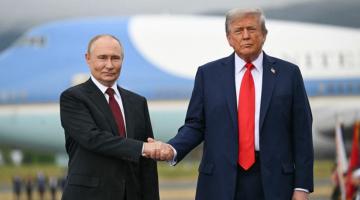
Trump arrived in Ankara more like a creditor than a partner. He told reporters he was “very disappointed with NATO” for failing to back the US-Zionist war on Iran and for not meeting his 5% GDP defense spending demand more expeditiously — he is forgetting the impending recession plaguing European economies and the ongoing deindustrialization and loss of jobs. Trump threatened to “remove all our soldiers out of Europe.” He praised Erdoğan as “a very strong leader” while simultaneously treating his European allies with the contempt of a landlord addressing delinquent tenants. The Dutch NATO Secretary General, who last year referred to Trump as “daddy,” spent the summit calculating how to flatter the American president with talk of “the Trump trillion” — the cumulative defense spending of European members since 2017.
This is NATO's internal contradiction laid bare: an alliance supposedly built on collective security that functions increasingly as a protection racket, where the protector is also the primary threat, and the “defended” are expected to pay protection money in the form of ever-expanding military budgets. This is the theatre of what Ajamu Baraka calls US Gangsterism. Alas, these servile countries just witnessed the US commit genocide, kidnap President Maduro, strangle Cuba and bar its medical and energy needs, and launch war on Iran.
The 5% Solution: Militarization as Economic Policy
The 2026 Ankara summit will be remembered, if at all, as the moment NATO formally transformed itself from a military alliance into an industrial planning committee for the arms sector. But this is not a new observation. Materialist analysis of US-led imperialism always looks beyond the fog of war and understands that imperialism walks on two legs, military and finance. The latter is often obscured by the more pronounced form of imperialism, which is militarism. But military might without economics reduces the comprehensiveness of the term imperialism to mere expression of military power (and hence the liberal usage of the term that any military power is imperialist — Azerbaijan is as imperialist as US, since both have transgressed borders). In other words, and as eloquently put by Michael Hudson, Finance as warfare, imperialism is meant to make us think how the sword intervenes to preserve the dollar, and the dollar is used in backing and justifying the sword. Ergo, the summit’s continuation of militarization from previous years shows how Europe’s fickle politics are adhering to the diktats of the US and in fact contributing to financing the American war machine.
The figures announced in the Turkish capital are staggering in their implications: €70 billion pledged to Ukraine for 2026 alone, with a commitment to sustain “at least equivalent levels” in 2027; more than €50 billion in new procurement deals for “deep precision strike capabilities,” integrated air and missile defense, unmanned systems, and intelligence assets; €27 billion for fuel infrastructure; over $40 billion for counter-drone capabilities; and a “Call to Action” to financial institutions that has already mobilized $217 billion in private capital for defense investment — these are the financial institutions complicit in this warmongering, militarized mentality: including Banco Santander, Barclays, BNP Paribas, Citi, Deutsche Bank, NatWest, PKO Bank Polski, Danske Bank, the Business Development Bank of Canada, and the NATO Innovation Fund.
Rutte, speaking at the NATO Summit Defence Industry Forum, put it plainly: “There is no strong defence without a strong defence industry.” The forum’s very existence — a parallel summit bringing together arms manufacturers, bankers, and government officials — reveals what NATO has become. The “Made in NATO” branding applied to new multinational weapons programs is a marketing strategy for an alliance whose primary product is no longer security but arms contracts.
The new Strategy for Industry-NATO Cooperation (SYNC), the “Front Door for Industry” initiative, the Innovation Scale-Up Package — endless fashionable names that sound more like a business than a military doctrine. They are business development tools. NATO has become, in effect, the world’s largest defense trade association, with 32 member states serving as its sales force and one billion citizens as its captive market. And these billion citizens’ pension funds are used to finance this militarized industrialization (i.e., banks, pension funds, insurers, private equity and venture capital funds, private lenders, hedge funds, and family offices are all contributors to this armament mentality).
The economic logic is transparent. European economies are stagnating. The EU’s much-touted €800 billion rearmament plan, announced by Ursula von der Leyen in Ankara, represents an attempt to substitute military Keynesianism for genuine industrial policy. The theory — never stated openly but implicit in every announcement — is that building missiles and drones will somehow restart Europe’s economic engine. It is the same logic that drove the US military-industrial complex during the Cold War, now exported to a continent that has spent eight decades outsourcing its security to Washington and its economic imagination to Brussels.
The Ballistic, Long-Range, yet “Defensive” Missiles Summit
If the 2025 Hague summit was defined by the 5% spending commitment, Ankara 2026 was the “Missile Summit.” The agreements signed in the Turkish capital will, if implemented, transform Europe into a continent bristling with offensive weapons pointed eastward (Russia and China) and southward (Africa).
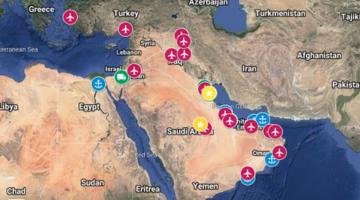
Germany — the nation whose militarization twice devastated Europe in the twentieth century — is now acquiring American Tomahawk cruise missiles, with Chancellor Friedrich Merz proudly announcing the deal as closing “an important strategic gap in our defense” (emphasis added). The Tomahawks, ground-launched variants capable of striking deep into Russian territory, represent a qualitative escalation in NATO’s offensive posture. Similar to the reactionary Gulf regimes who stationed American weaponry in their territory to be hunted down one by one by Iran, Europe somehow thinks that putting these already depleted stocks of weapons on their territory is defensively effective and will help strike Russia when the need arises.
The Patriot missile manufacturing scheme is perhaps the most revealing. Trump announced plans to grant Ukraine a license to produce Patriot interceptors — a technological and industrial fantasy given that Ukraine lacks the facilities, the security, and the supply chains for such production. So, we are being told that Ukraine will be able to build the Patriot missiles on their territory, which is touted as military industry growth. But imperialism relies on monopoly of knowledge — they will provide guidance on how to build a missile but will not transfer the knowledge to engineer everything from A to Z. Second, this is part of the military-financial nexus, whereby accumulation takes place through fictive capital development (i.e., contract is being given to Lockheed Martin, stocks rise, they deliver some equipment to Ukraine to begin building said factory). But isn’t Ukraine’s airspace compromised? How can they have a local production when they cannot defend themselves from Russian strikes, let alone hypersonic and ballistic ones, which Iran has proven to be indefensible? Therefore, any promises of building Ukrainian production is assumed to mean that Ukraine has air superiority over its territory and can defend itself from tiny drones and Russia’s advanced missiles. The real beneficiaries will be European defense giants like Rheinmetall, which will establish “maintenance centers” that can be converted to production lines at the stroke of a pen. Poland, hungry for industrial entry into Western missile supply chains, has already volunteered to help Ukraine establish production. What this ultimately means is that European financial and military resources will be dedicated to the war of attrition happening in Ukraine.
This is the arms trade’s eternal logic: today’s repair center becomes tomorrow’s production line. Today’s defensive interceptor becomes tomorrow's offensive platform. And the “Ukrainian” production of Patriot missiles will likely be Ukrainian mostly on paper, with German factories doing the actual work while Kyiv provides the political cover and the cannon fodder of its citizens.
The Lockheed Martin-Rheinmetall agreement to manufacture ATACMS ballistic missiles in Germany — “the first production of ATACMS missiles outside the United States” — completes the picture. “Current European demand alone is estimated at between 600 and 800 missiles annually.” Europe is being rearmed for offense and war.
Ukraine: The Permanent Proxy
The €70 billion pledged to Ukraine at Ankara — down from the previous year’s commitments when accounting for inflation and currency fluctuations — masks a deeper reality: NATO's European members are growing weary of the proxy war. The Netherlands, one of Kiev’s most enthusiastic backers, announced it had reached its limit, with Defense Minister Dilan Yeşilgöz-Zegerius stating plainly, “We don't have opportunities anymore as the Netherlands because we have done so much. We are at our limit.” Slovakia’s president Peter Pellegrini revealed that Hungary, the Czech Republic, and other unnamed states also refused to participate in the aid package. “Slovakia was not alone in this attitude. Our position is that we will not help with weapons or financially participate in the further arming of Ukraine.”
At the same time, the official declaration from the summit insists on “unwavering support” and “sustaining at least equivalent levels” of assistance. The disconnect between rhetoric and reality is the defining feature of NATO’s Ukraine policy of doublespeak. The alliance cannot admit that the proxy war has failed to achieve its stated objective — the “strategic defeat” of Russia — without undermining the entire ideological edifice of NATO. And so the pledges continue, the weapons flow (in diminishing quantities), and the Ukrainian president is reduced to begging for Patriot air defense systems at summit after summit, receiving photo opportunities in return. While it might not appear to be visibly clear of the clown/actor-turned-politician, Mr. Zelenskey is clearly being humiliated. Ukraine is not a member of NATO, yet it is expected to fight the alliance’s war, absorb its casualties, and destroy its own infrastructure in the process — all while being told it may join the club at some unspecified future date.
Global NATO and the Institutionalization of War
As NATO’s history is clear, the alliance is not defensive. Since no one ever attacked the alliance and all its operations — from Yugoslavia to Afghanistan, from Iraq to Libya — none of these were on its territory. This summit was not about defending Europe. It was about institutionalizing permanent war as the organizing principle of Western political economy. It keeps expanding and then complains that the enemies are at the gates, which works in tandem as an ideological and media policy of the alliance to scaremonger their population into the necessity of defending their countries and European lifestyles from an encroaching elusive, enigmatic force. NATO’s mindset is akin to what the late Michael Parenti described about US imperialist media when it comes to Qaddafi and Libya, which had a population of just over two million and an army no bigger than 50,000 troops: “Qaddafi, I remember going around. People would be talking. They be Qaddafiying, Qaddafi. What about Qaddafi? Qaddafi! Qaddafi! Qaddafi is going to get your momma! Qaddafi under your bed, watch out!”. And this talk of an impending attack by the so-called axis of autocracies is only an illusion to scare the masses and acquiesce them into accepting the institutionalization of war.
But when we look at the supposed enemies of the West, where are they and how are they faring? Russia’s economy is smaller than Italy’s and its military is bogged down in the attritious proxy war in Ukraine. China is in east Asia and has no military footprint expanding westwards. Democratic People’s Republic of Korea is self-actualising its communist project away from the buzz of US dollar dominance and cannot be bothered by the west which is strangling the country and denying it any conciliatory effort to reunite with its southern family (Republic of Korea, an attendee of the Summit). Lastly, Iran, which withstood two unprovoked aggressions by the zionist-American nexus in 2025 and 2026, with Europe suffering from such escalation due to oil deliveries backlogs, has not attacked any country and would in fact prefer to partner with Europe as much as it is partners with Russia and China, since its policy is not adversarial, but built on civilizational merit and understanding that people who work together can survive. But Europeans shoot themselves in the foot and stand with the Americans by regurgitating expired talking points that Iran should not have nuclear weapons and that the Strait of Hormoz should be opened (it was open before the unprovoked attack and the militarization of the strait by the US, turning Freedom of Navigation to Freedom of Militarization). In short, the “hybrid threats” and “recurrent shocks” cited in the Ankara declaration are sufficiently vague to encompass anything from cyberattacks to migration to energy price fluctuations — a catch-all justification for permanent militarization.
The Decline Behind the Deterrence
NATO’s own polling reveals what the official communiqués cannot admit. An internal survey conducted before the summit found that only 43% of Americans believe the alliance would honor Article 5 if the US were attacked — “the lowest level of confidence among the bloc's 32 members and well below the 57% average.” Support for Ukraine has slipped from 59% to 55%. Favorable views of Russia and China are rising across member states despite the official narrative of existential threat.
Trump’s America First rhetoric is not an aberration but an expression of a deeper truth: the American public, like the European public, is increasingly skeptical that NATO serves their interests. The alliance’s response — more spending, more weapons, more summits — addresses the symptoms of this crisis while accelerating its cause. When NATO becomes indistinguishable from the arms industry, when its summits are indistinguishable from trade fairs, it ceases to command the loyalty of citizens who see their healthcare, education, and infrastructure deteriorating while their taxes fund missile systems they will never see used in wars they never agreed to.
The Ankara summit’s most significant achievement may have been the HALO initiative — not the space-based satellite constellation, but the acronym itself: Hybrid Alliance Layered Operations in Space. It captures the essence of NATO’s current trajectory: hybrid (neither war nor peace), layered (bureaucratically complex), operational (always active), in space (expanding endlessly into new domains). The military-industrial complex has discovered that space, like cyber technology before it, offers infinite frontiers for procurement, research, and threat inflation.
The Gun Club at Twilight
NATO in 2026 is an alliance in search of a purpose that its own success has rendered obsolete. The Soviet Union is gone. What remains is the machinery of institutional self-preservation. The 5% GDP target, the “Made in NATO” procurement, the Defense Industry Forum, the financial sector “Call to Action” — these are not responses to external threats but internal necessities. NATO must spend because spending is what NATO does. NATO must arm because arming is what NATO is. And NATO must identify enemies because without enemies, there is no rationale for NATO.
The revolvers that Erdoğan distributed to his fellow leaders were, in the end, the perfect symbol of this logic. A weapon from a bygone era, presented as a collector's item, loaded with live ammunition, and received with the nervous laughter of people who know they are playing a dangerous game. Six bullets. Thirty-two leaders. One billion citizens told they are being defended by an alliance that cannot defend itself from its own contradictions.
The guns will be deactivated, donated to museums, or locked in embassy safes. But the arms race they symbolize continues, fueled by the same manufactured fears that have sustained NATO through three ages of existence. The Cold War enemy was communism. The post-Cold War enemy was instability and the promotion of democracy. The current enemy is Russia, Iran, China, and whatever “hybrid threat” can be conjured next — or what brings western imperialism and zionism together is what they term the Green-Red alliance of Islam and Communism, which is why the continued attacks on Cuba and its designation as a terrorist persist.
In Ankara, NATO’s leaders posed for photographs, signed declarations, and accepted their engraved weapons. Behind the smiles and the communiqués, the alliance’s core truth remained unspoken: it is not Russia or China that threatens NATO’s survival. It is the slow, grinding realization among its own citizens that the guns are pointed in the wrong direction, the money is flowing to the wrong hands, and the “collective defense” they are paying for defends nothing so much as the profits of those who sell the guns.
The revolver with six bullets sits in its wooden box. The alliance it represents has far more ammunition — and far less justification for using it.
Bio: Essam Abdelrasul Bubaker Elkorghli is a Libyan doctoral researcher at the University of Illinois at Urbana-Champaign, researching imperialism, ideology and education with a primary focus on Libya. He serves as the assistant editor to the Middle East Critique Journal, and member of the Global Pan-African Movement. He writes frequently for the Black Agenda Report and Pambazuka News. His Twitter.




 The Bush administration had long planned a global war for U.S. hegemony, and the attacks of September 11 provided the perfect pretext to put those plans into motion.
 Oklahoma prison inmates were making political calls for a conservative Super PAC during the primary.
 Longtime attorney Flint Taylor’s new book tells the story of the People’s Law Collective, which grew out of the radical movements of the late 1960s.
 The Trump administration has already cut off Cuba’s access to oil. Now it’s attempting to starve the Cuban people, targeting the country’s capacity to grow, process, and import food — unless it buys…
 Fergie Chambers is an American philanthropist who was arrested on July 10 in Ibiza, Spain, by order of the Trump Administration.


