U.S. launched Christmas Day strikes on targets in Nigeria.
The Alliance of Sahel States are fighting against western backed terrorists. But neighboring Nigeria is a western puppet state and does not protect its own people or territorial integrity, choosing instead to back U.S. dictates.
Security crises in West Africa cannot be understood in isolation but as reflections of a state’s prioritization of popular sovereignty or foreign alignment. Unlike Nigeria, the African masses in Burkina Faso, Mali, and Niger are strategically organized to bolster national security and Pan-African unity. From April 25-26th, the Islamist terrorist group Jama’at Nusrat al Islam wal Muslimeen (JNIM), in coordination with the Tuareg separatist movement the Front de libération de l’Azawad (FLA), conducted attacks on several cities across Mali., According to Africa Corps, the Russian paramilitary group that assisted in the repulsion of the assault, the number of fighters ranged from 10,000 to 12,000, signaling one of the largest security crises the Sahel has seen in years. During this massive assault, FLA/JNIM fighters captured the city of Kidal in Northern Mali; 16 people were injured, and Mali’s Defense Minister General Sadio Camara, along with his second wife and two grandchildren, were killed by a suicide car bomb that drove into their residence in Kati.,,
By April 27th, state media reported that Malian and Russian armed forces successfully repelled the attack, neutralizing over 1,000 fighters and destroying over 100 vehicles. Moreover, Niger’s government announced on April 30th that the Unified Force—the joint military force of Burkina Faso, Mali and Niger—conducted “intense air campaigns” that day in defense of Mali., As of April 2026, the Unified Force expanded to 15,000 troops from its initial 5,000 when it was founded in December 2025 to combat terrorism across the Sahel.
The Mali military junta interpreted the terrorist attacks as a proxy war waged by France and its European allies, a view shared by much of Mali’s civil society. On April 28th, President Goita described the attacks as part of a "vast destabilization plan conceived and executed by terrorist armed groups and the foreign sponsors of [FLA] who provide them with intelligence and logistical means." This perspective echoes statements made in late 2024, when JNIM attacked tankers to siphon Mali’s fuel supply. At that time, Foreign Minister Abdoulaye Diop also labeled the situation a "proxy war" and questioned the attackers’ military capacity: "These terrorist groups have drones. Where do they come from? Who manufactures them? Who provides them in areas where people cannot even eat?" That same year, Ukraine’s military intelligence spokesperson, Andriy Yusov, asserted that his country had provided "necessary information, and not just information" to Tuareg armed groups to conduct attacks in Mali.
Recently, Bamada.net, a local Mali newspaper, found evidence of Ukrainian involvement in the April 25-26th terrorist attacks. They published an image of a reel containing light fiber-optic cable coils sitting in a market stall in the Tessalit region of Northern Mali, where terrorist groups have been actively operating for over ten years. Mali journalists traced the logo on the case—“3D Tech”—back to a Ukrainian military manufacturer bearing the same name. The journalists claim that these coils guided FPV drones used by JNIM to their targets, and that the seller said it was found in the bags of JNIM terrorists killed by civilians during waves of the April 25th attacks.
Additionally, Ibrahim Sega Konaré, the Bamako-based vice president of the Pan-African anti-imperialist organization Plateforme Anke Transition Dèmè, stated in a video released on Sovereign Media’s X account:
“JNIM… and the separatists are being funded, armed, trained and controlled by the French junta… French imperialism in Africa… and the first victims of this attack were Muslims who were in mosques… they attacked the same mosque near the home of his Excellency Lieutenant General Sadio Camara… [T]he terrorist attacks we have suffered here in Mali and indeed throughout the [Alliance of Sahel States (AES)] have nothing to do with religious issues. It is simply the hidden hand of French imperialism.”
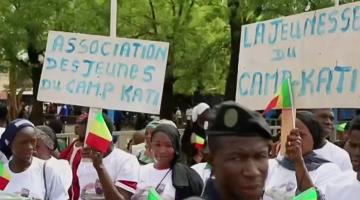
Konare is not alone in his assessment, which is likely attributable to France’s (neo)colonial past and the resulting anti-French sentiment in the AES member states. Fassery Traoré, president of the Coalition Together to Save the Sahel (CPSS), told the People’s Dispatch that many Malians no longer view the April 25th attacks as mere “terrorism, but as a proxy war against Mali’s sovereignty.” As a result, the Mali people have shown strong support for their military junta, and civil organizations throughout the AES have expressed solidarity with them. According to a journalist at the People’s Dispatch, thousands of citizens packed the Mamadou Konate Stadium in Mali’s capital Bamako—one of the cities attacked on April 25—to attend a gathering themed “For a Mali standing tall, united, at peace and secure.” At the May 9 gathering, Ibrahim Cissé, president of the National Youth Council of Mali (CNJ), insisted that the youth “refuse to be a youth of spectators”, and called on more young Malians to enlist in the army to support the fight against terrorism. Additionally, live social media footage showed roughly 1,000 people gathered in Niger’s capital Niamey, on April 30th, 2026, expressing their solidarity with Mali. Crowds at the Djado Sekou Cultural Center chanted slogans like “down with the imperialists, “down with the terrorists and their sponsors,” and “long live the AES,” as a photo of slain General Camara was shown overhead. While the Malian people rally behind their government as a sovereign force, the Nigerian populace remains fractured and unsupported by their leadership.
Both Nigeria and the AES face similar threats from terrorism, yet their responses reveal fundamentally different relationships to sovereignty and power. While the masses in the AES have recognized terrorism as a symptom of imperialist destabilization and mobilized to defend their sovereignty, the Nigerian government remains trapped in a logic of dependence. Even as the AES formed a unified military force, President Tinubu approved U.S. AFRICOM airstrikes on empty fields in Northwestern Nigeria to curb the U.S.’s economic competitors in Africa. This contrast highlights a fundamental driver of security outcomes in the region: it is not a lack of capacity, but a divergence in political will and anti-imperialist consciousness. Nigeria responds swiftly to Washington’s demands while ignoring the needs of its own citizens, whereas the AES seeks to reclaim agency from foreign imperialist powers.
Towards the end of 2025, a narrative picked up momentum through U.S. media and policy circles that there was a Christian genocide in Nigeria, alongside calls for military intervention. While those claims have been disputed by the Nigerian government, it faced significant diplomatic pressure from white Christian nationalists in the U.S. government, and insecurity was nonetheless a major problem in Northeast Nigeria. To repel both, Nigerian President Bola Tinubu gave US AFRICOM the green light to launch airstrikes in Northwestern Nigeria. The $32M “Christmas Day” missiles were intended to target Islamic militants killing Christians in Nigeria, but landed in the rural town of Jabo, Sokoto State. Locals confirmed there was no visible terrorist activity. Moreover, Sokoto State is in the Northwest, while terrorist groups like the Islamic State West Africa Province (ISWAP) have a stronger presence in the Northeast.
Five months after the “Christmas Day” strikes, Nigeria conducted a joint operation with U.S. AFRICOM that was more successful, albeit largely symbolic. On May 16, 2026, U.S. AFRICOM reportedly launched airstrikes in Northeast Nigeria that killed ISWAP second-in-command Abu-Bilal al-Minuki and roughly 40 of his lieutenants. U.S. AFRICOM commander General Anderson testified that “Nigerians have been instrumental throughout the last several months…developing the target, helping us with the intelligence and providing support in order to [respond to the security crisis]” before the U.S. House and Senate Armed Services committee on May 19, 2026. It could be argued that U.S. AFRICOM is respecting Nigeria’s sovereignty—refusing to respond to security threats in the country without its explicit cooperation. However, Nigeria’s military appears emboldened to tackle insecurity when prompted by foreign countries, rather than the demands of its people.
Moreover, testimony from former U.S. AFRICOM General Michael Langley suggests a self-serving, ulterior motive behind U.S. military action in Nigeria—competing with Russian and Chinese influence in Africa. In a congressional hearing back on April 3, 2025, General Langley identified China and Russia as active players in the region, the former working to change “international rules-based order” and the latter “[seizing] opportunities created by chaos and instability.” He says it is that the U.S. must “deter these nations… from their goals on the African continent” to protect itself and its interests.
Additionally, U.S. House Representative Riley Moore (R-WV) provides more evidence of the U.S.’s imperialist interests in Nigeria. Apart from introducing a bill barring Chinese citizens from applying for student visas and posing in front of an El Salvador prison with illegally kidnapped immigrants like Kilmar Abrego Garcio, Rep. Riley Moore passionately spoke against the religious persecution of Christians in Nigeria last year. In an official report titled “Ending the Persecution of Christians in Nigeria”, he reveals why the U.S.—a country based on genocidal Indigenous land theft and African chattel slavery—deeply cares about them too.
After labeling Nigeria a “Country of Particular Concern” (CPC), President Trump called on Rep. Moore, Chairman Tom Cole, and the House Appropriations Committee to investigate and produce a report on the persecution and murder of Christians in Nigeria. On February 23, 2026, they presented one with a few recommendations to the White House. The first recommendation calls for a bilateral agreement between the U.S. and Nigeria’s government to “protect vulnerable Christian communities” and “eliminate jihadist terror activity in the region”. It also calls for the U.S. and Nigeria to engage in “further economic cooperation” and to “counter adversaries in the region, including the Chinese Communist Party and Russian Federation.” A bullet point under that recommendation states that such an agreement should include a commitment by Nigeria to “[c]ontinue and expand security cooperation with the United States, including by divestment of Russian military equipment for American military equipment through sales and financing.”
Based on former General Langley’s testimony, one could deduce that the recommendation to counter Chinese and Russian influences is well-intentioned. According to him, the “Chinese Communist Party” (CCP) breaks international law to establish regional hegemony in Africa, and Russia is an opportunist exploiting the existing insecurity on the continent for its own interests. But unlike the case of Ukraine, there is little to no evidence to suggest that the CCP or Russia sponsored terrorism in Nigeria, let alone the persecution of Christians in Nigeria. And so, the recommendation seems to take advantage of the existing insecurity in Nigeria to solidify U.S. influence in the country, something former General Langley accused Russia of doing on a continental level. His testimony, alongside the report presented by Rep. Moore, suggests that the U.S. is pushing for military action in Nigeria to compete with Russia and China for influence in Africa, and is taking advantage of the security crisis in Nigeria to do so.
Nigeria did not just engage in joint military operations with the U.S. last year. On December 7, 2025, President Tinubu deployed the Nigerian Air Force to Cotonou, Benin, to assist Benin, the Economic Community of West African States (ECOWAS), and French armed forces in quelling a military coup in the country—which he called “a direct assault on democracy.” Scarcely seen Tucano fighter jets flew over Cotonou within 24 hours of the bloodless event. This is another instance in which the Nigerian military suddenly becomes competent at managing insecurity at the request of external actors. Interestingly, the Nigerian Air Force has not deployed as quickly to tackle domestic security challenges that resulted in significant casualties.
In the face of increasing kidnappings and terrorist attacks, Nigerians appear to be helplessly disorganized. On March 17, 2026, multiple suicide bomb attacks killed at least 23 and wounded over 100 people in Maiduguri, Borno State. President Tinubu released a public statement expressing solidarity with the people of Borno and mourning those who lost their lives. Yet for the next two days, President Tinubu honored a state visit to the United Kingdom, to “strengthen bilateral relations [between Nigeria and Britain] and explore avenues for collaboration on issues such as immigration, trade, investment, and cultural exchange.” The visit yielded no tangible results for Nigeria’s security crisis. On May 28, 2026, Nigeria’s Federal Ministry of Education condemned the abduction of dozens of children and teachers from schools in Oyo and Borno State, roughly 2 weeks after the events occurred.,, As of May 18, the mathematics teacher, Michael Oyedokun, was beheaded in a video allegedly released by bandits. Moreover, images circulating online depict the kidnapped children sleeping in the forests, bearing large cut marks on their backs, and twisting in pain while blindfolded as the kidnappers exposed their skin to burning plastic cartons.
In the most ironic fashion, security forces could be seen fleeing the scene of a protest in Ibadan, Oyo State, where participating civilians were beaten by state-sponsored thugs. That day, Ibadan residents, young and old, gathered to demand the immediate and safe release of abducted students and teachers in the state. Over fifteen buses transporting thugs were reportedly mobilized to disrupt the protest, where they assaulted protestors and allegedly shot and injured multiple individuals. According to eyewitness sources at the venue, the planned attack was led by the self-appointed National President of the National Association of Nigerian Students (NANS) and Senior Special Assistant to the Governor on Student Matters, Victor Olojede.
However, when the daily victims of Nigeria’s insecurity crisis include members of the bureaucratic ruling class, security forces are more responsive. A day after Nigerians demanding the immediate release of abducted students and teachers were left defenseless by Nigerian police to be beaten by state-sponsored thugs, gunmen reportedly abducted the sister and twin nephews of the former Minister of Power and All Progressive Congress (APC) 2027 gubernatorial aspirant in Oyo State, Chief Adebayo Adelabu. Olaide John-Paul, the youngest of Adelabu’s five children, and her twelve-year-old twin sons, were kidnapped at around 7:30 am as she was on her way to take the children to school in Ibadan. John-Paul had reportedly worked at the Central Bank of Nigeria (CBN) and First Bank Pension Custodian before voluntarily retiring last year at 42. During a coordinated operation by the Force Intelligence Department’s Intelligence Response Team (FID-IRT) that involved “sustained intelligence gathering, surveillance, and tactical operations”, John-Paul and her twin sons were rescued at approximately 7:30 pm on June 6. This was after they spent only three days in captivity. Meanwhile, as of May 31st, President Tinubu approved the recruitment (not deployment) of 1,000 forest rangers in Oyo State to find the kidnapped children and schoolteachers. This was after they had been held captive for sixteen days. To date, they have not been rescued.
The Nigerian state’s disregard for popular sovereignty is also reflective of the class-based oppression that characterizes security responses. In the span of two weeks, Nigerians in Oyo State were beaten by state-sponsored thugs for demanding the government respond to the poor victims of insecurity, whereas security forces in the same state rapidly deploy to rescue relatives of a traditional ruler and aspiring governor candidate in the same state, which includes a woman who voluntarily retired after less than 30 years career in banking and a relatively obscure employment history.
There is also a regional bias in the security responses. While forest rangers have been approved for recruitment in Oyo, the same process has not occurred in Borno, where children and teachers were kidnapped (and remain in captivity as of date). The lawyer and Senior Advocate of Nigeria, Femi Falana, urged President Tinubu to make the same commitment in the Northeastern state in a statement two days after Tinubu announced the recruitment of forest rangers in the Southwestern state of Oyo. This is likely to exacerbate spatial inequalities in multidimensional poverty if left unaddressed. In 2018/19, the World Bank found that 67.3% of households in North Central, North East, and North Western zones of Nigeria were multidimensionally poor, whereas the figure was only 25% for households in South. The slower response to the kidnapping of school children and teachers in Borno versus Oyo State could have a disproportionately negative impact on weighted indicators of multidimensional poverty in Borno State, including educational enrollment and educational attainment, as well as monetary poverty (via the payment of hefty ransoms of over 2000% of Nigeria’s monthly minimum wage).,
To make matters worse, the APC—the dominant political party in Nigeria—fails to contextualize the nation’s rising insecurity, as was done multiple times in the foregoing analysis. This could also explain their mismanagement of the security crisis. Besides his willingness to cooperate with the U.S. military on counter-terrorism efforts, President Tinubu’s public statements about insecurity over the past year suggest that he and the APC lack a clear understanding of its root causes.
During his UK state visit, President Tinubu had a broadcast meeting with UK Prime Minister Keir Starmer. There he expressed his commitment to improving the welfare of Nigerians and working with Britain to do so. He also stated that Nigeria is challenged by being the “largest country in West Africa”, by “terrorism… [which] comes from the Sahel”, and by the “conflict of… climate change..” President Tinubu didn’t elaborate. On May 27, 2026, Nigeria celebrated the first of a two-day public holiday for Eid-al-Kibr. President Tinubu reportedly attended an observation that day, where a Channels Television correspondent asked Tinubu, “Sir, what’s your message to Nigeria [as it pertains to] the issue of security?” He responded with vague calls to obedience to the rule of law and the wishes of Allah. According to Punch Nigeria, President Tinubu said that “[n]owhere in the holy teachings does it say you should engage in banditry or take a human life.” But online, many Nigerians reacted to the raw footage of his interview (on X), some with humor and others with rage. Word for word, President Tinubu replied to the interviewer: “Issue of insecurity. That is the lawf’—that is obedience of law—nowhere… in the holy teaching…that… you should engage in banditry.” While the fixation on speech may seem unnecessary, the mixed reaction from the Nigerian masses suggests that President Tinubu has not calmed their anxieties about insecurity through his words or his actions.
The divergent security outcomes in the Sahel reveal a fundamental conflict between anti-imperialist sovereignty and neocolonial dependence. In Mali, the AES states experienced one of the largest terrorist attacks in years, yet repelled the threat through unified mass mobilization, grounded in the popular understanding that these attacks were an imperialist proxy war waged by former colonizers. Conversely, the Nigerian government has sacrificed its independence to protect U.S. imperial interests, failing to articulate the root causes of insecurity while its military responds only when prompted by foreign powers. The class and spatial inequalities Nigeria’s security responses expose a government that serves Washington and local elites ahead of the Nigerian people. Therefore, the logical conclusion for the Nigerian masses is clear: they must confront the foreign imperialist machinery and its domestic collaborators who dictate security priorities. This necessitates organized resistance to expel U.S. AFRICOM from Nigerian soil and the removal of the political structures—specifically the current APC leadership—that have entrenched this dependency. Until this structural break occurs, our school children and teachers will never be safe; security will remain an unfulfilled promise reserved for the few, denied to the many.
Biography: Francis Phillip is a Nigerian research assistant in the U.S., currently studying Moral and Political Economy at Johns Hopkins University. He specializes in the political economy of energy policy and welfare analysis in Nigeria. Francis is also a member of Nigeria Solidarity (UK) and the Black Alliance for Peace.
-
^
Pavan Kulkarni, “‘Sovereignty Will Be Consolidated’, Reiterates Malian President after ‘Foreign-Sponsored’ Terror Attacks in Six Cities,” Peoples Dispatch, April 30, 2026, https://peoplesdispatch.org/2026/04/30/sovereignty-will-be-consolidated-reiterates-malian-president-after-foreign-sponsored-terror-attacks-in-six-cities/.
-
^
“2026 Mali offensives,” Wikipedia, May 23, 2026, https://en.wikipedia.org/w/index.php?title=2026_Mali_offensives&oldid=1355663059.
-
^
Segun Adeyemi, “Russian-Backed Troops Report Foiled Coup Attempt in Mali as Security Concerns Deepen,” Markets, Business Insider Africa, April 27, 2026, https://africa.businessinsider.com/local/markets/russian-backed-troops-report-foiled-coup-attempt-in-mali-as-security-concerns-deepen/g979ec7.
-
^
The Africa Center for Strategic Studies, “Attacks in Mali Mark Long Trajectory of Worsening Security,” Africa Center, n.d., accessed May 27, 2026, https://africacenter.org/spotlight/attacks-in-mali-underscore-worsening-security-trajectory/.
-
^
Mark Banchereau, “Islamic Militants and Separatists Attack Several Locations in Mali’s Capital and Other Cities,” World, PBS News, April 25, 2026, https://www.pbs.org/newshour/world/islamic-militants-and-separatists-attack-several-locations-in-malis-capital-and-other-cities.
-
^
Toward the African Revolution, “The Enemy Within: Internal Betrayal and the April 25 Attack on Mali,” Substack newsletter, Abasimperialism, May 25, 2026, https://abasimperialism.substack.com/p/the-enemy-within-internal-betrayal.
-
^
Segun Adeyemi, “Russian-Backed Troops Report Foiled Coup Attempt in Mali as Security Concerns Deepen,” Markets, Business Insider Africa, April 27, 2026, https://africa.businessinsider.com/local/markets/russian-backed-troops-report-foiled-coup-attempt-in-mali-as-security-concerns-deepen/g979ec7.
-
^
AFP-Agence France Presse, “Rebels Take Key Military Camp In Mali’s North,” Barrons, accessed May 28, 2026, https://www.barrons.com/news/rebels-take-key-military-camp-in-mali-s-north-f5fdc5a1.
-
^
“Alliance of Sahel States Responds to Kidal Attack amid Mali Crisis,” News, Al Mayadeen English, May 1, 2026, https://english.almayadeen.net/news/politics/alliance-of-sahel-states-responds-to-kidal-attack-amid-mali.
-
^
Daoura, “Will the AES Unified Force Succeed Where the G5 Sahel Failed?,” ISS Africa, March 4, 2026, https://issafrica.org/iss-today/will-the-aes-unified-force-succeed-where-the-g5-sahel-failed.
-
^
Nicholas Mwangi, “The Alliance of Sahel States Launches Unified Military Force and Strengthens Regional Security,” Peoples Dispatch, December 24, 2025, https://peoplesdispatch.org/2025/12/24/the-alliance-of-sahel-states-launches-unified-military-force-and-strengthens-regional-security/.
-
^
Pavan Kulkarni, “‘Sovereignty Will Be Consolidated’, Reiterates Malian President after ‘Foreign-Sponsored’ Terror Attacks in Six Cities,” Peoples Dispatch, April 30, 2026, https://peoplesdispatch.org/2026/04/30/sovereignty-will-be-consolidated-reiterates-malian-president-after-foreign-sponsored-terror-attacks-in-six-cities/.
-
^
Kulkarni, “‘Sovereignty Will Be Consolidated’, Reiterates Malian President after ‘Foreign-Sponsored’ Terror Attacks in Six Cities.”
-
^
Kulkarni, “‘Sovereignty Will Be Consolidated’, Reiterates Malian President after ‘Foreign-Sponsored’ Terror Attacks in Six Cities.”
-
^
“Du Matériel Ukrainien Destiné à La Fabrication de Drones Trouvé Dans Le Nord Du Mali,” Bamada.Net, Avril 2026, https://bamada.net/du-materiel-ukrainien-destine-a-la-fabrication-de-drones-trouve-dans-le-nord-du-mali.
-
^
sov_media. "MALI SURVIVES FRENCH-BACKED TERROR CAMPAIGN." Video interview with @iskonare. X (formerly Twitter), April 27, 2026. https://x.com/i/status/2048706696759890254.
-
^
Pavan Kulkarni, “Is Mali’s Capital Really Blockaded?,” Peoples Dispatch, May 22, 2026, https://peoplesdispatch.org/2026/05/22/is-malis-capital-really-blockaded/.
-
^
Pavan Kulkarni, “Thousands of Malians Demonstrate in Support of the Government’s Fight against Terror Groups,” Peoples Dispatch, May 11, 2026, https://peoplesdispatch.org/2026/05/11/thousands-of-malians-demonstrate-in-support-of-the-governments-fight-against-terror-groups/.
-
^
“Alliance of Sahel States Responds to Kidal Attack amid Mali Crisis,” News, Al Mayadeen English, May 1, 2026, https://english.almayadeen.net/news/politics/alliance-of-sahel-states-responds-to-kidal-attack-amid-mali.
-
^
Dionne Searcey et al., “How Trump Took Up the ‘Christian Genocide’ Cause in Nigeria,” World, The New York Times, February 1, 2026, https://www.nytimes.com/2026/02/01/world/africa/nigeria-christians-trump.html.
-
^
“Did the US Military Strikes in Nigeria Hit the Right Target?,” January 12, 2026, https://www.thenewhumanitarian.org/analysis/2026/01/12/us-military-strike-nigeria-target.
-
^
Dionne Searcey and Eric Schmitt, “After U.S. Strikes on Christmas, Fear Grips Muslims in Rural Nigeria,” World, The New York Times, January 5, 2026, https://www.nytimes.com/2026/01/05/world/africa/nigeria-us-strikes-muslims.html.
-
^
U.S. Africa Command Releases Video from May 16 Airstrike Killing ISIS Number Two in Nigeria (U.S. Africa Command, 2026), https://www.africom.mil/video/36572/us-africa-command-releases-video-from-may-16-airstrike-killing-isis-number-two-in-nigeria.
-
^
U.S. Africa Command 2026 testimony to the House Armed Services Committee: Hearing before the Armed Services Committee, U.S. House and Senate (2026), timestamp 30:37, https://www.youtube.com/watch?v=W4q6hrR5noI.
-
^
Martin Plaut, “Head Of US Africa Command Testifies On His Mission And Future Of His Command Under Trump,” Martin Plaut, April 8, 2025, https://martinplaut.com/2025/04/08/head-of-us-africa-command-testifies-on-his-mission-and-future-of-his-command-under-trump/.
-
^
Moore, Riley M., “Congressman Riley M. Moore Presents Official Report to the White House with Solutions to End Christian Persecution in Nigeria,” Office of Congressman Riley M. Moore, February 23, 2026, https://rileymoore.house.gov/media/press-releases/congressman-riley-m-moore-presents-official-report-white-house-solutions-end.
-
^
“2025 Beninese coup attempt,” Wikipedia, April 8, 2026, https://en.wikipedia.org/w/index.php?title=2025_Beninese_coup_attempt&oldid=1347797359.
-
^
Bayo Onanuga, “President Tinubu Begins Historic State Visit to the United Kingdom Tomorrow,” press release, The State House, Abuja, March 16, 2026, https://statehouse.gov.ng/president-tinubu-begins-historic-state-visit-to-the-united-kingdom-tomorrow/.
-
^
Samuel David, “Oyo School Abduction: What Security Agencies Have Revealed so Far,” WITHIN NIGERIA, May 27, 2026, https://www.withinnigeria.com/2026/05/27/oyo-school-abduction-what-security-agencies-have-revealed-so-far/.
-
^
AFP and Reuters, “Gunmen Kidnap Dozens of Students in Nigeria’s Borno State,” Al Jazeera, n.d., accessed May 28, 2026, https://www.aljazeera.com/news/2026/5/16/gunmen-kidnap-dozens-of-students-in-nigerias-borno-state.
-
^
Federal Ministry of Education [@NigEducation], “FEDERAL MINISTRY OF EDUCATION PRESS RELEASE 27th May, 2026 FG CONDEMNS ABDUCTION OF STUDENTS, VOWS SAFE RETURN OF ALL CHILDREN The Federal Ministry of Education has condemned the abduction of students in Oriire Local Government Area of Oyo State and Askira/Uba Local https://t.co/7JNititHUA,” Tweet, Twitter, May 28, 2026, https://x.com/NigEducation/status/2059940135219646838.
-
^
Adekunle Sulaimon, “JUST IN: Bandits Behead Abducted Oyo Teacher,” Punch Newspapers, May 18, 2026, https://punchng.com/just-in-bandits-behead-abducted-oyo-teacher/.
-
^
@inside_ibadan, "A protest in Ibadan took a tense turn as demonstrators reacted to the disruption of their gathering by NANS members. Watch the moment the situation unfolded," Instagram reel, June 2, 2026, https://www.instagram.com/reel/DZGC5jROz_p/?igsh=MmNkZzBoYWgwbXNl.
-
^
Democratic Socialist Movement, OYO STATE: CDWR Condemns Violent Attack on Protesters, Including TIB Members, in Ibadan, June 2, 2026, https://www.socialistnigeria.org/8591/2026/06/02/oyo-state-cdwr-condemns-violent-attack-on-protesters-including-tib-members-in-ibadan/.
-
^
Musliudeen Adebayo, “Gunmen Abduct Ex-Tinubu Minister Adelabu’s Sister, Twin Sons in Ibadan,” Daily Post Nigeria, June 3, 2026, https://dailypost.ng/2026/06/03/gunmen-abduct-ex-tinubu-minister-adelabus-sister-twin-sons-in-ibadan/.
-
^
Jemilat Nasiru, “Adelabu’s Sister, Nephews Freed after Three Days in Captivity,” TheCable, June 6, 2026, https://www.thecable.ng/just-in-adelabus-sister-twin-sons-rescued-from-captivity/.
-
^
Kazeem Kasali, “How We Rescued Adelabu’s Sister,Twin Sons - Police,” TVC News, June 7, 2026, https://www.tvcnews.tv/how-we-rescued-adelabus-sistertwin-sons-police/.
-
^
Bolaji Ogundele Abuja, “Tinubu Approves 1,000 Forest Guards for Oyo, Deploys Special Rescue Team for Abducted Pupils,” The Nation Newspaper, May 31, 2026, https://thenationonlineng.net/tinubu-approves-1000-forest-guards-for-oyo-deploys-special-rescue-team-for-abducted-pupils/.
-
^
Hadiza Musa, “Falana Urges Tinubu to Recruit 1,000 Forest Guards for Borno,” Daily Post Nigeria, June 2, 2026, https://dailypost.ng/2026/06/02/falana-urges-tinubu-to-recruit-1000-forest-guards-for-borno/.
-
^
World Bank, A Better Future for All Nigerians: Nigeria Poverty Assessment 2022 (The World Bank, 2022), https://documents1.worldbank.org/curated/en/099730003152232753/pdf/P17630107476630fa09c990da780535511c.pdf.
-
^
Elizabeth Ugbo, “Terrorists Demand N6bn Ransom for Abducted Victims in Borno and Kaduna,” Peionews, April 21, 2026, https://peionews.com/terrorists-demand-n6bn-ransom-for-abducted-victims-in-borno-and-kaduna/.
-
^
Segun Dukeh, “What Is Nigeria’s Minimum Wage?,” The Guardian Nigeria News - Nigeria and World News, March 3, 2026, https://guardian.ng/nigerian/what-is-nigerias-minimum-wage/.
-
^
Video: 'President Tinubu on Security,' Channels Television, May 27, 2026, timestamp 8:40. https://www.youtube.com/watch?v=xypL84pvUvQ.
-
^
Olugbenga Ige, “Eid-El-Kabir: Tinubu Urges Nigerians to Embrace Love, Tolerance,” Punch Newspapers, May 27, 2026, https://punchng.com/eid-el-kabir-tinubu-urges-nigerians-to-embrace-love-tolerance/.

 “Between October 2 and October 8, 1937, between 15,000 and 40,000 Haitians and Black Dominicans were slaughtered by Dominican troops…”
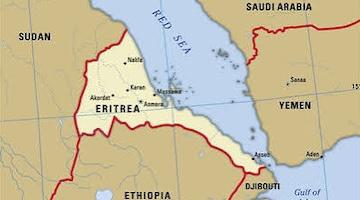 Ethiopia and Eritrea are on the brink of a war that could further destabilize the Red Sea, disrupt oil tanker traffic, and drive gas prices even higher.
 The UN's renewal of the Gang Suppression Force mandate is part of a wider hemispheric project to reassert military control across the Americas. Caribbean leaders cannot claim to support a Zone of…
 The Islamic Revolutionary Guard Corps (IRGC) has issued a letter addressed to the American people, outlining its views on recent developments and Iran-U.S. relations.
 The Trump administration's new sanctions on Cuba, are part of a dual strategy to create unendurable hardship while simultaneously making Cuba financially dependent on the United States.


