Israel's diplomacy with Lebanon is a fiction. The goal is complete capitulation and annihilation of the resistance, at the cost of thousands of lives.
Originally published in Zeinab Al Saffar.
From the vantage point of the resistance in Lebanon, what is being paraded as a diplomatic track is, in reality, a refined instrument of coercion—an attempt to achieve through negotiations what could not be secured on the battlefield. Under Benjamin Netanyahu, diplomacy is no longer a parallel channel to war; it is its extension, calibrated to convert firepower into political submission.
The objective is neither ambiguous nor negotiable: the dismantlement of Hezbollah and the forced reconfiguration of Lebanon’s internal balance of power. This is not a framework for de-escalation; it is a blueprint for strategic erasure. By insisting on maximalist outcomes—security restructuring to the Litani, total disarmament, and the rejection of interim arrangements—Israel effectively positions diplomacy as a demand for surrender dressed in procedural language.
The doctrine of “negotiating under fire,” amplified by figures such as Danny Danon, rests on a familiar illusion: that sustained pressure will fracture the resistance’s political and social base. Yet this logic repeatedly collapses against Lebanon’s structural reality. The more coercion intensifies, the more (the resistance) is recast not as an anomaly, but as a necessity—an embedded deterrent within a fragmented state that cannot outsource its own defense.
Crucially, this strategy misreads Lebanon itself. It assumes a centralized authority capable of decisive realignment under pressure. In truth, Lebanon is a layered, decentralized system where power is diffused and legitimacy is negotiated, not imposed. Attempts to forcibly separate the state from the resistance do not resolve this complexity—they collide with it.
Even the reliance on the United States government as an external enforcer reveals its own fragility. American leverage is conditional, episodic, and constrained by competing global priorities. It can amplify pressure, but it cannot manufacture compliance where the underlying political terrain rejects it.
What emerges, then, is not a pathway to stability but a “managed” escalation cycle—one that institutionalizes confrontation while mistaking it for leverage. Agreements extracted under duress rarely endure; they incubate the next round of conflict.
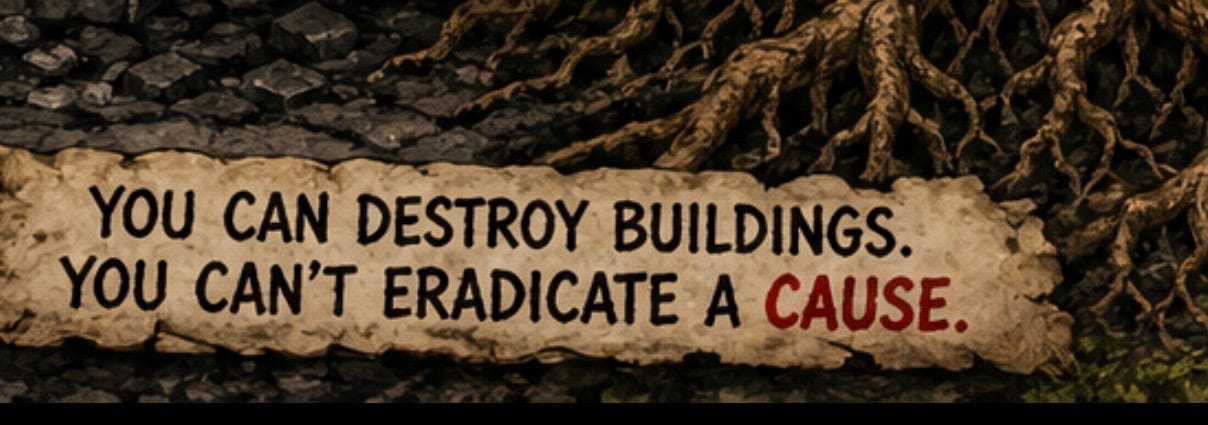
From the resistance’s perspective, the equation is straightforward: a strategy built on coercion against a society conditioned to absorb and reinterpret pressure is less likely to dismantle the adversary than to reinforce it.
But perhaps the most revealing aspect of this entire exercise is its quiet premise—that Lebanon can be engineered from the outside, and that the resistance can be negotiated out of existence. A bold theory, certainly… just not one that has ever survived first contact with reality.
Bottom Line:
What is unfolding is not a peace process but a coercive bargaining model in which military force and diplomacy are fused into a single instrument. The objective is not de-escalation, but the forced restructuring of Lebanon’s internal and security architecture under sustained pressure. The viability of this strategy is highly uncertain—and may produce prolonged instability rather than resolution.



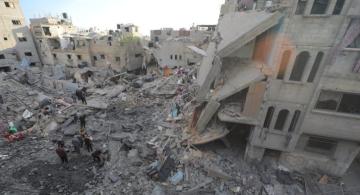




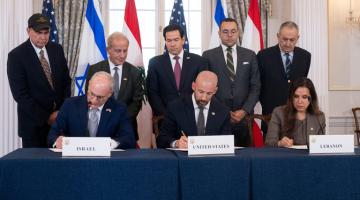

 Fraternal fist-bump between gangstas—Fugget about it… (For Allen Ginsberg, my other favorite ‘Jersey Boy’)
 Black political organizations condemne