The A.I. revolution has a hidden cost. Its massive data centers create huge amounts of waste and decimate labor and humanity.
Ali Kadri is an anti-imperialist scholar who focuses on the question of capitalist accumulation, and how waste–both in terms of environmental destruction and the shortening of lives–is the fundamental basis of accumulation on a world scale. Militarism is the principal form that waste accumulation takes, thus, waste is the product of the imperialist division of labor on a world scale. To give one example, the shortening of lives and lifespans in Gaza, along with the denial of development across the entire Arab world, are part of this strategy of accumulation. Through dropping bombs, controlling caloric intake, denying life saving medicines from entering Gaza, and the use of starvation as a weapon, the American-Zionist imperialist project engages in this strategy of accumulation on a world scale. The very origin of growing profit margins in the Global North is the premature deaths of the masses of the Global South. Following from Marx, Kadri argues that capitalism destroys the two fundamental bases of development, humanity and the biosphere.
In this essay, my aim is to take Dr. Kadri’s theory of the accumulation of waste, and apply it to the principal imperialist formation–the United States. As with three previous articles, the focus here shall be data centers, tech monopolies, and the “AI” market. Given the new wave of hyperscale data centers, the geographic-strategic placement of these data centers, and the aftershocks once they ‘go live’, I contend that these are a profound example of what Kadri calls the accumulation of waste.
First, we must endeavor a further exploration of what exactly Kadri means by ‘the accumulation of waste’; while there are multiple books, articles, and interviews where Kadri lays out the totality of his argument, for the purposes of this essay, a few select quotes and explanations will suffice, which alongside the example of the data center will elucidate the point being driven:
Wanton militarism, pollution and severe austerity, all subcomponents of waste accumulation, cut life short. Unlike pre-capitalist phases of history, the process of reducing life expectancy either instantaneously or by attrition relative to what is realised under conditions of overproduction, tallies with the rate of surplus value. A life expectancy in the South 20 or 30 years less than the North is a counter image of surplus value because as waste it is an engine of surplus value in itself, and by reduction in the ranks of the reserve army of labour, or as it spins off into ideological defeatism. The rate at which brains and brawns are consumed in shorter-intervals of waste production are paralleled by a rate of exploitation.
When Kadri says that waste is the ‘essence of the value relationship’ he is speaking about a historical process unfolding in multiple directions. In one aspect, there is the ‘wasting’ of the workers and masses of unemployed in the global south through the pillaging of their nations. This pillaging occurs through kinetic imperialist warfare, through the reorganization of production so the finished commodities flow towards the NATO states, or both. Yet, everything mentioned above relates to the production of waste and how it relates to the imperialist division of labor on a world scale. How does this waste relation exist inside the imperialist state formations with their labor aristocracies and tech monopolies?
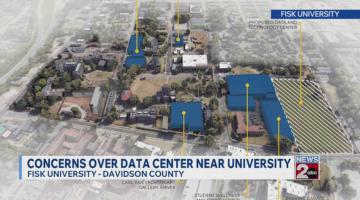
Data centers are an expression of Kadri’s accumulation of waste par excellence because they do not produce a physical commodity, but they are ensconced in an ideology of ‘job creation’ and ‘regional development’ which is attractive to mayors and city councils in areas that have been decimated by deindustrialization and the globalization of the value relationship. They also aim to reduce the intelligence of the worker, removing specialization and encouraging the abdication of critical thinking to the computer. This ideology protects the data centers from scrutiny, and thus environmental collapse is soon to follow them.
A 2024 report from the Lawrence Berkeley National Laboratory estimated that in 2023, U.S. data centers consumed 17 billion gallons (64 billion liters) of water directly through cooling, and projects that by 2028, those figures could double – or even quadruple. The same report estimated that in 2023, U.S. data centers consumed an additional 211 billion gallons (800 billion liters) of water indirectly through the electricity that powers them.
Being that the A.I. market is an overtly and exclusively financialized market, the aftermarket of data center construction is a market that is composed of fictitious capital. All the water used, the electrical grids sapped, and farmland decimated produces no real end product, only a computer program which aims to replace knowledge, and woefully falls short.
Kadri emphasizes how the accumulation of waste depends on the decimation of labor and the hegemony of capital, the result of historical processes and class struggle. Part of this entails subduing or anaesthetizing the construction trade unions with high wages, strong benefit packages, and the false promise of cordial relations between capital and labor:
The issue of reducing value outlays upon society has a precondition, which is the defeat of labour…working classes must be stripped of all their institutions, forms of organisation, memories and culture of resistance.
With this potent mixture, the construction of data centers–which place the unions and the masses at odds–is seen as ‘just another job’ which ‘if we don’t do it, non-union will’. The machines installed are just as any other, the end-use obscured by the comfortability provided by the high wages.
Bring in waste accumulation into this equation, or the making and selling of waste, and living man begins to simultaneously serve as the labourer, the raw material and also as an output whose substance is the premature death of the labourer himself. This process of waste production is the precondition of every other stage of production. As the wasted man whose very wasting requires expending socially necessary labour time becomes the source of surplus value, waste, which is a form and substance of value, becomes the dominant activity of capital.
The data center itself is the only physical component in the “A.I.” market, because in a sense this market is pure ideology. By this, I mean that the ideological baggage of ‘job creation’ and ‘regional development’ is never properly unpacked. The data center is the physical manifestation of the single world market and the attendant civilizational and systemic struggles underway. The data center represents the cross section of the race to produce the most sophisticated computer chips, the cold war between the USA and China, Israeli militarism, monopoly capitalism, post-Covid computer-mediated schizoaffective disorders, digitalization of currency, and the mass surveillance state dreamed up by Silicon Valley executives like Larry Ellison. In sum, they are the physical manifestation of waste and the destruction of social life.
To give a concrete example; Microsoft engineers who no longer wanted to be complicit in war crimes exposed how the Microsoft Azure cloud computing network was hosting Zionist, AI-generated kill lists of Palestinians, and thus how Microsoft data centers, constructed by North American building trades unions (organic partners of capital), were the sites where these kill lists were physically hosted. As the linked article states, the Zionist Unit 8200 swiftly moved their logged surveillance of Palestinians to Amazon Web Services, and without a hitch the accumulation of waste continues.
In 2025, data centers were the engine of US economic growth. So here we are presented with something quite worse than stagflation; a Harvard professor, Jason Furman, put this into numbers:
According to Furman’s analysis, GDP growth in the first half of 2025 was driven almost entirely by investment in information processing equipment and software….While these tech sectors only made up 4% of total GDP, they contributed a staggering 92% of growth. Absent this investment, Furman estimates GDP growth would have hovered around 0.1% on an annualized basis—barely above zero
The point is clear that without data centers, the genocidal war in Gaza, and the attempted piracy of Venezuela’s oil, the United States’ economy would be nothing. The production of waste, shaped by the imperialist division of labor on a world scale, represents value in the world economy. Here, we can also see the problems with neoclassical economics and their assumption that price and value are equal. As regular people lose work, empty the shelves in food pantries, and watch prices of everything skyrocket, it is precisely because the waste production structure has faced resistance internally and externally.
Hanna Eid is a Palestinian American writer, researcher, and a Union electrical worker. His writing concerns mainly imperialism and anti-imperialism in West Asia and West Africa.







 In this week’s segment, we hear about the ongoing uprising in France against neo-liberal austerity, colonialism, and white supremacy. But first, we discuss a new report that reveals a 25% decline in…
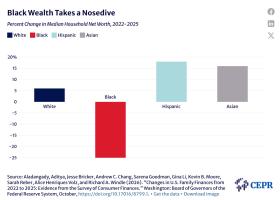 The Center for Economic and Policy Research (CEPR) recently reported on Federal Reserve data indicating that Black people in the U.S. have lost 25% of their wealth between 2022 and 2025. Whites,…
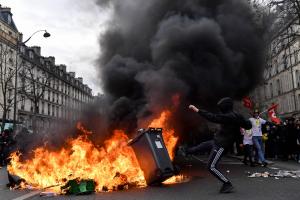 Bouna Mbaye is an activist, writer, and a member of the Pan-African League-Umoja, the Pan-African Brigade for Palestine, and the US Out of Africa Network. He joins us from Paris to discuss the…
 As Black Agenda Report is poised to celebrate its 20th anniversary, we reprint Glen Ford's commentary on the killing of Trayvon Martin and the impunity provided to his killer in a criminal justice…
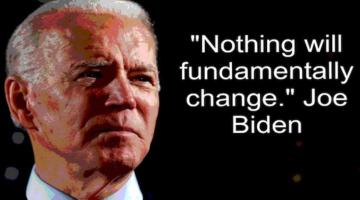 The Democratic Party is terrified of even small liberal reforms and will not abide left leaning democrats thwarting their plans for austerity and neoliberal orthodoxy.


