Skulls of 19 Black Americans have returned to New Orleans after more than a century in Germany, where they were sent for racial research. Jacob Cochran/Dillard University
Looted African skulls come home after a century in German labs, exposing colonialism's history of dehumanizing "race science."
Originally published in NPR.
Marie Louise was a lifelong New Orleanian who died of malnutrition. Hiram Malone came to Louisiana from Alabama, hospitalized at 21 with a fatal case of pneumonia. Samuel Prince was a 40-year-old cook who succumbed to tuberculosis.
They were among 19 Black patients who died at one New Orleans hospital in the 1870s, and whose heads were removed by a doctor to be sent to Germany. There, the crania were studied as "specimens" in what was then a proliferating pseudoscience of phrenology. It purported connections between someone's intellect or morality and the size or shape of their skull, with some doctors theorizing superiority of one race over another.
The skulls of those 19 patients have now been repatriated to Louisiana after more than a century abroad. On Saturday, they were honored in a multi-faith memorial and laid to rest in a jazz funeral rooted in New Orleans tradition.
"We can't be sure exactly where they came from. And so here, we have them. And what are we to make of what happened to them?" Eva Baham, a historian from Dillard University who led the cultural repatriation committee, said during Saturday's service. "You can be angry. You could be upset, rightly so. But we can't stay there."
The remains were returned by the University of Leipzig, which in 2023 contacted the city archeologist in New Orleans, acknowledging the skulls had been acquired in a "colonial context and unethically." The two-year return process involved city, state and academic institutions. It culminated in a notable international restitution, a return of African American remains from Europe — with many remains still lingering in archival collections across the U.S. and abroad, at museums and universities.
Researchers presume many of the 19 people had been enslaved, later moved freely after the Civil War, and eventually fell ill or were institutionalized in asylums before landing at Charity Hospital in New Orleans. It was one of the nation's oldest hospitals, serving the city's poor for centuries; it closed due to damage from Hurricane Katrina in 2005. Hospital death records helped Baham's team reconstruct some biographical moments of the 13 men and four women. Two people are unidentified.
At Saturday's memorial, a group of Dillard students read from those biographies, ending with their return journey:
"Another voyage across the Atlantic, passing bones of enslaved Africans on the ocean floor," the students' account went. "From Africa, to the Caribbean, to the United Sates of America; from New Orleans, Louisiana, to Leipzig, Germany; from Leipzig, Germany to New Orleans, Louisiana — justice carries 19 men and women home. May they walk freely in the city of God, in dignity and in honor."
Saturday's ceremony included prayers from ten religious leaders of different faiths, with an African drum and dance performance leading the attendees out of the chapel. Handlers in white gloves carried memorial vessels containing the skulls for interment. And a jazz band accompanied the procession.
"These people's lives had meaning," Baham said during the memorial, later adding: "History is not to wallow in, or wind about. It is to build on. It is to move forward. And when we keep our past hidden, we're starting over every day."
Alina Selyukh is a business correspondent at NPR, where she covers retail, low-wage work, big brands and other aspects of the consumer economy. Her work has been recognized by the Gracie Awards, the National Headliner Award and the Society of American Business Editors and Writers.


 This week’s column discusses the Bernie Sanders campaign, Medicare for All, and white supremacy in Venezuela.
 The book is a meditation on a way of life that is joyous and abundant without ever asserting that we must all convert to Pentecostalism.
 Gay liberation didn’t originate as a single-issue movement, and must confront neoliberalism and gentrification as well as anti-queer violence.
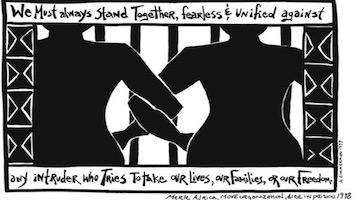 Society needs prison abolition in order to heal, but people living in prison need basic humane conditions in order to survive.”
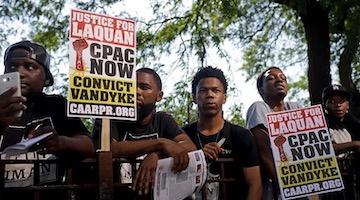 Chicago media care more about the safety of a killer cop and the Jesse Smollett saga than victims of the city’s rabidly racist police.



