XXIII ALBA-TCP Summit in Caracas, Venezuela. Photo: Presidencia de Bolivia
2024 marks 20 years since the regional integration platform was founded by Commanders Hugo Chávez and Fidel Castro.
Originally published in People's Dispatch.
The XXIII Summit of Bolivarian Alliance for the Peoples of Our America – Trade Agreement for the People (ALBA-TCP) was held in Caracas, Venezuela on Wednesday April 24. The summit was the first since Venezuelan revolutionary leader Jorge Arreaza took over as executive secretary of the platform in February 2024.
The gathering in Caracas saw participation from heads of state and ministers from the 10 member states of the body as well as a representative from Honduras who attended as a special invitee.
The closing declaration from the summit states, “We reaffirm our firm commitment to strengthening the ALBA-TCP, as a mechanism for unity, dialogue and political coordination, based on the principles of solidarity, social justice, cooperation, and economic complementarity, which allows us to face in better conditions the dangers and challenges that arise from the complex world scenario, characterized by the deepening of disrespect and the constant threat to peace, security, sovereignty, and self-determination of nations.”
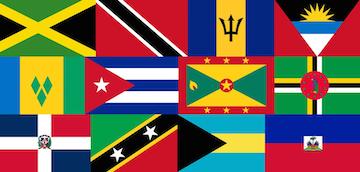
ALBA-TCP was founded in 2004 by Commanders Fidel Castro and Hugo Chávez as a cornerstone of their vision to revive and strengthen strategic unity and integration in Latin America and the Caribbean and serve as a counter proposal to US imperialism’s efforts to dominate the region. The platform works towards social, political and economic integration of the region and for “the consolidation and strengthening of development, peace, social justice, complementarity, equality, inclusion, solidarity and integration of the Latin American and Caribbean peoples.” The current member states of the platform include: Venezuela, Cuba, Antigua and Barbuda, Dominica, Grenada, Nicaragua, Saint Kitts and Nevis, Saint Lucia, Bolivia, and St. Vincent and the Grenadines.
The summit was held on the heels of a series of gatherings organized with social movements from across the world in the Bolivarian Republic, including the Political Coordination Meeting of ALBA Movimientos, a platform of movements from across Latin America and the Caribbean, and the World Gathering for a Social Alternative, wherein 500 delegates from across the world gathered to discuss the tasks of the left and progressive movements to organize the masses and strengthen their struggle and solutions to address the crises facing humanity and provoked by imperialism.
In Wednesday’s heads of state summit, chaired by Venezuelan President Nicolás Maduro, the representatives of the member states shared their perspectives on the current situation in the region and the world, and emphasized the importance of spaces like ALBA-TCP for dialogue and creation of joint solutions.
No more sanctions!
In the XXIII Summit, leaders of the bloc issued sharp condemnations of the unilateral coercive measures imposed by the United States against countries in the region such as Cuba, Nicaragua, and Venezuela and called for an end to US interference in the region. Special attention was paid to the upcoming electoral process in Venezuela and the attempt by the US to interfere and put pressure on Venezuela through sanctions.
Philip J. Pierre, the prime minister of Saint Lucia, remarked that his country has called for an immediate lifting of the sanctions against countries in the region: “We have done it consistently in every single session of the United Nations and we will continue to do so until all the sanctions are lifted, and we want them to be eliminated against all countries.”
Prime Minister of Dominica Roosevelt Skerrit stated, “We cannot leave out the blockade against Cuba, which has affected millions of lives, and we as a world cannot sit back and allow a single country to impose this terrible act on a sister nation, and I told the president that there is nothing that can prevent us from strengthening and deepening our solidarity, our love for the people of Cuba and the Cuban Revolution.”
Leaders such as Prime Minister of Antigua and Barbuda Gaston Browne also added that Cuba must be taken off the state sponsors of terrorism list, as the designation has no basis in reality and has caused great harm to the Cuban people.
In the closing declaration, the member states affirmed: “We demand the immediate and unconditional lifting of the criminal -as they are illegal and unjust- unilateral coercive measures imposed against the people and Governments of Nicaragua and Venezuela, for being irreconcilable with International Law, violating Human Rights and the Charter of the United Nations…We demand that the countries responsible for imposing such measures provide due reparation and compensation to the affected countries and peoples.”
With regards to Cuba, the bloc declared, “We ratify our strong condemnation of the genocidal and illegal economic, commercial and financial blockade imposed by the government of the United States of America against Cuba…We demand the exclusion of Cuba from the spurious and arbitrary unilateral list of countries supposedly sponsoring terrorism prepared by the United States Department of State, which has a negative impact on all spheres of Cuban society and the well-being of its people.”
Free Palestine!
While not geographically part of the region, Palestine and the struggle of the Palestinian people was at the heart of the interventions during the ALBA-TCP Summit. The body issued a special communique on the situation in Palestine to condemn the actions of Israel and all of the Western powers that have militarily, economically, and politically backed Israel and its genocidal assault on Gaza and called for the international community to take urgent measures to enforce a ceasefire.
Cuban President Miguel Díaz-Canel stated in his intervention, “We cannot be indifferent to the daily crime that has been committed against the brother Palestinian people for 75 years. No one can justify the brutal Zionist escalation of the last six months, the serious violations of International Humanitarian Law, the war crimes and crimes against humanity that have turned a small strip of inhabited land into a training ground for a bloodthirsty army.”
Venezuelan President Nicolás Maduro affirmed in his opening remarks that what is happening in Palestine “is not a war, it is a genocide. And the humanist, Christian position is solidarity, accompaniment, and love to the brave people of Palestine. Palestine lives, Palestine fights, Palestine will be victorious towards the future!”
Gaston Browne of Antigua and Barbuda stated that “As a hemisphere we must protest tirelessly against the genocide in Palestine.”
Bolivian President Luis Arce, whose country broke diplomatic relations with Israel in early November 2023, highlighted that ALBA-TCP was one of the first organizations to express its solidarity with Palestine and condemnation of Israel, and called for concrete actions of solidarity and support to be carried out by the bloc.
ALBA 2030
One of the key achievements of the summit was the approval of the ALBA 2030 Strategic Agenda drafted by the executive secretary to serve as a “guide and document to address the coming years and consolidate the Alliance in a comprehensive way, in a joint effort to strengthen the most important areas for development and well being of our people.”
The document, which reflects discussions and consultations with members of the bloc, outlines concrete plans in the economic, social, political, cultural, and communication realms to achieve the above goal.
Among the plans to strengthen economic cooperation and development, ALBA-TCP has called for an increase in trade between member states and identified the steps needed to achieve that such as reviewing trade barriers, developing the necessary logistics chain to allow this trade such as expansion of air and maritime routes, drafting of a map of economic complementarity highlighting the productive and logistic capacities of each country, and reactivating and strengthening credit mechanisms within the bloc. The expansion of the ALBA Bank is also a central point of promoting this economic agenda and the president of the bank, Raúl LiCausi, was present at the meeting.
Finally, the revitalization of PetroCaribe was included as a key part of the economic agenda of ALBA 2030. PetroCaribe was an energy agreement launched in 2005 under the leadership of Hugo Chávez to provide fuel to countries in the Caribbean at a subsidized price, with a part of the price paid consisting of services rendered or agricultural exports to Venezuela from the countries. The agreement signed by over a dozen Caribbean countries also helped fund social programs in countries to address socioeconomic equality such as expanding access to education, sanitation, public services, housing, healthcare and others.
PetroCaribe was suspended in 2019 due to the heavy sanctions imposed on Venezuela’s oil sector which caused a dramatic decrease in production. With Venezuela achieving important economic growth in recent years and a reactivation of oil production, it is now ready to relaunch the program.
ALBA 2030’s social agenda in anchored in the promotion of food sovereignty by financing agricultural production in each country, strengthening natural disaster response and risk mitigation of each country given the particular challenges faced by the island region, the creation of a gender observatory to evaluate and build policies to promote gender equality and guarantee rights of all women and children in the member states, and continue the ALBA Games.
The activation of a Social Council of ALBA was also mandated in order to expand social programs across the region. This council would work on literacy programs, strengthen health and education policies, relaunch joint health programs and missions such as the renowned Operation Miracle which provided free eye treatment to millions of people, reinforce education cooperation agreements, and develop programs that guarantee a dignified life for disabled people such as economic support programs and integration into the workforce. The Social Council also seeks to create cooperation mechanisms to protect labor rights in the region.
The political agenda of ALBA-TCP is focused on positioning it as a consolidated bloc with a common agenda and as an important political voice in regional and international forums such as different UN bodies and Community of Latin American and Caribbean States (CELAC). Another key priority in the political realm is expanding the scope of the bloc beyond just the member states and their leaders to foster dialogue and cooperation with different sectors such as: the social movements in the region with the Social Movements Council, with left and progressive parliamentarians in the region with the creation of the Parliamentarian Network of ALBA, and with left and progressive local governments and authorities. The bloc also seeks to establish joint, multi-state initiatives to address organized crime, arms trafficking, human trafficking, drug trafficking, and even terrorism.
The tremendous achievements in economic, social, and political cooperation in ALBA-TCP over the past 20 years, and those to come in the next period, are all dependent on the bloc’s emphasis on the promotion of shared culture, history, and values based on anti-colonialism, anti-imperialism, and regional integration. This is a crucial element in combating US hegemony in all realms in the region. In the 2030 agenda, ALBA calls for a communicational, cultural, and educational campaign to promote common values and symbols of the region, a new geopolitics of knowledge which promotes the educational institutes and think tanks of the south and the production of scientific and technological production, and publications about regional integration and ALBA-TCP. ALBA Culture will continue to organize activities and exchanges of music, theater, art, film, and prioritize perspectives with gender, youth, and Indigenous and Black peoples.
ALBA recognizes the need for a network of communication which is able to share the reality of what is happening in the region and respond to media campaigns and fake news wielded by imperialism and the far-right to attack the projects in the region. For this it calls for the creation and strengthening of networks of media outlets of all sizes and digital influencers in order to share content and information, as well as the strengthening of TeleSur.
The ALBA 2030 Strategic Agenda was approved at the conclusion of the XXIII Summit with great enthusiasm from the delegations present and marking a new stage in the process of integration. The bloc will have another summit in December to mark the 20th anniversary of its founding.
Nicolás Maduro ended the session thanking the delegates for their presence and declaring, “From Venezuela, we are engaged in the anti-imperialist counter offensive for the peoples of Our America!”

 A People(s)-Centered Human Rights framework rejects the liberal abstraction that makes a false symmetry between Iranian authoritarianism and U.S. imperialism, which obscures the fact that one is a…
 “In the period since 1969, one can detect the same old close ties between right-wing U.S. academics, think tanks, foundations, and the U.S. Government…”
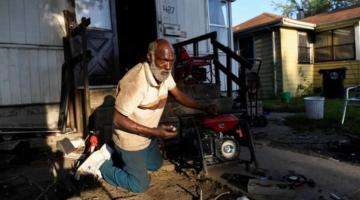 White supremacy works through institutions, and FEMA's formula for allocating disaster relief shows us how the state decides which neighborhoods are prioritized and which are left to suffer. Those in…
 The IMF and World Bank are not subjects the corporate media cover in any real sense. Instead, their role is treated as unquestionably immutable and beneficial.
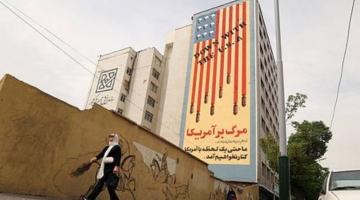 The Anti-Imperialist Scholars Collective (AISC) wrote this response to the open letter To Iran's political prisoners, 'trapped between two blades of a scissors' which appeared in The…


