In this series, we ask acclaimed authors to answer five questions about their book. This week’s featured author is Jamil W. Drake. Drake is Assistant Professor of African American Religious History at Yale Divinity School. His book is To Know the Soul of a People: Religion, Race, and the Making of Southern Folk.
Roberto Sirvent: How can your book help BAR readers understand the current political and social climate?
Jamil W. Drake: My book argues that liberal-minded social scientists and their field studies of the religious expressions of black farming communities contributed to the culture of poverty hypothesis that gained steam in policy debates in the second half of the twentieth century. To Know the Soul of a People is an intellectual history of the study of black religion in the first half of the twentieth century. Moreover, my history prioritizes the place of class in the study of black religion. In other words, these secular scientists studied what they called folk religion to illustrate the moral and cultural deficits of a population suspended in a defunct agricultural system in the Jim Crow south. My book further highlights how stubborn Protestant moral and cultural frameworks continue to guide our discussions of poverty and welfare in American politics. Currently, we see how our discussions of the Child Tax Law were hampered by discussions about the behavioral and cultural deficits of children and families in need, such as laziness, drugs, or no desire to work. And to be sure, these discussions about the behavioral and cultural deficits are historically rooted in racial logics that denigrate and subjugate black and lower-class people in particular.
What do you hope activists and community organizers will take away from reading your book?
My book affirms what activists and community leaders already know about the importance of ideas in shaping our political actions. Moreover, To Know the Soul of a People shows how our classifications of the specific group and their religious cultures have deep political consequences. This is definitely true with groups we claim or desire to represent. What I show in my book is that these liberal-minded social scientists were earnest in their studies to show the entrenched social and economic inequalities of black farming communities in the lower south. Despite their earnestness, their analysis of the [religious] cultures of these farming communities actually reified the same racial logics that prioritized the behavioral deficits of black farmers used to maintain Jim Crow governance. Thus, their modern frameworks of culture (e.g. nuclear family, hard-work, and rational and scientific knowledges, etc.) prevented them from offering a more robust critique of the political economy that showed the racial and class dynamics in the regional south and broader America. Thus, our ideas matter!
We know readers will learn a lot from your book, but what do you hope readers will un-learn? In other words, is there a particular ideology you’re hoping to dismantle?
I think we as a society have to rethink poverty and welfare in this country. I am another voice in the wilderness claiming that we have to unlearn these deeply problematic religious, moral, and cultural frameworks used to discuss racial and economic inequality. These frameworks frustrate the work of racial and economic justice by taking our attention away from structural inequalities that perennially plague black and low-income communities. These frameworks are also used to protect the interest of wealthy oligarchs and big businesses. Unlearning these frameworks could also generate new ways of thinking about the welfare in this country. Additionally, To Know the Soul of People intervenes in an old debate about race and class that continued in the Democratic Primary (e.g. Bernie Sanders campaigns) and the broader Presidential race (e.g. identity politics of the white working-class) in 2020. My intellectual history of black religion says that you cannot separate race and class—they both inform one another. The late Stuart Hall was right in his assertion that “[r]ace is the modality in which class is lived.”
Who are the intellectual heroes that inspire your work?
I have a lot of intellectual inspirations. Although I critique W.E.B. Du Bois’s early views during the Progressive era (which he later abandoned), he still remains my intellectual inspiration. I admire the breath of his intellectual work—meaning how he worked across different genres, such as the social sciences, history, fiction, journalism, poetry, plays, etc. I’m also inspired by the witness of James Baldwin. I appreciate Baldwin’s soul-stirring essays that integrate the personal and social in his political critique. In other words, he critiques American society by interrogating himself. I can go on and on with my intellectual inspirations—my mother, grandfather, E. Franklin Frazier, Lorraine Hansberry, Cornel West, Edward Said, Toni Morrison, Stuart Hall, etc. But directly related to my book, To Know The Soul of a People, I was most inspired by reading Barbara Savage’s Your Spirits Walk Beside Us: The Politics of Black Religion and Curtis J. Evans’ The Burden of Black Religion in graduate school. My book emerges out of my dissertation project. After reading (and re-reading) Savage’s and Evans’ books, I was inspired to write a dissertation on the “study of the study of black religion” with an eye towards the history of the social sciences and the political. But I have many intellectual heroes—both dead and living—that continue to shape my intellectual formation and trajectory. My many intellectual inspirations (sorry, I could not name you all) underscore that knowledge is shaped in community—meaning in relationships, interactions, and encounters. I am grateful for these daily relationships, interactions, and encounters.
In what way does your book help us imagine new worlds?
The book challenges us to imagine new worlds that affirm the humanity of populations that society marginalizes, dehumanizes, and exploits. This imagining of new worlds not only centers the humanity of people who are socially marginalized and disadvantaged, but it prioritizes their knowledges in the fight for racial and economic justice! With this being said, the book imagines a new world where welfare is based on the responsibilities of federal and state governments to protect and foster individual and community rights and flourishing. My book imagines a new world that values Black humanity and life through political, social, and economic policies and arrangements. The imagination of new worlds places value on grassroots activism and organizing. Several grassroots organizations are continuing the best of the Black Freedom Tradition by imagining a new world amid the current white backlash in state politics (I speak from Florida). In the end, I join them in imagining a better world for our children’s children.
Roberto Sirvent is editor of the Black Agenda Report Book Forum.

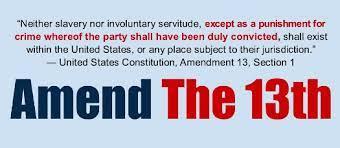 Savannah Eldrige is the founder of Coaliton to Abolish Slavery in Texas, an organization devoted to ending involuntary servitude in that state. She is also the founder of Be Frank 4 Justice which…
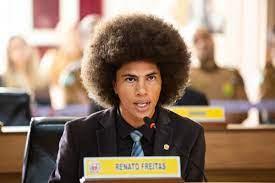 Renato Freitas is a Black City Councillor in Curitiba, Brazil. He and others joined in national protests over the killing of Congolese immigrant Mugenyi Kabagambe, who was beaten to death after…
 In 2018 the late Glen Ford wrote about the election of Jair Bolsonaro to the Brazilian presidency, and the nature of fascism in Brazil, the U.S. and around the world. Margaret Kimberley reads…
 Democrats are using the hearings investigating the January 6, 2021 attack on the Capitol as one long campaign commercial. They believe that saying the name Trump often enough will ins
 A 1965 Freedomways interview with Mrs. Fannie Lou Hamer provides an unvarnished and unsentimental portrait of Mississippi – and of the tasks of the Freedom Movement.


