Under imperialism resource wealth can become a curse, such is the case with the EACOP pipeline in East Africa.
In 2010, journalist John Vidal visited the village of Otuegwe in Nigeria where corporate oil spills had caused widespread disaster. He reported: “Forest and farmland were now covered in a sheen of greasy oil. Drinking wells were polluted and people were distraught. No one knew how much oil had leaked.”
Elsewhere in Nigeria, and in that same year a leaking ExxonMobil pipeline spilled one million gallons of oil in Akwa Ibon causing widespread devastation. Africans in the Niger Delta have not passively watched oil ruin farmland and fishing waters. As early as 2006, the Movement to Emancipate the Niger Delta (MEND) waged militant resistance that sometimes involved sabotage of oil company facilities and the abduction of company personnel. In fact, some speculate the group’s activities may have contributed to the decision to establish U.S. Africa Command (AFRICOM).
The catastrophes in the Niger Delta should have been enough, but capitalists are evidently anxious to continue their longstanding tradition of making mega profits by causing Africa humiliation and agony as they plunder the continent’s natural resources – especially oil. The latest escapade involves an oil pipeline in Uganda and Tanzania.
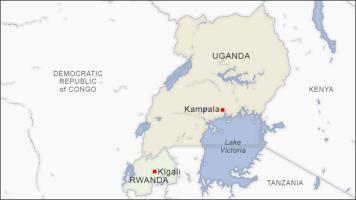
When constructed, the East African Crude Oil Pipeline (EACOP) will carry 200,000 barrels of oil daily across nearly 1,500 kilometers. Proponents of the project have promised considerable economic benefits to the region, but resistance has been global. The concerns include but are not limited to as many as 3,000 households that will be economically displaced and the need to resettle up to 400 families. Not only that, analyst Abby Morenigbade explained that an EACOP oil spill could be disastrous:
“Not only will the extraction of oil in Uganda generate up to 34 million tons of carbon emissions each year, the pipeline will also run alongside the Lake Victoria basin. Lake Victoria is the African continent’s largest freshwater reserve which sources the Nile and which 40 million people rely on for drinking water and food production.”
She goes on to explain:
“In addition to running alongside Lake Victoria, the pipeline will run through and pose risks to several nature reserves and habitats such as Murchison Falls National Park, the Taala Forest Reserve, the Bugoma Forest, and the Biharamulo Game Reserve. These different reserves are home to endangered animals…In all, nearly 2,000 square kilometers of protected wildlife habitats will be negatively impacted by the EACOP.”
Culprits behind this looming threat include: TotalEnergies, (a French oil corporation); Tullow Oil (UK); and the Chinese National Offshore Oil Corporation. The project will also be underwritten by insurers and banks based in the U.S. and Europe. The government-owned oil corporations of Uganda and Tanzania are also part of the deal, but that should give little comfort to those who have concerns. To understand why, it is helpful to look at Kenya’s history.
In 2014, the deliberations about a way to get Ugandan oil to coastal regions included tentative plans to partner with Kenya rather than Tanzania. What might have been the Uganda-Kenya Crude Oil Pipeline was an idea that collapsed because of various political and other factors. But decades before that, during the early post-independence period, the Kenyan government had dabbled with government partnerships with foreign oil companies. In his book Underdevelopment in Kenya, Professor Colin Leys observed that the benefits of these partnerships were minimal at best:
“In the case of refineries, no outward change was apparent. The existing, mainly expatriate top management was retained. It was clear that the government was in a position to know more about the profits of oil distribution, once it controlled the source of supply, and should thus be able to influence that stage of fuel pricing. However, the distributors still owned the wells and controlled the shipping of oil to the refinery, and it is doubtful if control of the refineries really conferred on the government a significant power to determine the profitability to the oil companies of even the modest Kenya component of their total operations.”
Thus, it is reasonable to question whether the participation of the Uganda National Oil Company and the Tanzania Petroleum Development Corporation will ensure that the harms feared by pipeline opponents will fail to materialize.
The problem with this arrangement, as is the case with practically all engagements Africa has with foreign corporations, is that there is an inherent dialectical relationship between these capitalist forces and what is in Africa’s best interests. It is “good business” for a corporation to work out arrangements that, through exploitation, result in higher profits. Measures that might ensure stability of local populations and environmental safety could be costly and adversely affect the bottom line.
The only guarantee Africa can ever have is to place full control of its natural resources in the hands of the continent’s people, presumably within the context of a socialist government and economy. But there is plenty of evidence that imperialist forces will not sit quietly by and watch Africans secure control of their own resources. As just one example, AFRICOM has worked feverishly to establish a military infrastructure throughout the continent. One of its initiatives was Exercise Obangame Express. A military official explained:
“The exercise, therefore, is an avenue for participating Gulf of Guinea nations and international partners to collaborate towards addressing the maritime security concerns in the Gulf of Guinea. Exercise Obangame Express comes against the backdrop of piracy cases, illegal unreported and unregulated fishing, illegal exploitation of mineral resources, the proliferation of small arms and light weapons and other local and international threats in the Gulf of Guinea.”
Each of the activities specified could easily be part of righteous resistance to imperialist exploitation. If African fishermen take direct action against foreigners who engage in illegal dumping in African fishing waters, will they be regarded as “pirates?” If Africans sabotage foreign oil operations will they be regarded as criminals subject to military attacks? In an era when massive damage is done by so-called weapons of mass destruction, is AFRICOM’s concern about small arms and light weapons really concern about African freedom fighters developing the capacity to engage in justifiable armed struggle?
In much the same way that the struggle against apartheid was particularly suitable for international engagement, the struggle against EACOP has drawn the involvement of activists throughout the world. This is due in no small part to the fact that the pipeline’s principals are scattered around the globe, making it easy for those outside of Africa to identify local targets (e.g. banks and insurance companies) for protest. This resistance is critical, but it must occur as part of an ongoing, more profound exploration of strategies aimed not simply at urging imperialists to do the right thing, but rather at methods of driving them out of Africa altogether.
Mark P. Fancher is an attorney and writer. He is a member of the Black Alliance for Peace Africa Team and the All-African People’s Revolutionary Party. The views expressed are his own and do not necessarily reflect the views of organizations with which he is affiliated. He can be contacted at mfancher[at]comcast.net.





 China has been the victim of US espionage and cyber attacks, despite claims that it is "stealing" US technology.
 This week’s featured author is Allan E.S. Lumba.
 Human Rights Watch and the Inter-American Commission on Human Rights confirm what was already clear to BAR's reporter and others on the ground in Peru. The coup government has…
 Messages and texts from those suspected of the plot to assassinate Haitian president Jovenel Moise make for fascinating reading. One of them communicated with Ariel Henry, who was named Prime…
 Claims of anti-Black racism in revolutionary countries should be treated with great skepticism. This trope is used as a tool to target countries for regime change plots and other attacks. While in…


