In this series, we ask acclaimed authors to answer five questions about their book. This week’s featured author is Treva B. Lindsey. Lindsey is Associate Professor in the Women's, Gender, and Sexuality Studies Department at Ohio State University. Her book is America, Goddam: Violence, Black Women, and the Struggle for Justice.
Roberto Sirvent: How can your book help BAR readers understand the current political and social climate?
Treva B. Lindsey: America, Goddam: Violence, Black Women, and the Struggle for Justice is a blend of historical inquiry, memoir, and political and cultural analysis. Each of these points of entry helps to uncover the dynamics, contributing factors, and complexities of contemporary violence against Black women and girls in the United States. I invite readers to wrestle with how antiBlackness, patriarchy, capitalism, and other systems of marginalization, violation, and dispossession operate in our lives. Using a historical contextualization as well as my some of my own encounters with violence, I offer a detailed, though not exhaustive accounting of numerous forms of violence Black women and girls confront in the twenty-first century. I want readers to also consider the harm of “unlivable living”- which can and does lead to slow and far too often, premature deaths of Black people. Each chapter focuses on a specific form of violence, harm, or precarity to grapple with the intensity of violence against Black women and girls. I chose an intimate approach because I wanted the stakes of this book to be clear and unabashed. I used my experience as a survivor of multiple forms of violence and my still-evolving expertise as a lifelong student and a scholar of African American history to uncover the pervasiveness of violence against Black women and girls. Intriguingly, the project was initially entitled Hear Our Screams. I wanted readers to have visceral responses to the stories and analytical core of the book. The shift to America, Goddam occurred when I realized what I deeply felt while researching and writing. Each story about violence and precarity left me saying “Goddam.” That reaction doesn’t prevent me from imagining and working towards new worlds, but I wanted to offer a space to contend with the gravity of this incessant loop of violence and precariousness. Ideally, readers will take away new insights about what’s happening to too many Black girls and women and charge them to work towards resisting, dismantling, imagining, and building.
What do you hope activists and community organizers will take away from reading your book?
My work is indebted to activists and organizers. This book is not possible without their insights, strategies, and unwavering commitment to Black communities. In reading this book, I hope that they see their work not only affirmed but also as the heartbeat of the struggle for justice. I think America, Goddam can serve as one of many resources that organizers and activists engage as they work within communities and organize around specific issues as they pertain to violence against Black women and girls. I see this book in a dialogue with work already being done and as a point of departure for future projects, initiatives, and agendas anchored in dismantling white supremacy, patriarchy, and capitalism. Ultimately, I hope this book resonates as an invitation for collaboration, further engagement, and a deepening of existing commitments to upending these violent and harmful systems that disparately impact our communities.
We know readers will learn a lot from your book, but what do you hope readers will un-learn? In other words, is there a particular ideology you’re hoping to dismantle?
What a great question. I often tell my students that un-learning is more challenging than learning because unlearning demands that we displace things we know that were taught to us by loved ones, communities, or institutions and systems to which we feel connected. So, it’s not just learning something new, which often is exciting and refreshing. Unlearning asks us to reconsider our relationships to people, communities, systems, and institutions. With America, Goddam I think readers will begin to un-learn the falsehood that violence against Black women and girls only occurs in spectacular ways. I want folks to think about quotidian harm and the gradual wearing down of Black women and girls in the U.S. caused by antiBlackness, capitalism, misogyny, ableism, transphobia, xenophobia, and homophobia. This requires accounting for both the most spectacular forms of violence as well as the most intimate and slow-moving forms. I hope that readers will confront the reality that if your “pro-Blackness” is antiqueer, patriarchal, antitrans, antipoor, or ableist, it ain’t actually pro-Blackness. I hope folks will acquire a better understanding of how patriarchal violence is integral to how antiBlackness operates and unlearn our collective tendency to diminish what a significant role patriarchy plays in the lives of all Black people, and especially Black women and girls.
Who are the intellectual heroes that inspire your work?
I’m inspired by so many but first and foremost my parents- who spent decades as educators in DC and PG County public schools. To name some outside of my family: Ida B. Wells-Barnett, Maria Stewart, Audre Lorde, June Jordan, Saidiya Hartman, Christina Sharpe, Pumla Gqola, Cedric Robinson, C. Riley Snorton, Claudia Jones, Angela Davis, Deborah Gray White, Clyde Woods, Joy James, Lauren Berlant, Ruth Wilson Gilmore, Mariame Kaba, Barbara Smith, Cherrie Moraga, Katherine McKittrick, Beth Richie, Martha Jones, Robin D.G. Kelley, Sylvia Wynter, Martha Jones, Ula Taylor, Pauli Murray, M. Jacqui Alexander, Gloria Anzaldua, Chandra Mohanty, Darlene Clark Hine, Rinaldo Walcott, Stuart Hall, Zora Neale Hurston, W.E.B. DuBois, John Hope Franklin, Lucy Diggs Slowe, Patricia Hill Collins, Deborah King, Toni Cade Bambara, Jose Munoz, Ntozake Shange, Nina Simone, and Deb Willis are a few that come to mind.
In what way does your book help us imagine new worlds?
Although this book is admittedly heavy and primarily focused on violence and unlivable living, stories of resistance and the struggle for justice are also part of America, Goddam. Part of what compelled me to write this book is my commitment to imagining new worlds in which Black girls and women are held warmly and in their fullness. I needed to know that despite overwhelming evidence of how far we are from those worlds and how much work it requires to get to these new worlds; I remain undaunted in the struggle for justice. Additionally, imagination remains one of our greatest weapons against the relentlessness of oppressive regimes. The book concludes with both a personal commitment to fighting with all I got and a call to activate our collective imagination to envision what’s on the other side of the fight for freedom.
Roberto Sirvent is editor of the Black Agenda Report Book Forum.


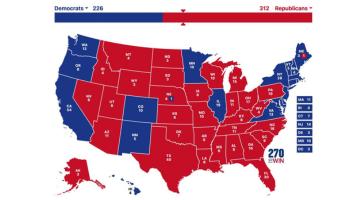 Dr. Anthony Monteiro joins us to discuss the 2024 presidential election results, why Kamala Harris failed to connect with millions of voters, and what will happen under a Trump presidency.
 Anthony Rogers-Wright provides his analysis of the latest United Nations climate change summit, COP29, now being held in Baku, Azerbaijan.
 Democrats are in a collective state of panic because Donald Trump is returning to the presidency. But Joe Biden is escalating conflict in the Ukraine proxy war against Russia and endangering the…
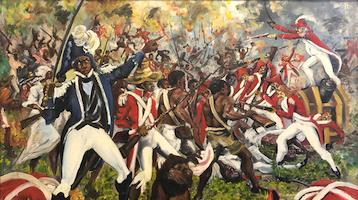 Haiti’s Battle of Vertières reminds us that resistance is not futile, that victory will come.
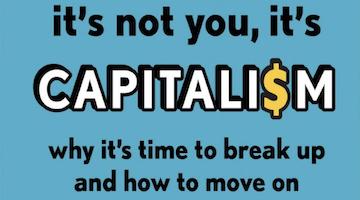 Malaika Jabali’s book explains our toxic relationship with capitalism and says it’s time to break up.


