Cuba's president Miguel Díaz-Canel continues his country's struggle against U.S. attempts at domination. The Cuban people continue to make strides, in spite of the 60-year long blockade intended to destroy their revolution.
This article was originally published in Globetrotter.
In 1994, Miguel Díaz-Canel began a new position in Santa Clara, not far from his birthplace of Placetas, as the provincial secretary of the Cuban Communist Party. He set aside the air-conditioned car given to him and went to work each morning on his bicycle, his long hair and jeans defining him. Díaz-Canel organized rock concerts, spent time with his family at El Mejunje, the local LGBTQ cultural center, and roamed about talking to people on the streets. This closeness to the people defined his tenure at Santa Clara, which shaped the man who is now the president of Cuba.
In March, I spent a few hours talking to Díaz-Canel, who—born in 1960—has lived his entire life as Cuba struggled against the suffocating policies from Washington to shape its socialist path. Raised by a teacher and a factory worker, Díaz-Canel saw firsthand the Cuban Revolution’s comprehensive program of social justice in which millions of members of the working class, peasants, Black people, and women began to access for the first time on equal terms the right to work, study and live with dignity. Díaz-Canel’s generation grew up in a period under Fidel Castro’s leadership in which, despite the existence of a U.S. blockade, most Cubans saw their standards of living and quality of life rise significantly due to national development plans, favorable trade relations with the Soviet Union and a growing network of support in the nonaligned world. Díaz-Canel studied electrical engineering at the Central University of Las Villas, but early on in his career teaching engineering there, he devoted much of his time to local activism with the Young Communist League. That led him to an internationalist mission in Nicaragua where, along with thousands of Cuban doctors and teachers, he served among the poorest, often in remote corners of this Central American country that was then trapped under a U.S.-funded war of counterinsurgency.
Díaz-Canel returned from Nicaragua in 1989 as the USSR neared its final days and as the U.S. government seized the opportunity to tighten restrictions on Cuba. In 1991, Cuba entered a Special Period as trade fell by 80 percent. Cubans were eating less (caloric intake decreased by 27 percent from 1990 to 1996), long queues for food became common, electricity became a rare occurrence, and millions took to riding bicycles as the island faced a severe oil shortage under an intensified blockade. Díaz-Canel was one of those on a bicycle. Cuba’s resilience during the Special Period shaped his view of the world.
Special Period II
In 2018, Díaz-Canel was elected to be the president of Cuba. U.S. President Donald Trump had tightened the U.S. blockade on Cuba, with 243 new sanctions measures, the prevention of remittances from overseas Cubans coming to the island, and Cuba being placed back on the United States’ State Sponsors of Terrorism list. This campaign of maximum pressure has hurt the Cuban economy, which began to see fuel and food shortages that echoed the Special Period. The Biden administration has kept each and every one of these measures in place.
During the pandemic, the U.S. did not allow Cuba any relief from its unilateral blockade. The Cuban government spent $102 million on reagents, medical equipment, protective equipment, and other material; in the first half of 2021, the government spent $82 million on these kinds of materials. This is money that Cuba did not anticipate spending—money that it does not have because of the collapsed tourism sector. Despite the severe challenges to the economy, the government continued to guarantee salaries, purchase medicines, and distribute food as well as electricity and piped water. Overall, the Cuban government added $2.4 billion to its already considerable debt overhang to cover the basic needs of the population.
In this context, public discontent spilled onto the streets in 2021, notably on July 11. Díaz-Canel’s first instinct was to go to the heart of the matter and speak with the people. He went to great lengths not merely to dismiss their concerns but rather to understand them within the broader context of what Cuba was facing. Díaz-Canel said of the people that most of them are “dissatisfied,” but that their dissatisfaction was fueled by “confusion, misunderstandings, lack of information, and the desire to express a particular situation.” “Imagine facing that situation in a country that is attacked, blocked, demonized on social networks, and then COVID-19 arrives,” he told me. “Therefore, I am convinced that they [the U.S.] bet that Cuba had no way out: ‘They cannot sustain the revolution; they cannot get out of this situation.’”
Among the many creative responses to these many challenges was the decision by the Cuban government to develop its own vaccine. On May 17, 2020, Díaz-Canel called together Cuba’s scientists. “I told them, ‘Look, there is no alternative; we need a Cuban vaccine. Nobody is going to give us a vaccine. We need a Cuban vaccine that guarantees us sovereignty,’” he told me. Seven weeks later, in the second half of July, the first bottle of a Cuban vaccine candidate was ready. Soon after Cuba would have five vaccine candidates. Of these, three are already in use: Abdala, Soberana 02, and Soberana Plus. Two others are in the final stages of clinical trials and are quite promising, including one called Mambisa, which can be applied nasally. This is all short of a miracle considering that Cuba was only able to invest $50 million to develop these vaccines.
With the many economic problems that Cuba faces, President Díaz-Canel, in line with his predecessors Fidel and Raúl Castro, has renewed the principle of self-reliance. “We have to face the economic battle ourselves with the concept of creative resistance,” he said. With a growing number of workers in the non-state sector, the economy has encouraged small local businesses. A new energy has emerged between the state-led sectors of the economy and these growing new businesses.
In regular visits made by Díaz-Canel across the island, a great deal of emphasis is being placed on the local capacities of each municipality. He advocates a line of continuity with politics based on the ethics of José Martí and Fidel Castro, whose premise is to study the contradictions that exist in society, find the causes of those contradictions, and propose solutions that eliminate the causes. “We are defending the need to increasingly expand democracy on the basis of people’s participation and control in our society,” said Díaz-Canel. This approach has already opened the door to deep debates about how to eradicate the vestiges of racism that remain in society, the transformation of neighborhoods in disrepair, and a proposed legal code that would radically expand the rights of LGBTQ people, including marriage. In hundreds of meetings, many of which are recorded and televised, Díaz-Canel listens patiently to religious leaders, university students, artists, intellectuals, community organizers, social activists, and other sectors of Cuban society who have much to say. These meetings can quite often be tense. Díaz-Canel smiles and says, “We have learned tremendously, proposals are made, we can share criteria, we can clarify doubts, and then we all go out together to work.”
Cuba continues to face great challenges, and many problems remain to be solved.
Yet it’s clear that Díaz-Canel is leading a profound renewal of the Cuban Revolution in a process that seeks to face many complex challenges by empowering local leaders and citizens to become democratic problem-solvers within their communities. Those who continue to see the Cuban system as a repressive dictatorship refuse to come to terms with an evolving society that, despite the cruel violence from Washington, exists and is creating its own future.
Manolo De Los Santos is the co-executive director of the People’s Forum and is a researcher at Tricontinental: Institute for Social Research. He co-edited, most recently, Viviremos: Venezuela vs. Hybrid War (LeftWord Books/1804 Books, 2020) and Comrade of the Revolution: Selected Speeches of Fidel Castro (LeftWord Books/1804 Books, 2021).

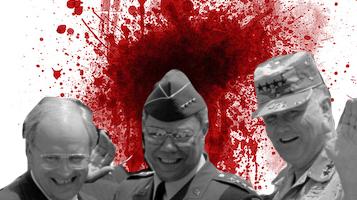
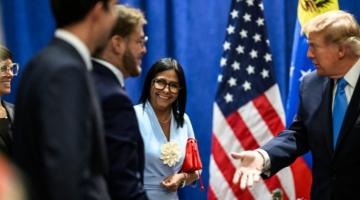
 The Republicans and Democrats are united under the American imperial banner, and only differ on details of strategy to maintain Washington’s global domination.
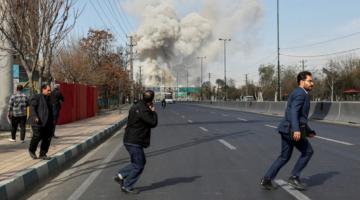
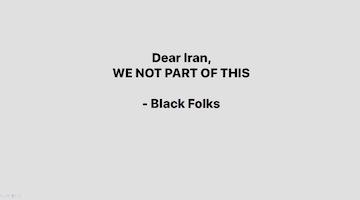 Black Americans, as perpetual targets of US lies and attacks, should be the first to reject Washington’s rationales for war with Iran.
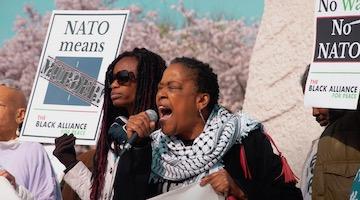 The rhetoric of the Democratic “progressives” only gives cover to the ongoing criminality of the U.S. state and its commitment to permanent war – with congressional approval.
 The “it” being: put Republicans in power by allowing George Bush to steal the presidency for the second time, in 2004, with no assistance from Russians, Wikileaks or Jill Stein.
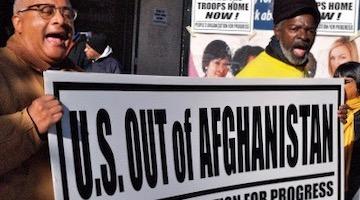 There may be two political parties in the United States, but there is only one ruling class agenda.


