The nation of Barbados recently became a republic, severing its ties with the British crown. The road to independence began years earlier as part a wider Caribbean movement.
This article originally appeared in Stabroek News.
On November 30, 2021, on the 55th anniversary of its political independence, Barbados will become a republic. It is commonly assumed this was some sudden decision by Mia Mottley’s government. The most bizarre suggestion came from British voices, who asserted this had to do with Barbados tilting to China. But the roots of this change go back decades, and are anchored in the politics of the wider Caribbean.
Forbes Burnham’s decision in 1970 to proclaim the Cooperative Republic of Guyana, and Eric Williams’s push towards the Republic of Trinidad and Tobago in 1976, are the key precedents. Both were underpinned by the politics of what I have called ‘secondary decolonization’, for which, in the long 1970s, the global Black Power moment was central. Both were attempts by politicians to muster behind them, and perhaps to displace into constitutional change, the revolutionary appetites of ordinary people. It appeared commonsense in that 1970s moment. At the Dominica constitutional conference in 1977, where the decision to opt to become independent as a republic was taken, Eugenia Charles, not one of nature’s revolutionaries, denounced “the old myth that a republic is synonymous with revolutions, license without law, arbitrary action by state authorities”.
I am confident that if Errol Barrow had won the 1976 elections, that Barbados would have been a republic shortly after. It was not just that he had the stimulus and precedent of his close friend Burnham and Williams. Barrow had already shown his appetite for bold constitutional change. In 1969 he had disestablished the Anglican Church. In 1970 he created a Barbados Defence Force, replacing the ‘Regiment’, which had assumed subordinacy in the British army. In 1970, he broke the link of the dollar to sterling, giving sovereignty over money to a Central Bank of Barbados. In 1974 he changed the constitution to impose parliamentary supremacy over both the judiciary and the civil service. Barbados was already a de facto republic in 1976. In reality, the only issue remaining pendant was the title of Head of State, and the means by which she or he assumed that office.
Barrow, with his experiences of race in the RAF and in London, had the greatest suspicion of Britain. He believed that Britain had lent ‘moral and other support’ to the opposition Barbados Labour Party in the 1966 election. On 25 June 1971, in the lead up to the next general election, Barrow called a press conference at which he accused the United States and the United Kingdom of “meddling in the internal affairs of Barbados”, and warned that if evidence of further meddling arose he would “take steps to ask for the peaceful withdrawal of the citizens of the country in question”. He believed in the mid 1970s, leading up to his defeat in the summer of 1976, that he was, like Manley, the victim of ‘destabilization’. He may have been right, since he had joined Manley, Burnham and Williams in breaking the diplomatic boycott with Cuba in 1972, and had secretly offered Barbados as a refuelling station for Cuban troops going to fight South Africa and its proxies in Angola in 1975.
But the effects of the oil shock of the mid-1970s on the Barbados economy, and the natural swing of the pendulum after 15 years of Democratic Labour Party (DLP) power, led to the arrival of ‘Tom’ Adams and the Barbados Labour Party (BLP) to power. In 1977, Adams took up the baton, ordering the Cox Commission to enquire into the future of Barbados’s constitution, although perhaps taking the precaution to stack it with conservative figures like Jack Dear and F.A. Hoyos. It reported in March 1979, in the season of the Grenada Revolution, and with the influence of the precedents of Guyana and Trinidad, that for many younger people a change to republic seemed reasonable and even desirable, but older Barbadians were more fearful of the loss of the relationship to the Crown. It concluded that at that moment, retention of the Queen of Barbados as head of state seemed prudent.
In 1998, a far more ambitious constitutional commission was ordered by Owen Arthur, the first Prime Minister to be exclusively educated at the University of the West Indies. Its report, presided by Henry Forde, represents the most sophisticated statement of a vision of Barbadian sovereignty yet produced. It reported, after taking testimony, that “the overwhelming preference was for a system of government in which a President would replace the Queen as the Barbadian head of state” and that “Barbadians, with few exceptions, believe that our Head of State should be a citizen of Barbadian by birth or descent, who lives in Barbados, has first allegiance to Barbados, and … is familiar with its history, customs, tradition and culture”. What is being implemented in 2021, is only the most modest fulfilment of the vision of 1998.
Arthur’s attention to the question intensified in 2004, when he ordered his legal people to draft a republican constitution for Barbados, promising Barbadians a referendum on the head of state, and passing in 2005 an act to create the legislative frame for such consultation. Behind this, I believe, was the global crisis that surrounded the origins of the Iraq War. Barbados came then under significant pressure from the United States and United Kingdom to support the war. Arthur gave a fiery speech to the House of Assembly on March 17, 2003, declaring that “We do not need any tutelage in relation to the conditions under which we should support international engagement with sovereign states… We do not support the precept nor the practice of regime change.” After 2003, Arthur took his foot off the brake; in that same year he implemented the most momentous constitutional change since Barrow in 1974, replacing the Judicial Committee of the Privy Council with the Caribbean Court of Justice as the highest appellate court.
It remains a puzzle why between 2005 and Mottley’s coming to power in 2018, no action was taken. Change to a republic after all had bipartisan support, with Prime Minister Freundel Stuart at the 50th anniversary of independence in 2016 promising its realization. One cause might be Arthur’s proposition of the hurdle of a referendum; after the Jamaica referendum which destroyed the West Indies Federation, and Brexit, governments may have been wary. But I suspect it was more that so little was at stake in the change, given the extraordinary powers already enjoyed by Prime Ministers of Barbados, which extended to the appointment of the majority of the Upper House and of the judiciary.
Mottley however is of what I have called the independence generation, those children of midnight, formed in the optimistic opening of the 1960s, and by the ‘secondary decolonisation’ of the 1970s. Her political apprenticeship was beside Owen Arthur, in his most ambitious period. She moreover has a fine sense of symbolism and political theatre. The path forward seemed obvious. It is striking that the change takes the very modest shape of giving the current Governor-General, the new title of President. There has been no consultation of the people yet on the shape a new republican order might take.
While the Republic as a project becomes real this November 30, there is still a long road, spiritual and psychological, to be travelled. When I was in the island earlier this month, I was struck by the disconnection between this state magic and ordinary people. The supporters of the change, while an overwhelming majority, spoke in terms of ‘why not?’, rather than with any passionate enthusiasm. I found myself turning to George Lamming’s novel Season of Adventure of 1960, in which he warned the makers of the then young West Indian Federation of the chasm which lay between the educated of ‘Federal Drive’, and the masses of the working people who remained on the ‘Forest Reserve’. For many on the underside of the society, living on biscuits, rice and a little corned beef, unemployed and underemployed, facing the crisis and soaring inflation of the Pandemic moment, it is unclear what the Republic is for, or in what ways it really belongs to them.
Richard Drayton, born in Guyana and also a citizen of Barbados, is a historian at King’s College London.


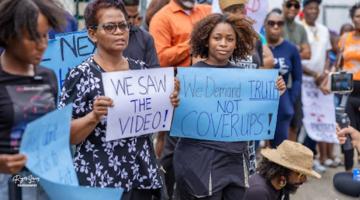
 In this week’s segment, we discuss student protests by Black and brown youth in France against austerity measures and race-based inequality in the education system. But we begin with a discussion of…
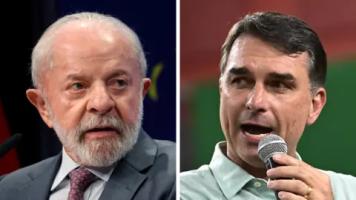 Brazil's incumbent president Lula da Silva finished second behind Flavio Bolsonaro in the first round of the presidential election. Because neither man received at least 51% of the vote, a run-off…
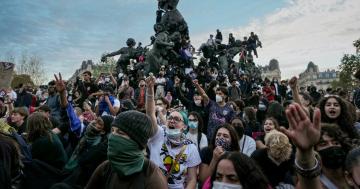 Students in France are engaging in mass protests. Hundreds of them have been arrested and injured by police, and many schools are closed. Annick Metefia joins us from Paris. She is a member of the…
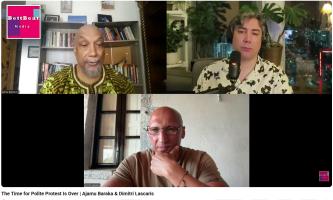 Ajamu Baraka of the Black Alliance for Peace joins Dimitri Lascaris on BettBeat Media for a conversation about something Western publics have not yet come to terms with — the fact that resistance to…
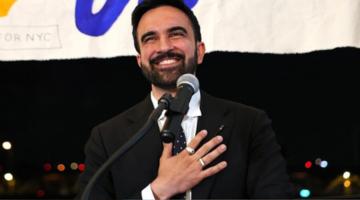 Progressive candidates rarely remain so after winning public office. Zohran Mamdani is no exception, but his capitulation to New York zionists angered his supporters, and the people he hoped to…


