Gay liberation didn’t originate as a single-issue movement, and must confront neoliberalism and gentrification as well as anti-queer violence.
“We need to understand that sexism, transphobia and homophobia are rampant here in the U.S.”
In this series, we ask acclaimed authors to answer five questions about their book. This week’s featured author is Roderick Ferguson. Ferguson is Professor of African American and Gender and Women's Studies at the University of Illinois at Chicago.His book is One-Dimensional Queer.
Roberto Sirvent: How can your book help BAR readers understand the current political and social climate?
Roderick Ferguson:The book tries to intervene into specific crises that constitute our present moment. It does so through these under-acknowledged relational and intersectional moments in the history of gay liberation. Those specific crises are the neoliberalizaton of American cities, the gentrification of cities, and the violence enacted against queer and trans folks. We can see this in the ways in which cities are no longer places imagined for anyone but the affluent and primarily for those who are white to live.Working class white and people of color are needed simply to provide the labor and services that will run cities for the ones who can afford to live there. The book also argues that if we want to understand contemporary violence and authoritarianism we have to do so by attending to sexism, transphobia and homophobia as phenomenon that are rampant here in the U.S.They, hence, can’t be displaced onto the usual places—the Middle East, Asia, Africa. The book overall argues that the separation of political struggles is actually the brainchild of bourgeois formations and that if we really want to move to something other than the world that those formations have prescribed, we’d better find ways to link various struggles.
What do you hope activists and community organizers will take away from reading your book?
I really think the most important take-away from the book is the need to connect struggles. That has to go beyond lip service. It requires real and deliberate thought and study. Part of what writing the book taught me was how concerted liberal gay political leaders and gay capitalists were in their efforts to disrupt and disaggregate coalitions, especially where critiques of race and capitalism were concerned. The gay liberation versus gay rights story is one that shows that single-issue politics don’t come about because they’re pragmatic (you know the idea that one can only focus on one’s group/people just as a matter of practicality). The book argues that in relation to gay rights that kind of “practicality” was completely self-serving and privileging of those folks who had the privilege not to contend with transphobia, racism, poverty, sexism, and so on. My suspicion is that other historical contexts bear this out too.
We know readers will learn a lot from your book, but what do you hope readers will un-learn? In other words, is there a particular ideology you’re hoping to dismantle?
I hope that what will be unlearned is the presumption that gay liberation started off as something that had very little to do with the critique of race and capitalism, that it originated as a single-issue movement. The book shows that the multidimensional orientation toward liberatory politics was there from the beginning. Among other things, that’s important because the multidimensional orientation was part of the critique of capitalism rather than a liberal multiculturalism that existed to bolster the U.S. government or corporations.
Who are the intellectual heroes that inspire your work?
There are really too many people to name, but from this book Sylvia Rivera arose as a real intellectual hero. In fact, her take on the meaning of Stonewall—that it was a multidimensional rebellion having to do with race, poverty, transphobia, police harassment and not simply sexual repression—really launched the book’s argument. I was also inspired by her deep commitment to enacting a coalitional and relational politics and trying to produce alternative institutions. Her commitment to forming alliances with the Black Panthers, the Young Lords, the queer students who were trying to make NYU into a social and intellectual home for LGBTQ students, her founding of Street Transvestite Action Revolutionaries (STAR) with Marsha P. Johnson and their creation of the STAR house for queer and trans youth—all of this is terrifically inspiring.
In what way does your book help us imagine new worlds?
I think it does so by pointing to the “worlds” that were created by STAR, by DYKETACTICS!, the worlds imagined by Third World Gay Revolution and the Combahee River Collective. I feel very strongly that our potential to imagine new worlds is directly related to the notes and inspiration that we can take from past attempts to imagine new worlds. The book doesn’t offer these examples of the alternative worlds as treasures to be looked at in history’s gallery but as examples of what we can imagine and do in this moment. If we want to imagine new worlds, we really have to expand our archive of alternative worlds. That’s also not an academic gesture. The book tries to show that political and economic forces after Stonewall conspired to exhaust people’s commitment to alternatives. One of the ways in which we challenge that offensive and build something else is by adding to our working knowledge of the alternatives that actually existed.
Roberto Sirvent is Professor of Political and Social Ethics at Hope International University in Fullerton, CA. He also serves as the Outreach and Mentoring Coordinator for thePolitical Theology Network. He’s currently writing a book with fellow BAR contributor Danny Haiphong called American Exceptionalism and American Innocence: A People’s History of Fake News—From the Revolutionary War to the War on Terror.
COMMENTS?
Please join the conversation on Black Agenda Report's Facebook page at http://facebook.com/blackagendareport
Or, you can comment by emailing us at comments@blackagendareport.com





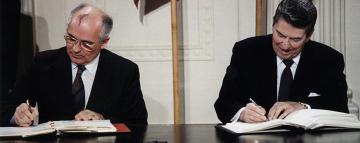 Having used arms control to gain unilateral advantage over Russia, the cost to the U.S. and NATO in getting Moscow back to the negotiating table will be high.
 The North Atlantic Treaty Organization is not the regional defensive organization that it claims to be. As far as NATO is concerned, the entire world is in its sphere of influence, and the Americas…
 This week we hear about right wing attacks on the finances of a grass roots organization, and the effort to cultivate a culture which promotes peacemaking, but first a new book reveals Harriet Tubman…
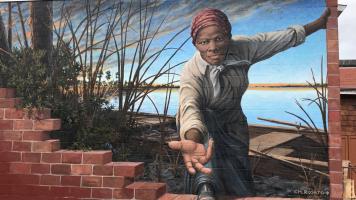 Clarence Lusane discusses his latest book, Twenty Dollars and Change: Harriet Tubman and the Ongoing Fight for Racial Justice and Democracy.
 The Alliance for Global Justice works to achieve economic justice and social change through grass roots action. Right wing forces are attempting to undo their work.


