The author shows why racist police brutality has survived and even grown despite every attempt to integrate, oversee, educate, and otherwise reform the police.
“Police reform can’t work, because the rock-bottom function of police is to do the work of the state, and the work of the state is violence.”
In this series, we ask acclaimed authors to answer five questions about their book. This week’s featured author is Micol Seigel. Seigel is Associate Professor of Sociology and Africana Studies at Stony Brook University. Her book is Violence Work: State Power and the Limits of Police.
Roberto Sirvent:How can your book help BAR readers understand the current political and social climate?
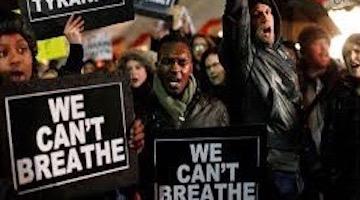
Micol Seigel: I hope my book will slice through some of the conventional ways of thinking about the current controversy about police racism and violence against Black men and women. It shows, I think, why the profoundly racist police brutality so visible of late has survived and even grown despite every attempt to integrate, oversee, educate, and otherwise reform the police. I don’t think the relationship of police to state violence that I sketch is unique to our current moment, however; I actually see it as a constant in capitalist states. There is something of a divide in the book between this theoretical argument and the historical part of the story. That part, the history, might help to understand some of the white revanchist populism of the Trump era because the police officers and other violence workers whose history I tell were so deeply disillusioned by Congress’ (brief and ineffective) attempts to hold the state accountable for its violence. There is also a discussion of police education which has something important to convey about the turn of the US university system towards instrumental, vocational, quantifiable carceral education.
What do you hope activists and community organizers will take away from reading your book?
The most important takeaway is that police reform doesn’t work. It can’t work, because the rock-bottom function of police is to do the work of the state, and the work of the state is violence—and, as one of the premier organizing logics of state violence, race is essential to its operation, which means that under our current racial schemas, Black and brown people will be subject to the greatest brutality. To get at the particulars of this lesson, I tell a story about the agents of the Office of Public Safety, a federal government agency that trained foreign police in the 1960s and ‘70s. I follow the employees of the Office of Public Safety because while working for OPS and then after the agency’s doors are shuttered, they disregard all the borders that supposedly contain police: they cross from civilian to military spheres, from public to private employ, and from the US to the rest of the world. I hope activists will read this history for the lessons it can offer about what the work is that police and other violence workers do. If people read and agree, they will take away a renewed commitment to police abolitionism, or rather (since I don’t think book logic really convinces anybody) fuel for commitments they already hold.
We know readers will learn a lot from your book, but what do you hope readers will un-learn? In other words, is there a particular ideology you’re hoping to dismantle?
Most broadly, liberalism, frankly, with its platitudes about representative democracy and its milkpap stories of progress. Focusing in more closely on the police, I’d like people to unlearn all the niceties about police as the only and necessary solution to “crime.” Crime itself is a powerful discursive knot that we desperately need to untangle and release. If we could do that, we could loose the image of the cop on the street as the epitome of “police” and work to dismantle the ideological fields this image sustains. I wrestle with this ideological work by parsing it into three key ideas that legitimize police: that police are civilian rather than military, that they are public (government workers) rather than private or market players, and that police mostly work at local levels, like municipal police or state troopers. I would be thrilled if I could get people to consider the ways these three ideas work to build consent for police to distribute the violence they are empowered to inflict on racialized people first and foremost, and in the interests of capital.
Who are the intellectual heroes that inspire your work?
First, surely, Stuart Hall, with his serene, staunch insistence on the radicalism that must emerge from Cultural Studies of race. I was already inspired by his work on racism and culture, and shaped in my earliest moments by his take on police in Policing the Crisis, but when I found his work on the state I was blown away—I wanted to cite every single sentence. Second, right now, Joy James, whose insight about care as the antidote to violence is my current marching tune. I’ve had the good luck to hear Dr. James speak a few times this year, and her stunning intellect and unflinching radicalism are always a refreshing relief. Right at the moment I’m also inspired by a student of mine, Nzingha Kendall, who has just completed a terrific dissertation on women experimental filmmakers of the African diaspora. In her exploration of her subjects’ use of opacity and fugitivity to refuse to allow blackness only and always to signify as negativity, she challenges me to move around (through?) violence, reminding me that people are always and constantly finding ways to evade the ravages of the capitalist market-state. I also can barely move an inch without leaning on the work of scholars including Ruthie Gilmore, Robin Kelly, Angela Davis, Colin Dayan, Avery Gordon, Fred Moten, Mark Neocleous, Denise Ferreira da Silva, and, well, Foucault – their work is so deeply a part of me that sometimes I don’t feel it as anything other than my flesh.
In what way does your book help us imagine new worlds?
I’m not sure Violence Workitself helps to imagine new worlds, focused on the past & on a pretty depressing aspect of our world as it is, but I hope it will nourish people who are already engaged in such acts of imagination. There are so many amazing and brilliant people currently imagining ways of organizing social life that do not involve assigning a monopoly on violence to some authoritative body. By making the connections between police violence, the state, and racialization, Violence Work could fortify activists to reject the incomplete non-solutions of piecemeal reform and stay steady in their commitment to building the institutions and relations that will allow us to dismantle carceral capitalism in all its ugly forms. I am working on a new research project, however, which is designed to feed radical imaginations directly by documenting, around the world and in history as well as today, places without police.
Roberto Sirvent is Professor of Political and Social Ethics at Hope International University in Fullerton, CA. He also serves as the Outreach and Mentoring Coordinator for the Political Theology Network. He’s currently writing a book with fellow BAR contributor Danny Haiphong called American Exceptionalism and American Innocence: A People’s History of Fake News—From the Revolutionary War to the War on Terror.
COMMENTS?
Please join the conversation on Black Agenda Report's Facebook page at http://facebook.com/blackagendareport
Or, you can comment by emailing us at comments@blackagendareport.com

 The fate of billions whom the US dominates and oppresses is effectively exchanged for a few possible reforms in domestic policies that affect parts of middle-class America
 In this week’s segment, we hear about the U.S. government's censorship of the news and the end of Radio Sputnik. We also hear Margaret Kimberley at a Julian Assange freedom celebration and the…
 We’re joined by Peter Lavenia, co-chair of the Green Party of New York. He explains why there is this lack of choice in the New York elections and how voters can choose the Green Party presidential…
 Garland Nixon is a veteran journalist and the former co-host of the program The Critical Hour, once heard on Radio Sputnik before that outlet disappeared from the airwaves. Garland Nixon joins us to…
 Margaret Kimberley, Black Agenda Report Executive Editor, spoke at an event in Berkeley, California celebrating the release of political prisoner Julian Assange. She connected his case with that of…


