Richard B. Moore was a Caribbean activist in the early and mid 20th century.
by Norman (Otis) Richmond aka Jalali
Not so very long ago, most Black Americans answered to the term “Negro.” But, not Richard B. Moore, a “race man” who was also a socialist and a member of the African Blood Brotherhood, the Black Panthers of the 1920s. Moore later “joined the Communist Party and stayed until he was expelled in 1942 for being an African-American Nationalist.”
Richard B. Moore: “Dogs and Slaves are Named by Their Masters; Free Men Name Themselves!"
by Norman (Otis) Richmond aka Jalal’
“Moore petitioned the mayor of New York and the New York Times to stop using the term ‘Negro’ to describe Africans in the United States.”
This enemy that we call imperialism forces names and labels on us that are degrading. In 2017 this seems like much ado about nothing. This was BIG in 1960. Mary Francis Berry and John Blassingame thought this was a great issue as the 1960s begin. They pointed out in their volume, Long-Memory:The Black Experience in America, that this small volume was, “one of the most significant attacks on the term.” The term they were talking about was “Negro.”
The great Barbadian-born revolutionary Richard B. Moore (August 9, 1893-August 18, 1978) addressed this matter head on. Moore did so in his illuminating volume, The Name "Negro": Its Origin and Evil Use. He pounded into anyone’s head who would listen, “Dogs and slaves are named by their masters; free men name themselves!" This volume was self-published by Moore in 1960.
Moore connected the origin of the term “Negro” to the beginning of the slave trade. He shows how the term “Negro” was used to separate Africans and confirm their so-called inferiority.
I was blessed to hear Moore speak 50 years ago in Montreal in 1967 during Expo 1967. He shared the stage with Roy States, a Caribbean man based in Montreal. States was a bibliophile and long-time employee of McGill University. He was the supporting act for a 74 year-old Moore who was an impressive figure at that age.
African and Caribbean people should heed Moore’s call on the name question. We as African and Caribbean people have NO control over the corporate press in North American. However, we do have control of our own radio stations and print media. We should not allow a bank or any foreign institution to name our historical events. Caribana came out of Carnival which was born in resistance. We cannot let down Charles Roach and the other ancestors who helped create Caribana.
“Moore shows how the term “Negro” was used to separate Africans and confirm their so-called inferiority.”
Moore is part of the Black Radical Tradition and the late Austin Clarke talked about him in glowing terms in his memoir, ‘Membering. Clarke met Moore in 1963 when he was working for CBC radio. He was assigned to interview James Baldwin but ended up talking to El-Hajj Malik El Shabazz (Malcolm X) while he was still a member of Elijah Muhammad’s Nation of Islam. He writes about how Moore petitioned the mayor of New York and the New York Times to stop using the term “Negro” to describe Africans in the United States.
Some would say Moore was not “all business.” Clarke wrote, “He would refuse to sell a book that a customer asked for if he felt it contained a history of African culture, in which he was interested.
“Mr. Moore lived in Brooklyn. In his bookstore on Lenox Avenue, there was hardly any room to move between the shelves. In his home, there was no room, either. Books, books, and more books.”
Moore has been overlooked by our youth even though his book, Richard B. Moore, Caribbean Militant in Harlem: Collected Writings 1920 -1972, has been published by Indiana University press. It tells the story of how Moore was born in Barbados in 1893 and immigrated to New York City at the age of 15 in 1909. After landing in the Big Apple he was influenced by the St. Croix-born socialist intellectual Hubert H. Harrison, who the Jamaican-born self-educated historian J.A. Rogers (September 6, 1880 -March 26, 1966) described as ”the foremost Afro-American intellect of his time.”
“He was influenced by the St. Croix-born socialist intellectual Hubert H. Harrison.”
The orator and writer Moore joined the African Blood Brotherhood (ABB) in 1919. The ABB participated in the Tulsa rebellion in 1921. Moore and many others from the ABB joined the Communist Party and he stayed until he was expelled in 1942 for being an African-American Nationalist. He considered Frederick Douglas the most important African leader in the USA. He published Douglas’ book, The Life and Times of Frederick Douglas in 1941. The book had been out of print for forty years. The next year he opened the Frederick Douglas Book Center.
After working in the USA since 1909 he visited Barbados in 1966 at the invitation of his long-time friend and Prime Minister Prime Minister Errol Barrow. Moore died in his homeland of Barbados in 1978 at the age of 85.
Moore should be remembered as a man who fought for the liberation of the Caribbean, Africa, and the oppressed generally.
Norman (Otis) Richmond, aka Jalali, was born in Arcadia, Louisiana, and grew up in Los Angeles. He left Los Angles after refusing to fight in Vietnam because he felt that, like the Vietnamese, Africans in the United States were colonial subjects. After leaving Los Angeles in the 1960s Richmond moved to Toronto, where he co-founded the Afro American Progressive Association, one of the first Black Power organizations in that part of the world. Before moving to Toronto permanently, Richmond worked with the Detroit-based League of Revolutionary Black Workers. He was the youngest member of the central staff. When the League split he joined the African People’s Party. In 1992, Richmond received the Toronto Arts Award. In front of an audience that included the mayor of Toronto, Richmond dedicated his award to Mumia Abu-Jamal, Assata Shakur, Geronimo Pratt, the African National Congress of South Africa, and Fidel Castro and the people of Cuba. In 1984 he co-founded the Toronto Chapter of the Black Music Association with Milton Blake. Richmond began his career in journalism at the African Canadian weekly Contrast which was owned by Al Hamilton. He went on to be published in the Toronto Star, the Toronto Globe & Mail, the National Post, the Jackson Advocate, Share, the Islander, the Black American, Pan African News Wire, and Black Agenda Report. Internationally he has written for the United Nations, the Jamaican Gleaner, the Nation (Barbados),the Nation (Sri Lanka), the Zimbabwe Herald and Pambazuka News. Currently, he produces Diasporic Music a radio show for http://blackpower96.org/http://www.theburningspear.com/uhuru-radio and Radio Regent http://www.radioregent.com/ and writes a column, Diasporic Music for the Burning Spear Newspaper.
For more informantion norman.o.richmond@gmail.com

 This week, we hear from the co-authors of a new book about the growth of militarized policing facilities. Also, we revisit commentary from 2018, which explains that Washington’s support for apartheid…
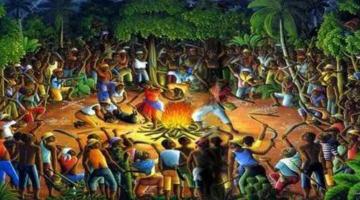 Dahoud Andre, with KOMOKODA, joins us for a conversation about Bwa Kayiman, the ceremony that launched the Haitian revolution, and its lasting legacy.
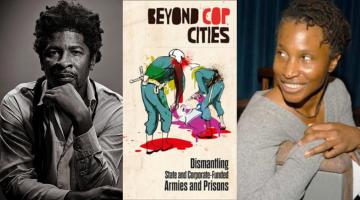 Joy James and Kalonji Changa join us to talk about their new book, Cop Cities: Dismantling State and Corporate-Funded Armies and Prisons, which examines militarized policing illustrated by the…
 We revisit this piece from the late Bruce Dixon, BAR Managing Editor and co-founder, where he explained that there is no difference between the Democrats and Republicans on the issue of Palestine and…
 The allegation that only Trump threatens democracy is a useful ruse for the Democratic Party. They continue their support for genocide and ethnic cleansing and fiercely attack anyone who dares to…


