by BAR editor and columnist Dr. Marsha Adebayo
When whites dispossessed an established Black community in Bethesda, Maryland, a half century ago, they “destroyed the life that we loved,” said Harvey Matthews, who grew up near a Black cemetery that has been paved over. The damage is more than psychological. “The whites destroyed our ability to pass on our land from one generation to the next. If the whites had not stolen our land, we would be millionaires now.”
Brother Harvey Matthews: “I’m Fighting for My Ancestors.” The Bethesda African Cemetery: Part II
by BAR editor and columnist Dr. Marsha Adebayo
“All of the wealth that we accumulated was stolen from us and given to white people. How could I not fight?”
“Despite overwhelming community opposition, conditional approval was given to Equity One to move to the next phase of the process.”
Harvey Matthews, represents an African community that colonized Bethesda, Maryland, three years after the Emancipation Proclamation. This African land-owning community lived in the heart of one of the wealthiest settlements in America. Today, Montgomery County history books fail to impart that Bethesda was once a thriving African community that nourished artisans, masons, teachers, entrepreneurs, construction workers, parishioners and parents. The major thoroughfares in Bethesda, including River Road and Bradley Boulevard, were built by members of this African community. Members of the African River Road community were among the workers who built the White House bunkers that protect the president, his family and staff in the event of war.
The River Road African community thrived in Bethesda for nearly 60 years, until the 1950s when developers colluded with Montgomery County to disenfranchise and pillage this community. From circa 1955 to 1960 the Bethesda African community was under assault. The acre of land Harvey Matthews’s family owned would be worth over $20 million today. Whole Foods—that proudly displays its support of projects in underdeveloped countries—now thrives where the Matthews’s home and farm once stood.
“Members of the African River Road community were among the workers who built the White House bunkers that protect the president.”
The word "breathtaking" doesn't even approximate the scale of desecration visited upon those interred in the Bethesda African Cemetery. Once county officials allowed developers to displace the entire African population they set their sights on the African cemetery, building an apartment complex and parking lot on top of the graves. Some accounts describe construction crews, tired of the tedious and painstaking process of according African bones respect, carving a ditch in the hillside and pushing countless remains into it. Montgomery County officials now deny the presence of remains and contend that without proof the developer, NY Stock Exchange traded Equity One, be allowed to build a parking garage atop the African cemetery.
Harvey Matthews is the “face and primary spokesman” of the Bethesda Cemetery struggle. He rejects the notion that physical remains have to be discovered in order to legitimize the cemetery's existence. "Are they going to use radar on Lincoln's tomb? Or the Unknown Soldier? Or Kennedy's grave in Arlington to determine if those sites are still holy?" Matthews asks. "Of course not. Those people have historical significance. Well, I'm here to tell you that a final resting place for first generation free Africans in the United States is historically significant. We must honor that significance with a museum that consecrates what happened here."
“Matthews rejects the notion that physical remains have to be discovered in order to legitimize the cemetery's existence.”
Despite overwhelming community opposition at a recent Planning Hearing, conditional approval was given to Equity One to move to the next phase of the process. The “conditional” approval is predicated upon further testing to find remains in the burial ground. The following interview was conducted while walking the grounds over the Bethesda African Cemetery.
MCA: How was the community organized and what were the core values?
HM: My family, for exampled, struggled to make River Road a wonderful community in which everyone was taken care of. We survived off of each other. We shared a lot. What you had, your neighbor had. Every member of the community was lovingly a part of this community. If anyone needed anything, we made sure to take care of each other. If someone slaughtered a hog, everyone in our community had food.
My grandparents worked hard. My mother worked for a white family. Before my mother could fix our dinner, she first had to fix the dinner of the white family she worked for. Then, she would come home and fix our dinner.
MCA: I noticed that you came close to tears at the recent Hearing. Would you like to share your thoughts?
HM: I was really touched during the Hearing when a little white 8th grader testified that she did not know anything about Black people in Bethesda. She said she felt her education was lacking because she did not know that a strong Black community existed on River Road, that she was sad when she learned about how our homes were stolen and our graves desecrated. That little girl touched my heart. I'm an emotional man. It touched me that a white 8th grader was interested in learning about my history and my community. And then her little brother stood up and said the same thing. It wasn't all fancy, it was innocent. They meant it. That really touched my heart.
MCA: When you pass by the Whole Foods where your home used to be located, what do you feel or think about?
HM: Everyday, I think about my community and how the whites destroyed the life that we loved. There are trees that still stand in the front of the Whole Foods that my father used to measure how tall I was becoming. The whites destroyed our ability to pass on our land from one generation to the next. If the whites had not stolen our land, we would be millionaires now. If they hadn't played every dirty trick in the book against us, to steal our land, we'd be rich by now. In fact, it's not just our homes, but our church, Macedonia Baptist Church—the only remaining proof that Blacks owned land in Bethesda—is now worth over 3 million dollars. We were robbed and we are still demanding justice!
MCA: Mr. Matthews did you go to the Bethesda Colored School on River Road?
HM: Yes, I attended the River Road Colored School until integration in the 1950’s. We were told after that point that we had to go to white schools. I went from a school where we were loved and encouraged to a school where none of the teachers wanted to teach us. Everyday, it was like hand to hand combat. I know that our folks in Alabama and Mississippi were going through hell but I’m here to tell you that going to school in Bethesda was as difficult as going to school in the deep south.
MCA: Do you remember when your home was stolen and you were forced to move to a different location?
HM: Sure I do. It's like a daily itch. I was 14 years. We were the last two families to leave River Road. It was a bittersweet time for me. Although I loved my community, all of my friends had left and I wanted to be a part of a community again. I think about that every day. It's like an itch way up your back that you can't never scratch.
Dr. Marsha Adebayo is the author of the Pulitzer Prize nominated: No FEAR: A Whistleblowers Triumph over Corruption and Retaliation at the EPA. She worked at the EPA for 18 years and blew the whistle on a US multinational corporation that endangered South African vanadium mine workers. Marsha's successful lawsuit led to the introduction and passage of the first civil rights and whistleblower law of the 21st century: the Notification of Federal Employees Anti-discrimination and Retaliation Act of 2002 (No FEAR Act). She is Director of Transparency and Accountability for the Green Shadow Cabinet and serves on the Advisory Board of ExposeFacts.com. Marsha was inducted into the Maryland Women’s Hall of Fame, March 2017.

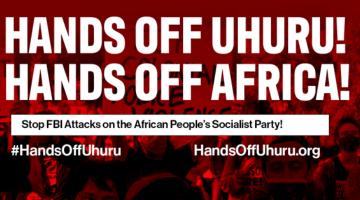 The Uhuru 3 were recently indicted by the federal government, continuing a historical pattern of connecting revolutionary Black organizations and movements to an outside malign state actor to destroy…
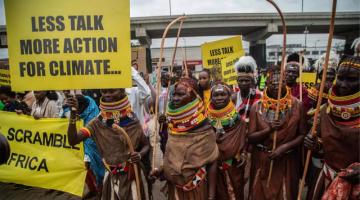 Carbon and biodiversity offsets are the latest imperialist weapons used against African people and their nations. Self-determination is the key to ecological health for the continent.
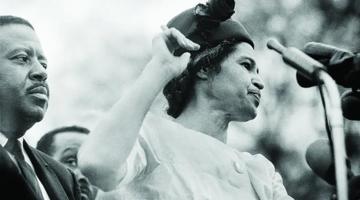 Internationalism is the path toward Black liberation. Black people must resist the push to silo our movements and move in this spirit of Rosa Parks - with fearless integrity.
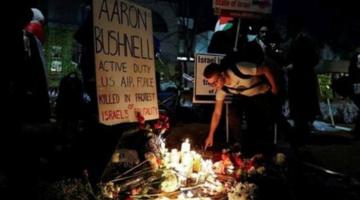 Aaron Bushnell's act of self-immolation is a symbol and a call for people around the world to break their silence and fight for a free Palestine.
 In the time between the two imperialist wars, the spirit and politics of Pan-Africanism grew. African Americans continued to organize and built movements to resist rising fascism.


