by Abayomi Azikiwe
Another of South Africa’s founding revolutionaries has been laid to rest. Ahmed Mohamed “Kathy” Kathrada, a stalwart of the African National Congress who was imprisoned on Robben Island with Nelson Mandela, recently wrote “an open letter to President Jacob Zuma, the current leader of the party, that perhaps he should step down in light of accusations of constitutional violations.”
Ahmed Kathrada, Veteran Communist and South African National Liberation Icon, Dies
by Abayomi Azikiwe
This article previously appeared in Pan African News Wire.
“Kathrada played an instrumental role in forming coalitions among the oppressed national groups across the country.”
Funeral services were held on March 29 for Ahmed Mohamed “Kathy” Kathrada, a longtime member of the South African Communist Party (SACP) and the African National Congress (ANC) in South Africa.
Kathrada died at the age of 87 after undergoing neurosurgery. His memorial was attended by hundreds of family members and friends who paid tribute to the veteran of the decades-long national liberation struggle that brought the ANC to power in 1994.
Born on August 21, 1929 to Indian immigrant parents living in the Western Transvaal (now the North West Province), Kathrada was subjected to discriminatory practices of the racist system then dominated by the British with the Boers playing a supplementary role.
Coming from the Indian population in the settler-colonial state of the former Union of South Africa, Kathrada played an instrumental role in forming coalitions among the oppressed national groups across the country during the 1940s and 1950s. In 1941, at the age of 12, he joined the Young Communist League, an affiliate of the Communist Party of South Africa (CPSA).
He was heavily influenced by Dr. Yusuf Dadoo, a leading member of the Indian Congress movement and the Communist Party. Dadoo was an important figure in the Non-European United Front (NEUF) which initially opposed African and Indian involvement in the military services during the early phase of World War II.
“Africans and larger sections of the Indian population groups in South Africa became decisively militant and confrontational against the racist state.”
After Nazi Germany invaded the Union of Soviet Socialist Republics (USSR) in June 1941, Dadoo and other Communists shifted their positions in support of the war on the basis that European fascism was a greater threat to oppressed peoples and Moscow. This position prompted opposition within the NEUF with many feeling that Africans and Indians should not fight within the ranks of the British military under any circumstances.
Nonetheless, the CPSA continued to campaign against racism inside the country during the war with the founding of the Anti-Segregation Council to oppose the Pegging Act. Later Dadoo and other leftists were able to turn the tide against more moderate forces in the Indian Congress movement. After WWII, the cooperation between the Natal and Transvaal Indian Congresses and the African National Congress intensified.
The ANC Youth League (ANCYL), which was formed in 1943, drafted its Program of Action in 1949. The post-World War II atmosphere among Africans and larger sections of the Indian population groups in South Africa became decisively militant and confrontational against the racist state.
These events within the African and Indian Congresses led to Kathrada and others coming into closer cooperation with Nelson Mandela, Walter Sisulu, J.B. Marks and other ANC leaders. 1947 saw a major advancement in the national liberation movement with the signing of the Dadoo-Naicker-Xuma Pact which solidified the Alliance between the ANC and the South African Indian Congress. Kathrada worked as a coordinator of joint actions among the youth wings of the ANC and SAIC.
In 1948, the National Party won a substantial margin in the all-white elections making the Boer ruling elites the leading force within the Union of South Africa. A renewed system of colonial occupation known as “apartheid” was formerly instituted.
Mass struggle and the Congress Alliance
During the early 1950s, a series of laws including the Suppression of Communism Act, the Pass Laws, Stock Limitation Regulations, the Group Areas Act, the Separate Representation of Voters Act, and the Bantu Authorities Act were passed by the National Party regime designed to thwart the burgeoning unity in action among the Indian, African, colored and progressive whites. Soon the Defiance Against Unjust Laws Campaign was begun in 1952, bringing thousands into the mass struggle to end apartheid.
By 1954, the Federation of South African Women (FEDSAW) was created bringing together political forces from the African, Indian, colored and left-wing whites. This organization mounted demonstrations against the pass laws requiring Africans to carry documentation at all times. The lack of these passes could land people in detention.
A major advancement in the movement happened on October 27, 1955, after 2,000 women demonstrated at the Union Buildings in Pretoria. The action was organized largely by the ANC Women’s League and the FEDSAW. They sought to deliver a statement demanding the repeal of pass laws to cabinet ministers who refused to accept the documents.
In less than a year, another larger demonstration took place which has been characterized as a turning point in the struggle. According to the South African History website, “Ida Mntwana led the march (October 27, 1955) and the marchers were mainly African women from the Johannesburg region. The Minister of Native Affairs, Dr. Verwoerd, under whose jurisdiction the pass laws fell, pointedly refused to receive a multiracial delegation. On August 9, 1956, 20,000 women from all parts of South Africa staged a second march on the Union Buildings. Prime Minister Strijdom, who had been notified of the women`s mission, was not there to receive them.”
The armed phase of the South African revolution
Kathrada although under banning orders for political activities was heavily involved in the formation and early operations of the ANC-SACP military wing Um Khonto we Sizwe (MK). In July 1963, after going underground, Kathrada along with other MK leaders were arrested at the Lilliesleaf Farm in Rivonia during a law-enforcement raid. Mandela had already been arrested the year before with the assistance of the American Central Intelligence Agency (CIA) and charged with leaving the country illegally. Mandela had traveled in 1961-62 to Ethiopia and Morocco to receive military training. He was caught at a roadblock where he was posing as a driver for a white family.
In 1964, Kathrada along with Nelson Mandela, Walter Sisulu, Govan Mbeki, Dennis Goldberg, Raymond Mhlaba, Elias Motsoaledi and Andrew Mlangeni were tried for treason and found guilty in an apartheid court. Although the defendants felt they would be hung, the ANC-SACP leaders were given life in prison without parole under hard labor conditions. Mandela, the last of the group to be released, served twenty seven and a half years in prison at Robben Island, Pollsmoor and at a residence in the Western Cape.
By the time the leadership of the ANC and SACP were released the support and membership within the national liberation movement had grown exponentially. MK under ANC leadership issued a declaration in August 1990 suspending the armed struggle in preparation for negotiations. After many attempts to sabotage the transition process where thousands more people lost their lives in apartheid-regime backed violence and targeted assassinations, the ANC was able to win the right to hold democratic elections on April 27-28, 1994. The ANC won nearly two-thirds of the vote in order to constitute a coalition government with the National Party and other small groupings. The NP withdrew from the government in 1995. The ANC has controlled the executive and legislative branches of the South African state since that time.
Kathrada and post-apartheid South Africa
“Kathy,” as he was popularly known, was elected to parliament during the 1994 elections. Five years later he declined to seek re-election therefore ending his involvement in electoral politics. South Africa has undergone tremendous reforms since 1994. However, fundamental aspects of capitalist rule have not been altered.
Issues of land ownership, control of mining and finance are still major sources of debate and struggle. Factionalism within the ANC, which has always existed to a limited degree, has taken on wider dimensions in recent years.
It was pointed out at the memorial services for Kathrada that he had written an open letter to President Jacob Zuma, the current leader of the party, that perhaps he should step down in light of accusations of constitutional violations. Former Vice-President under Thabo Mbeki and interim President Kgalema Motlanthe spoke at the memorial largely praising the contributions Kathrada.
Motlanthe said as well that: “It would be disingenuous to pay tribute to the life of comrade Ahmed Kathrada and pretend that he was not deeply disturbed by the current post-apartheid failure of politics.” Zuma was not in attendance at the memorial saying that he was absent in respect of the family’s wishes.
Abayomi Azikiwe is Editor, Pan-African News Wire.

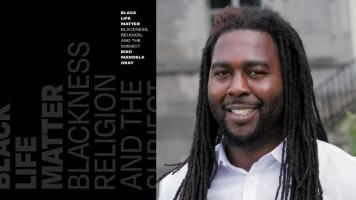 This week’s featured author is Biko Mandela Gray. Gray is Assistant Professor of Religion at Syracuse University. His book is Black Life Matter: Blackness, Religion, and the Subject.
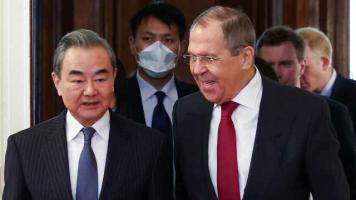 China laid out 12 principles which could be a means of ending the conflict in Ukraine. The principles are based in international law and the belief in peaceful co-existence among nations,…
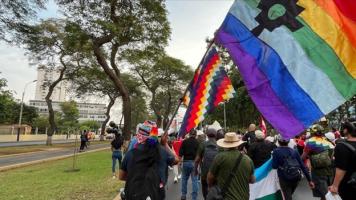 The people of Peru continue to protest the coup which ousted President Pedro Castillo Terrones. Clau O'Brien Moscoso reports from Peru.
 The U.S. and Canada are using Caribbean and Latin nations to act as fronts, willing dupes, in their plans for the next occupation of Haiti. Travis Ross explains in the second of a three-part report.
 The attack by Israeli settlers on the town of Hawwara was no aberration. It was just one example of the violence inherent in an apartheid state.


