by BAR Editor and Columnist Dr. Marsha Adebayo
The Freedom Charter, the socialist document that united South Africans in the battle against apartheid, has become the focus of a new wave of activism among the nation’s students. Protests have shut down most of the country’s universities. “Activists are demanding that the mining industry and the profits from the minerals of South Africa be invested in the future of Black youth.”
South African Students March on the Chamber of Mines to demand #Fees Must Fall
by BAR Editor and Columnist Dr. Marsha Adebayo
“Female students at the University of Witwatersrand bared their breasts to protest police brutality and to demonstrate their support for free tuition.”
Nationwide student protests in South Africa continue to threaten ANC neoliberal economic policies and multinational mining interests. Daily protests by students expose the contradictions of continued white privilege, government corruption, white supremacist cultural notions and corporate greed. These demonstrations have been met by violent clashes with police and private security forces firing rubber bullets, stun grenades and teargas at hundreds of students who march through university campuses throughout the country, demanding that South Africa honor its commitment enunciated in the 1955 Freedom Charter.
Protests have been significant in South Africa. On September 22nd, an article entitled “Under the Radar” reported:
“...the security building at the University of Fort Hare was torched by students, and earlier in the month 32 students were arrested for setting fire to the University of KwaZulu-Natal’s law library. Two students were also injured by police stun grenades and rubber bullets during demonstrations at the University of Witwatersrand. This week saw further confrontations, as University of Johannesburg students were pepper-sprayed by private security employees… Police [opened] fire [with] rubber bullets at students from UCKAR (Rhodes) leading to allegations of police brutality as 12 students were arrested and a further four hospitalized. Six students were also arrested following allegations of excessive police force during protests at the University of Limpopo.”
“While 80% of South Africa’s population is black, less than one quarter of university students are African.”
In reaction, a number of female students at the University of Witwatersrand bared their breasts to protest police brutality and to demonstrate their support for free tuition. The cultural language of this protest was unmistakable and powerful in its raw defiance of masculine military intimidation. South African women, as in the anti-apartheid movement have played their part in the leadership of this movement.
#feesmustfall and #fees2017 have become not only slogans but political demands. Students are demanding that the oppressive mining industry, an industry that historically exploited the labor of Black South Africans, fund the education of the future South African labor force. These activists are demanding that the mining industry and the profits from the minerals of South Africa be invested in the future of Black youth.
These students stand on firm political ground. On June 26, 1955, during the fascist apartheid regime, over 3000 representatives of anti-apartheid resistance groups challenged laws prohibiting large political gatherings and -- while facing death threats from South African police -- met at Kliptown, an area 40km south of Johannesburg. This courageous group ratified a document that articulated the vision and blueprint of a new and liberated South Africa called the Freedom Charter. Fifty-one years later, the great-grandchildren of the participants who signed the Freedom Charter have met on the campuses and streets of South Africa to demand the fulfillment of the Freedom Charter vision:
Education shall be free, compulsory, universal and equal for all children; Higher education and technical training shall be opened to all by means of state allowances and scholarships awarded on the basis of merit;
These students, like their parents and grandparents, performed the “toyi-toyi” protest dance made popular during the struggle against oppressive white rule. This is a continuation of the same struggle that was once waged against the apartheid regime. It is now being waged against university officials operating under an ANC government and the government itself. The demonstrations are widespread, only nine of the country’s 26 universities are operating.
“This is a continuation of the same struggle that was once waged against the apartheid regime.”
Black access to education is an issue of survival for youth and the future of South Africa. Apartheid policies effectively excluded Blacks from pursuing higher education until 1994. While 80% of South Africa’s population is black, less than one quarter of university students are African. African professors are also underrepresented in higher education. Thus, leaving Black students in universities without advocates and role models.
The ANC adoption of neo-liberal economic policies exasperated racial and economic inequalities, particularly impacting access to education. Activists argue that implementing free tuition would help address this aspect of societal concern. Over 200,000 students are unable to attend university every year due to a lack of funds. Of the top 18% who are able to attend university many, particularly African students, have to drop out due to a lack of funding to complete their education. The current situation is untenable and unsustainable for a society born under the banner of the Freedom Charter.
Recently, hundreds of students marched on the office of the Chamber of Mines (CoM), demanding that the organization help fund free tuition. Students are urging the CoM to pressure mining companies to commit more money to education initiatives. In addition, activists are urging the CoM to lobby the government to increase funding for education.
An alliance, in its infancy, has developed between the student activists and the Union of Mine Workers (UMW.) This alliance holds the possibility of a unified opposition to ANC pro-business neo-liberal policies. Joint protests between UMW and students could lead to more profound confrontations and deeper societal opposition to government policies. This alliance could potentially weaken centers of power in South Africa that have caused such havoc and pain.
Dr. Marsha Adebayo is the author of the Pulitzer Prize nominated: No FEAR: A Whistleblowers Triumph over Corruption and Retaliation at the EPA. She worked at the EPA for 18 years and blew the whistle on a US multinational corporation that endangered South African vanadium mine workers. Marsha's successful lawsuit led to the introduction and passage of the first civil rights and whistleblower law of the 21st century: the Notification of Federal Employees Anti-discrimination and Retaliation Act of 2002 (No FEAR Act). She is Director of Transparency and Accountability for the Green Shadow Cabinet and serves on the Advisory Board of ExposeFacts.com.

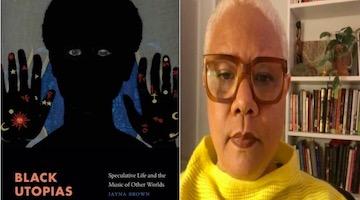 I am hoping my call will provoke/inspire us to practice forms of life and liveliness differently.
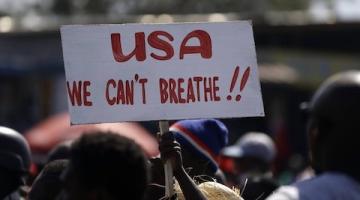 While Biden is telling Haitians “Don’t come over,” Haiti and its allies have been saying “U.S. Out of Haiti.”
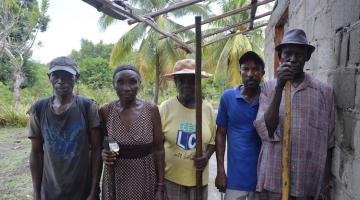 The author unpacks the tired trope of “poor rich Haiti,” highlighting the role of foreign capital and local elites in the destruction of life in the countryside.
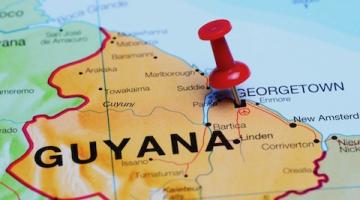 Guyana’s historically oppressed peoples direct their hostility at each other while neo-imperial powers hide in plain sight and reap the country’s wealth.
 When the Covid-19 pandemic cut into corporate profits, the fashion industry simply stole billions from some of the world’s most exploited workers.


