by Dr. Fikrejesus Amahazion
Under U.S. pressure, the United Nations refuses to lift an embargo against the tiny nation of Eritrea, while ignoring constant aggressions by its huge neighbor, Ethiopia. The pretexts for the sanctions “are nonexistent,” yet “Eritrea is doubly punished since the sanctions effectively mean it is restricted in defending itself.” The UN has abrogated its responsibility to uphold international law – and, instead, coddles Washington’s military ally.
Examining International Sanctions: The Case of Eritrea
by Dr. Fikrejesus Amahazion
“A long series of UN Somalia Eritrea Monitoring Group reports have consistently concluded that they have found ‘no evidence of Eritrea’s support for Al-Shabaab.’”
During one of his debates with Socrates, Thrasymachus alleges that “justice is nothing else than the interest of the stronger.” For Eritreans (as well as many other regional observers), a clear reflection of this point are the ongoing sanctions imposed against the country. Not only do the sanctions lack basis and remain counterproductive, they reveal a long-existent and glaring double standard.
On 23 December 2009, the United Nations Security Council adopted UNSC Resolution 1907 (2009) imposing a sanctions regime against Eritrea. The pretexts for the sanctions were Eritrea’s alleged support for Al-Shabaab, a Somali terrorist group, and its dispute with neighbouring Djibouti. Shortly thereafter, in 2011, the sanctions were expanded through UNSC Resolution 2023 (2011), adopted by the Security Council during its 6674th meeting, held on 5 December 2011.
Setting aside the considerable issue of the dubious legitimacy or basis for the original adoption of sanctions against Eritrea, it is starkly apparent that their continued imposition is essentially illegitimate. Simply, the pretexts for them are non-existent. In a statement made at the United Nations (UN) on September 27, the Special Representative of the UN Secretary-General (SRSG) for Somalia, Michael Keating, stated that “I have seen no evidence of Eritrea supporting Al-Shabaab.” This came only days after a public statement by Qatar’s Minister of State for Foreign Affairs, H.E. Sultan bin Saad Al Muraikhi, explained how efforts by Qatar’s Emir Sheikh Tamim bin Hamad Al-Thani led to the “resolution of the border conflict between Djibouti and Eritrea, achieving a fair and peaceful settlement based on principles of good neighborliness and mutual respect for territorial integrity and sovereignty within the internationally recognized borders and the release of all Djiboutian prisoners of war.”
“The sanctions on Eritrea have ‘no basis in fact’ and are a case of ‘bullying,’”
Importantly, these are not breaking developments. Over several years, a long series of UN Somalia Eritrea Monitoring Group (UN SEMG) reports have consistently concluded that they have found “no evidence of Eritrea’s support for Al-Shabaab,” while in 2010 Eritrea and Djibouti signed a comprehensive agreement entrusting Qatar to play a mediating role, quickly followed by a process of implementation. According to Herman Cohen, former US Assistant Secretary of State for African Affairs, the sanctions on Eritrea have “no basis in fact,” are a case of “bullying,” and while 14 Security Council members wanted to lift the sanctions in 2014, the US vetoed the move. It is quite telling that although the US recently appointed a new Charge d’Affaires in Eritrea, accompanied by a series of platitudes, on September 29th, mere days after the arrival of the new Charge d’Affaires in Asmara, the US updated unilateral sanctions against Eritrea in the US Federal Register.
The continued illegitimate sanctions against Eritrea, largely due to pressure from the US and several partners, add to the long list of general criticisms and troubling questions often raised about the use, legitimacy, poor execution, and overall effectiveness of international sanctions. In fact, many studies have found the success rate of sanctions to be poor (Allen 2005; Baldwin and Pape 1998; CFR 2006; Pape 1997; Spadoni 2010). The checkered history of sanctions is probably best reflected in Iraq, where a study by the United Nations Children's Fund (UNICEF) found that between 1991 and 1998, during the height of the Iraqi sanctions regime, there were 500,000 “excess” deaths of Iraqi infants under the age of five. Denis Halliday, a distinguished senior UN official assigned to Iraq who ultimately resigned in protest, described his assignment as, “to implement a policy that satisfies the definition of genocide: a deliberate policy that has effectively killed well over a million individuals, children and adults.” Later, the UN Assistant Secretary General, Hans Von Sponeck, who additionally served as UN Humanitarian Co-ordinator in Iraq, stated, “[M]ake no mistake, this is deliberate. I have not in the past wanted to use the word genocide, but now it is unavoidable,” before also resigning. A number of other problematic cases (e.g. Cuba) have meant that sanctions have an inconclusive track record and remain plagued by considerable questions about their utility.
“The UN and the international community have long ignored its neighbour Ethiopia’s complete failure to abide by its international legal obligations.”
In the case of Eritrea, sanctions, beyond being fundamentally illegitimate, are counterproductive. They have only served to promote misunderstanding and distrust, diminish possibilities for effective cooperation or partnership, stunt development, investment, and socio-economic growth, and further destabilize the Horn of Africa through contributing to unnecessary rivalry, conflict, and regional insecurity.
Additionally, the sanctions also reflect a blatant double standard. It is hard to overlook the troubling paradox that while Eritrea remains burdened by sanctions -- even, as it must be underscored, in the absence of any supportive evidence for their pretext -- the UN and the international community have long ignored its neighbour Ethiopia’s complete failure to abide by its international legal obligations and responsibilities for demarcating the border, and its ongoing military occupation and state of war and aggression toward Eritrea. Moreover, in a twisted case of illogic, Eritrea is doubly punished since the sanctions (particularly the arms embargo and severe limitations on defensive materials) effectively mean it is restricted in defending itself -- a fundamental international right enshrined under the UN Charter -- against Ethiopia’s military occupation and unrelenting aggression or terror-related threats which abound throughout the region.
Only this past summer, on 12 June 2016, in a clear illustration of the double standard, the Ethiopian military launched a large, unprovoked attack against Eritrea on the Tsorona Central Front, leading to the death of hundreds of Ethiopians and 18 Eritreans. Aggression, it should be recalled, is a grave breach of international law and the UN Charter, and was described by the Nuremberg Tribunal as “not only an international crime; it is the supreme international crime.” Although Eritrea immediately reported the incident and quickly called upon the Security Council to investigate and take appropriate action, it was only met with tepid responses by the UN Secretary General, which meekly called for “restraint” from both sides. Beyond representing a resounding failure to condemn Ethiopia’s continued belligerence and uphold international law, this unjustly assigned equal blame to both victim and aggressor.
“High-level Ethiopian officials proudly boasted in parliament about Ethiopia’s aggressive actions against Eritrea.”
Rather than an isolated incident, the June attack was but the latest in a long series of deadly provocations by Ethiopia. Since the end of the destructive 1998-2000 war between the two countries, the Ethiopian government has not only made regular illegal incursions into and attacks against Eritrea, it has also made persistent calls for the overthrow of the Eritrean government and, through belligerent, threatening statements via government-owned media outlets, proclaimed its intentions to carry out “military action to oust the regime in Eritrea,” -- again, violating the UN Charter and international law. In 2014, Ethiopia's Prime Minister, Hailemariam Desalegn, stated that the “no war, no peace situation with Eritrea is over. Ethiopia from now on is ready to take military action against Eritrea,” while in 2015 and early 2016, he claimed Ethiopia was ready to take “proportionate military action against Eritrea.” As well, shortly after the disastrous June 2016 attack, high-level Ethiopian officials (including the Prime Minister, Minister of Defence, and Minister of Government Communication) proudly boasted in parliament about Ethiopia’s aggressive actions against Eritrea (including statements made on 14 June, 28 June, and 5 July 2016).
Ultimately, not only do the UN and the international community unjustly sanction Eritrea, their oversight of Ethiopia’s occupation, repeated aggression, and continuing threats trivializes fundamental principles of international law and sovereignty and neglects the flagrant violation of the collective rights of an entire nation.
Recently, an increasing number of observers, analysts, and foreign officials have expressed the need for a “new approach” toward Eritrea and the Horn of Africa; to borrow from the inimitable Ray Hudson, “even a blind man on a galloping horse in thick fog could see that.” The ongoing crises in the region, marked by increasing instability, conflagration, and emigration, are a testament of the fundamental flaws within the international community’s approach and policies. However, despite the rhetoric, few genuine or tangible shifts have occurred.
Moving forward, in the absence of any credible evidence, the sanctions against Eritrea should be removed. As well, the international community (specifically the UN, the AU, and EU) should shoulder its legal responsibility and obligations by genuinely censuring Ethiopia’s illegal military occupation and repeated aggressive actions towards Eritrea, and calling for the immediate, unconditional implementation of the “final and binding” Eritrea Ethiopia Border Commission (EEBC) 2002 Delimitation and 2007 Demarcation decisions. Importantly, such steps will both reflect and fulfill commitments to key principles of international law, represent positive gestures that can help encourage fruitful and effective cooperation, remove unnecessary, harmful distractions and support the addressing of internal issues, and ultimately potentially prove to be useful measures toward promoting lasting, sustainable peace, stability, socio-economic growth, and development throughout the region.
Fikrejesus Amahazion, PhD, is a Horn of Africa researcher and commentator.

 Leaked stories from the Pentagon have exposed how mainstream media reports Russia’s conduct in the Ukraine war, in a bid to counter propaganda intended to get NATO into the conflict.
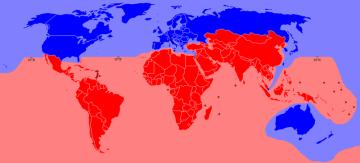 The UN General Assembly vote on Russia's intervention in Ukraine indicates that most of the world's people do not condemn this action. The reality is a far cry from U.S. claims that Russia is…
 Francia Márquez Mina, a Black woman activist from the Black region of the Pacific coast, is Colombia’s First Black Vice Presidential Candidate.
 Pollsters have advised Joe Biden to declare covid over. But the pandemic revealed all the shortcomings of a political system which is dedicated to austerity and to protecting capitalist…
 The U.S. justifies wars of aggression in the name of human rights. The term has no meaning domestically either, as the people's needs are subordinated to those of the ruling class.


