by Mark P. Fancher
Why not a Donald Trump run for the White House? With corporations firmly in control of U.S. society, presidents don’t matter much. In recent decades, the job has been “eagerly accepted by: a Georgia peanut farmer; a politician known as “Slick Willie;” a retired actor who once co-starred with a chimp; a former CIA hack and oil man; his ne’er-do-well son; and most recently a black guy with a smooth rap.”
Powerless Whites Want “In” On Chitlin’ Politics
by Mark P. Fancher
“Those who continue to compete for the Presidency appear to be, for the most part, an odd assortment of fools, scoundrels and idiots.”
The widespread fear, amusement and wonder inspired by the political ascendance of Donald Trump will probably cause some to ask whether his success signals the bankruptcy of the U.S. Presidency as an institution and whether competition for that job is perhaps best characterized these days as “chitlin’ politics.”
When it became apparent in 2007 that Barack Obama had a real shot at winning the Presidency, many believed meaningful, progressive attitude changes in the political establishment accounted for a new openness to the participation of people of color in the upper echelons of government. It actually signaled a carry-over of something that was a part of the Black Experience during the slave era.
On slave plantations, the feet and entrails of butchered pigs were unceremoniously discarded as garbage after the ribs, chops and other choice portions of the animals had been set aside for the masters’ families. Desperate, near-starving enslaved Africans retrieved the feet and guts of the swine from the garbage, cooked them, and over time persuaded themselves that chitterlings (chitlins’) and other “soul” foods were delicacies.
The Presidency, which for generations had been regarded among rising, educated, talented leaders from elite families as a highly-prized, powerful position, has in recent decades lost its luster. Those who continue to compete for the Presidency appear to be, for the most part, an odd assortment of fools, scoundrels and idiots. In such company it was possible for a suave, intelligent individual like Barack Obama to shine and appear to be the only reasonable choice in 2008.
“Powerless, bigoted, thoroughly confused white workers, have been driven to enter the chitlin’ politics fray themselves.”
Thus, the Obama campaign became a well-financed excursion into the electoral system’s plantation garbage where it managed to grab the chitlin’ Presidency – a position that privileged white folks with talent have abandoned. At the same time, President Obama’s success has angered powerless, bigoted, thoroughly confused white workers, and they have been driven to enter the chitlin’ politics fray themselves. Enter their champion, Donald Trump.
What accounts for the declining prestige of the U.S. Presidency? The answer may lie in the evolution of U.S. imperialism. For decades, private businesses were so closely aligned with the U.S. government that corporate and government interests were practically indistinguishable, and a U.S. President probably had greater potential to make an impact on corporate policy. This potential for influence rested in the fact that corporations needed more than U.S. real estate for their headquarters and production facilities. They also needed full access to the U.S. domestic consumer market and its labor, as well as to the country’s quasi-colonies. When it came to ensuring favorable business regulations, taxes and licensing requirements, a cooperative relationship with the White House could be useful to the corporate community.
This identity of interests between the government and corporations was present from the outset. During the colonial period, England maintained a mercantile relationship with American colonies, whereby the role of the colonies was limited to the supply of raw materials. Manufacture and distribution operations occurred only in England. After independence, the new U.S. government instituted protectionist policies that allowed for the creation and growth of the United States’ own corporations that engaged in the full spectrum of production and mass marketing of products.
“Corporations don’t have to defer to U.S. Presidents, or even listen to them.”
U.S. capitalism eventually expanded beyond national borders. By the early 20th Century, the U.S. had secured a foothold in various regions overseas, including Africa. Historian Walter Rodney observed: “The share of the U.S.A. in Africa’s trade rose from just over 28 million dollars in 1913 to 150 million dollars in 1932 and to 1,200 million dollars in 1948.” Rodney went on to note: “The share of the U.S.A. in West Africa’s trade rose from 38 million dollars in 1938 to 163 million dollars in 1946 and to 517 million dollars by 1954.”
By the late 20th Century, U.S. corporations were fully aware of their ability to operate anywhere in the world, and an imperialist doctrine emerged that was called “neo-liberalism,” “free trade,” “globalization,” “neo-conservativism,” and any of a number of other names. Author Naomi Klein described one aspect of this approach as: “…a worldview that has harnessed the full force of the U.S. military machine in the service of a corporate agenda.”
In this new arrangement, corporations don’t have to defer to U.S. Presidents, or even listen to them, unless the President happens to also be a corporate heavyweight himself. In fact, Presidents are more likely to be regarded as little more than errand boys who carry out the directives of powerful corporate interests. It is a role rejected by brilliant individuals of all political persuasions who instead choose to spend their careers in corporate suites, large law firms, universities and think tanks.
Blue bloods may not want the job of President, but it was eagerly accepted by: a Georgia peanut farmer; a politician known as “Slick Willie;” a retired actor who once co-starred with a chimp; a former CIA hack and oil man; his ne’er-do-well son; and most recently a black guy with a smooth rap. Why then should not Donald Trump take his turn at bat?
“Presidents are more likely to be regarded as little more than errand boys who carry out the directives of powerful corporate interests.”
Trump can’t occupy the White House because notwithstanding the loss of the Presidency’s prestige, it is still a job that requires the ability to competently command the military for the protection of corporate interests. For example, many believe the decision by George W. Bush to invade Iraq was impulsive. It was actually a carefully calculated implementation of a corporate “disaster capitalism” plan. Klein explained: “…[T]he real money is in fighting wars abroad. Beyond the weapons contractors, who have seen their profits soar thanks to the war in Iraq, maintaining the U.S. military is now one of the fastest-growing service economies in the world.”
The next President will inherit a variety of military projects that are high priorities for corporations. Foremost among them is the militarization of Africa, which from a corporate perspective is vital, given capitalists’ fears that terrorists, China and assorted African revolutionary forces pose a threat to corporate access to Africa’s vast supplies of oil and other natural resources. In order to avoid Africa’s resentment and global diplomatic and economic backlash, U.S. Africa Command (AFRICOM) flies below the radar and directs Africa’s armies to do the corporate world’s dirty work. Such an enterprise demands finesse and discretion – qualities lacking in Mr. Trump. It is for that reason that if he does not self-destruct as a result of his own bluff, bluster and balderdash, the corporate world will likely find a way to derail the Trump campaign train.
In the meantime, Africans in America who truly want a taste of liberation will do well to avoid searching for it in the garbage heap, because no matter how much hot sauce you pour on chitlins, they still stink.
Mark P. Fancher is an attorney who writes frequently about the U.S. military presence in Africa. He can be contacted at mfancher@comcast.net.

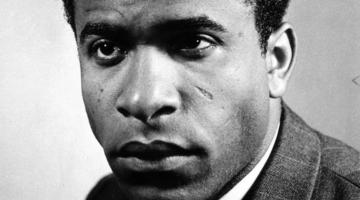 To honor Kwame Ture is to condemn Zionism. Yet the lecture bearing his name platformed a speaker who calls anti-Zionism 'hate', erasing Ture’s clarity that Palestine’s liberation is inseparable from…
 Decades of U.S. military aid and Israeli occupation created the conditions for the attack on Iran in an unbroken chain of imperial violence.
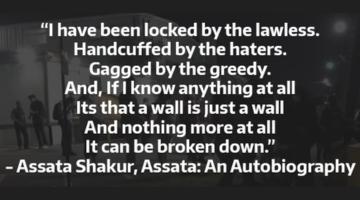 When oppression becomes unbearable, resistance erupts. The uprising at Delaney Hall exposes the brutality of immigrant detention and the power of collective defiance.
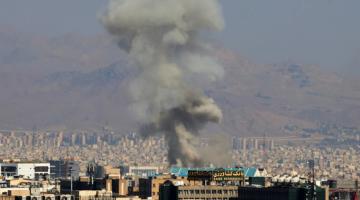 Three informed Arab officials, in touch with both the US and Iran, tell Middle East Eye that the White House appears to be moving closer to 'backing up' Israel.
 Israeli occupation forces shot and killed several Palestinians on Sunday morning across various regions of the Gaza Strip, as the humanitarian situation continues to deteriorate.


