by the Real news Network
VIDEO
JAISAL NOOR, PRODUCER, TRNN: Cuba has announced it's releasing 3,522 prisoners ahead of a high-profile visit from the pope this month, and this has spurred some to ask, will President Obama make a similar move before the pope visits the United States? The U.S. is number one in the world for putting people behind bars, with some 2.2 million people currently in the nation's prisons or jails.
Well, now joining us to discuss this is Glen Ford. He's the executive editor of the Black Agenda Report. Thanks so much for joining us, Glen.
GLEN FORD, EXEC. EDITOR, BLACK AGENDA REPORT: Thank you.
NOOR: So Glen, tell us your reaction to this news, and the calls for United States to make a similar move.
FORD: Well, my first reaction was to get pen and paper together and figure out, calculate what a matching offer by the United States, one that would follow the example of Cuban President Raúl Castro, what would it look like? What would reciprocity in pleasing the pope look like? And so it comes to this. Well, first of all, it's difficult to do a calculation that compares U.S. prison figures with anyplace else in the world, because comparing the United States to the rest of the world is like comparing watermelons and grapes because the United States is so far and away ahead, or below, the standards of the rest of the world in terms of incarceration.
But if we calculate the proportion of its inmate population that the Cubans are setting free in honor of the pope, then that can become a starting point. And that's about one out of every 16 prisoners held in Cuban jails. If the United States released 1/16th of its prisoners, and there are about 2.3 million of them, that would come to about 140,000 people. That's what they'd have to do in order to match Cuba's release of about 3,500 people. 140,000 people represents more prison inmates than exist in any of the United States' separate state prisons.
NOOR: Now Glen, this is really an astounding number. This is just a shocking number of people the United States would have to release.
FORD: It's like setting free everybody who's in prison in Georgia and Louisiana on the same day. That's the equivalent of what the Cubans are doing in their much smaller country. So this is not a token gesture by the Cubans. A gesture that would be equal to that by the Americans would be in excess of 140,000 people. More than any state in the United States except California, Texas, and Florida. The rest have smaller populations than that.
But there are skeptics. When it comes to Cuba there's always skeptics. And they say, well, the Cubans aren't releasing any political prisoners in this release.
NOOR: And Glen, I wanted to get to political prisoners. But before we get there I wanted to bring up how the mainstream media has reported this. Because you can look at the New York Times and Reuters and the Associated Press, they don't take this point of--they don't take it to the step where you're taking it, that the U.S. should do something similar. Instead they're quoting right-wing opponents of the government in Cuba.
So I wanted to quote some of that to you. I'm reading the New York Times. They spoke to Sebastián A. Arcos, a self-proclaimed former Cuban political prisoner. He said the mass release was a cynical and opportunistic effort to demonstrate a more tolerant government. He goes on to say, the reality is that Cuban prisons are overpopulated, and they have been for many years because we're talking about a police state, a repressive police state where almost anything is a crime, he said.
FORD: Isn't that amazing. So they're talking to and giving such vast credibility to Cuban former political prisoners. But they go along with the United States, which claims it has no political prisoners. The United States has not released one political prisoner in decades, in generations, because it claims there is no such thing. But the Cubans released 53 as a gesture to the United States back in January. And if the United States would recognize that these old activists who are dying from the '60s and from the '70s, have been in jail since that time and are dying with regularity, were political prisoners, then we could talk about some kind of reciprocity there, as well. And we've done the calculations on that, too.
NOOR: And you're talking about former Black Panthers, you're talking about basically freedom fighters that were fighting for just basic economic and human rights in the United States.
FORD: Sure. From lots of nationalities and lots of causes. Now they're in their 60s and 70s and some approaching their 80s. If the United States just matched what the Cubans released in terms of political prisoners this year, that was 53 for the Cubans, that would come for the United States to 848. and the release of 848 political prisoners, that would solve, basically, the political prisoner situation. At least, the backlog from the '60s and '70s with one fell swoop. But the United States is not about to do that, because the United States is at war. It's not at war with Cuba. It's at war with its own people.
NOOR: Well Glen Ford, thanks so much for joining us.
FORD: Thank you.
NOOR: And thank you for joining us at the Real News Network.

 The word "whataboutism" is used to silence and insult opponents of U.S. imperialism. It should be embraced as a means of revealing what is too often kept hidden.
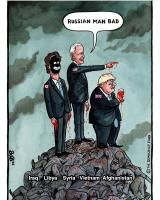 U.S. determination to be the world's hegemon created the crisis in Ukraine. The impacts are felt by working people in this country, who must look outside for solidarity and leadership as…
 International Women's Day has radical roots going back more than 100 years. Caribbean women have always played a pivotal role in political organizing.
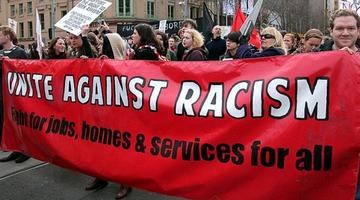 The American public are inundated with anti-Russian war propaganda that is worse than in the days of the Red Scare.
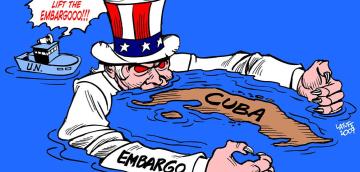 The U.S. claims the right to sanction, to steal from other nations, with one-third of humanity suffering from these crimes. Sanctions are war by other means and cause great suffering…


