by Mark P. Fancher
With the United States military command in the lead, “western troops and advisors continue their forward march across African.” But continental liberation is still possible: it just requires the spark of a decisive example. “At least one African country should, pursuant to its own national legislation, seize and nationalize all foreign oil operations, mines and processing facilities within its borders.”
Dr. Che Guevara’s Prescription for Africa’s AFRICOM Headache
by Mark P. Fancher
“Perhaps it will be necessary for new independent African liberation organizations to establish themselves.”
Last month the United States signed an agreement that will allow a permanent force of 2,200 U.S. Marines into the southern part of Spain where they will be periodically deployed to northern regions of Africa. It is yet another in a long series of solid, steady steps western countries have taken to lock down the African continent militarily to ensure continuing domination and exploitation. These moves have included, among many others: an extensive permanent military presence in Djibouti; collaborative U.S. Africa Command (AFRICOM) training operations in most of the countries in Africa; repeated drone strikes and surveillance missions; and the supply of arms to select insurgent forces.
Africans have not been silent, passive observers of these developments. In the publication Military Review, one scholar observed: “No single issue or event in recent decades in Africa has provoked so much controversy and united hostility as AFRICOM. The intensity and sheer scale of the unprecedented unity of opposition to AFRICOM across Africa surprised many experts.” Yet, the western troops and advisors continue their forward march across the African continent with no indication that they will be in any way deterred.
In this campaign to dominate a continent, intimidation has proven to be a critical imperialist weapon. It is not easy for African countries to say “no, thank you” to AFRICOM’s military assistance and training when faced with not only military might but also economic and diplomatic coercion. A mere implied threat of potential consequences can be enough to discourage not only active resistance, but also simple non-cooperation. African countries need not concede defeat however, because historical events in Angola show the vulnerability of imperialist power.
“The intensity and sheer scale of the unprecedented unity of opposition to AFRICOM across Africa surprised many experts.”
In 1987, Angola’s army, the Armed Forces for the Liberation of Angola (FAPLA) found itself battling the armed forces of South Africa’s apartheid regime as well as armed proxies of the United States in the context of Angola’s civil war. The massive military force mobilized against FAPLA was intended to prevent the liberation of Angola’s southern region. FAPLA’s enemies knew that if revolutionary African forces gained control of that area it could become the launching point for cross-border raids into Namibia, which at the time was under the control of South Africa’s apartheid regime. The Angolan central government requested modest assistance from Cuba. Fidel Castro responded with far more weapons and troops than the Angolans requested, and because of that support, the battle at the town of Cuito Cuanavale will forever be remembered for a heroic stand by revolutionary forces against Africa’s enemies. That powerful display of resistance significantly accelerated the demise of political apartheid in the region.
The battle at Cuito Cuanavale was not the first time that Cuba demonstrated its understanding of the potency of united revolutionary forces. In 1965, while fighting alongside freedom fighters in Congo, Che Guevara addressed a meeting of representatives of liberation organizations from throughout the continent. He implored them to allow their new recruits to gain battlefield experience by fighting in Congo. Guevara said: “I spoke to them of the fundamental importance which the Congo liberation struggle had in our eyes. Victory would be continental in its reach and its consequences, and so would defeat. The reaction was worse than cool. Although most refrained from any kind of comment, some asked to speak and took me violently to task for the advice I had given. They argued that their respective peoples, who had been abused and degraded by imperialism, would protest if any casualties were suffered not as a result of oppression in their own land, but from a war to liberate another country. I tried to show them that we were talking not of a struggle within fixed frontiers, but of a war against the common enemy, present as much in Mozambique as in Malawi, Rhodesia or South Africa, the Congo or Angola. No one saw it like that.”
Whether Africa prevails against AFRICOM will ultimately turn on whether Africans have significantly matured politically since Guevara proposed his Pan-African military strategy fifty years ago. Since 1885 when Europe carved Africa into pieces at a conference in Berlin, successful domination of the continent has depended not only on its geographic balkanization, but also on the acceptance of this division by the Africans themselves. It will continue to be easy for AFRICOM to intimidate individual African countries if African governments continue to believe they stand alone and that the circumstances of each of the countries on the continent are unique with respect to the foreign military presence.
“It will continue to be easy for AFRICOM to intimidate individual African countries if African governments continue to believe they stand alone.”
The defeat of the campaign to militarize Africa is feasible if there is a commitment to a unified African front for at least one go-for-broke confrontation with imperialism. More concretely, Africa should not have to wait one more day to reclaim and use the valuable natural resources that belong to Africa’s people. Zimbabwe started down that road with land, but at least one African country should, pursuant to its own national legislation, seize and nationalize all foreign oil operations, mines and processing facilities within its borders. When the inevitable diplomatic or military confrontation with western powers occurs, the rest of Africa will have the opportunity to belatedly take Che Guevara’s advice by providing the country under siege with the entire continent’s military resources. The powerful message that an armed attack on any single African country will be met with a united armed response more massive than what imperialism encountered at Cuito Cuanavale can do much to discourage not only an attack on one country, but it can also change imperialism’s perspective on the effectiveness of its strategy to militarize a continent that wants only peace and an opportunity to recover from centuries of oppression and exploitation.
Neo-colonial realities force an acknowledgment of the unlikelihood of a united front of African governments. But historically, Africa’s most significant resistance has come, not from governments, but from an alphabet soup of non-governmental liberation organizations like MPLA, SWAPO, FRELIMO, ZANU, PAIGC, and many more. For any confrontation with AFRICOM and the forces loyal to it, perhaps it will be necessary for new independent African liberation organizations to: establish themselves; ensure ideological clarity among their ranks; receive financial and material support from the global African community; and stand united and ready to fight and bleed if necessary for Africa’s dignity and independence from foreign military domination.
Mark P. Fancher is an attorney who writes frequently about the U.S. military presence in Africa. He can be contacted at mfancher@comcast.net.

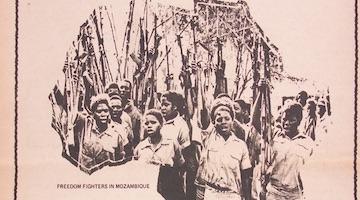 At the 1972 event, Walter Rodney proclaimed that “black unity must be international because we live on every continent, through no choice of our own.”
 2020’s hindsight—frost in the rearview mirror. Miles Ahead… I’m Sheltered in Solidarity with National Poetry Month and Jazz Appreciation Month— April in Boston—warm cider
 The critics want to wipe clear the actual history of racial oppression that is baked into the social and economic structures of the US.
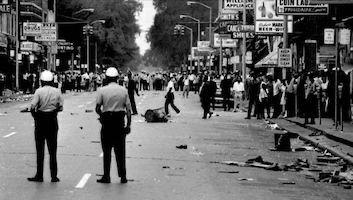 The police as they exist today need to be abolished, there’s no question. “Diversity doesn’t change the fundamental dynamics of policing.”
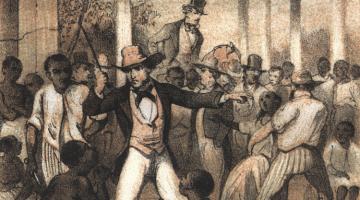 Much of what is called the “left” still insists that the American “revolution” of 1776 is “unfinished,” when history shows that white supremacy was the intended result.



