by BAR editor and columnist Ajamu Baraka
Where was the worldwide revulsion at the racist terror attack in Charleston? “Obama sang ‘Amazing Grace’ and lulled into a stupefying silence black voices that should have demanded answers as to why the Charleston attack was not considered a terrorist attack, even though it fit the definition of domestic terrorism.” As a result, “the political space for international solidarity with the plight of African Americans was significantly reduced.”
No ‘Je Suis Charleston’?: The De-Politicization of Black Oppression
by BAR editor and columnist Ajamu Baraka
“The old trope of gun control – along with a new twist, removing the Confederate flag – became the new focus.”
Where are the international marches of solidarity with African Americans? The statements from world leaders condemning the terrorist attack and calling on U.S. Authorities to crack down on the white nationalist terror networks developing in the U.S.? Where are the marches in white communities condemning racism and standing with black people? Why no ‘Je Suis Charleston’?
The fact that these questions are not being raised by most people speaks to the adroit way in which the propagandists of the U.S. state, with the corporate media in lockstep, successfully domesticated and depoliticized the murderous attack in Charleston, South Carolina.
First, President Obama, as the government’s chief propagandist, defined Dylann Roof, the white nationalist assailant, as a pathological, hateful loner who had easy access to guns. The words “terrorist” never crossed his lips or the lips of any other officials of the national government.
Then, the state and corporate media followed-up this framing with a fascinating slight-of-hand stunt: instead of focusing on the domestic security threat posed by violent, racist right-wing extremists groups in the country, the old trope of gun control – along with a new twist, removing the Confederate flag – became the new focus! The implication was that by removing the Confederate battle flag – a symbol of white supremacy and the defense of slavery – from public buildings (no one bothered to explain why, if this was the rationale for removing the Confederate flag, there would not be a discussion around the need to reject the national flag also), that would somehow move the country towards racial reconciliation, much like electing a black president was supposed to do.
“The words ‘terrorist’ never crossed his lips or the lips of any other officials of the national government.”
The effectiveness of this propaganda effort paid off just a few days after the attack. The domestic and international press gave full coverage to the spate of “terrorist” attacks that took place in three different counties, but missing from that coverage was any connection and mention of the terror attack in Charleston.
However, it was at the funeral of Rev. Pinckney, the pastor of the Emanuel African Methodist Episcopal Church murdered by Dylann Roof, where the concluding act of the governments’ obscene efforts to co-opt and deflect the pain of the attack played to a world-wide audience. President Obama turned in one of his best performances of a life-time of performances for white supremacy. His eulogy was a masterful example of his special talent to embody an instrumentalist “blackness” while delivering up that blackness to the white supremacist, U.S. settler project. In his eulogy, he couched his narrative of “American exceptionalism” in the language of Christian religiosity that was indistinguishable from the proclamations of the religious right that sees the U.S. as a state bestowed with the grace of their God.
Obama sang “Amazing Grace” and lulled into a stupefying silence black voices that should have demanded answers as to why the Charleston attack was not considered a terrorist attack, even though it fit the definition of domestic terrorism, or why the Obama Administration collaborated with suppressing the 2009 report from the Department of Homeland Security (DHS), which identified violent white supremacist groups as a threat to national security more lethal than the threat from Islamic “fundamentalists.”
“President Obama turned in one of his best performances of a life-time of performances for white supremacy.”
Because of this threat and the depraved indifference to black life by the U.S. government, international attention and solidarity is critical for African Americans. Yet, by quickly deploying the Obama weapon – aligning the government with the victims of the attack but defining the attack as a domestic criminal act –
the political space for international solidarity with the plight of African Americans was significantly reduced, at least in relationship to the Charleston attack.
There is another element of this story that compelled the Administration to get out in front of this issue. Obama needed to draw attention away from the fact that his Administration caved under the pressure from the “respectable” racist right-wingers in Congress who criticized the DHS report in 2009.
John Boehner, the leader of the House of Representatives, characterized the report as “offensive and unacceptable." According to Boehner, the Obama Administration should not be condemning “American citizens who disagree with the direction Washington Democrats are taking our nation.”
Instead of defending Secretary Napolitano and the report issued by her Department, or taking the opportunity provided by the report to educate the public on this internal threat, Obama threw Napolitano under the bus and the DHS pulled the report from its website. The unit responsible for monitoring white supremacist organizations and movements was dismantled, and the threat of white supremacist violence becoming the victim of Washington politics.
This is the mindset and the politics of this Administration and the political culture in the U.S., where the differential value placed on black life allows black life to be reduced to an instrumental calculation when considering issues of international public relations and domestic politics.
The result?
For all intents and purposes, the tragedy in Charleston is over, closed out on a song written by a captain on a slave ship in 1779 and sung over 200 years later by a black man still in the service of white supremacy.
Ajamu Baraka is a human rights activist, organizer and geo-political analyst. Baraka is an Associate Fellow at the Institute for Policy Studies (IPS) in Washington, D.C. and editor and contributing columnist for the Black Agenda Report. He is a contributor to “Killing Trayvons: An Anthology of American Violence” (Counterpunch Books, 2014). He can be reached at www.AjamuBaraka.com

 The A.I. revolution has a hidden cost. Its massive data centers create huge amounts of waste and decimate labor and humanity.
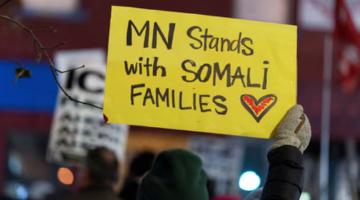 The Trump 2.0 administration is demonstrating the logical endpoint of a state project built on racial oppression. Trump’s actions show continuity with past history.
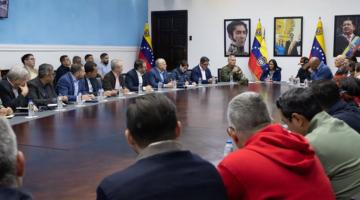 While the U.S. works to manufacture chaos and regime change, the Venezuelan government holds the line, revealing the gap between Washington's narratives and the realities on the ground.
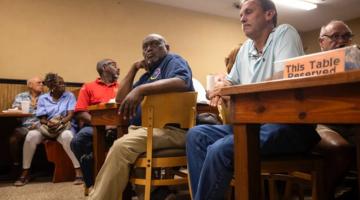 Four million Americans live within 1 mile of a data center. The communities closest to them are “overwhelmingly” non-white.
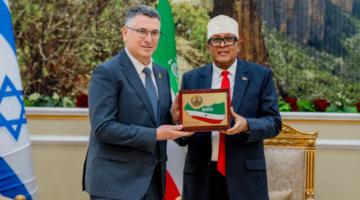 Breaking the longstanding African consensus on post-colonial borders, Israel is actively destabilizing an entire continent to serve its interests and Washington's.


