by Thomas C. Mountain
President Obama’s is a state-destroyer, especially in Africa. Chaos, misery and failed states are his legacy on the continent. Obama’s fatal touch causes “already failing societies to begin to disintegrate, filling our screens with ever more scenes of death and destruction.” South Sudan is a state that failed before it began.
Obama’s Failed State Policy in Africa
by Thomas C. Mountain
“The list of failed, or nearly so, states in Africa under the rule of “Barry O’Bomber” has taken a great leap forward.”
The Obama regime must be held responsible for a series of failed or nearly failed states on the African continent. Recently Burundi has been in the news but it could just as easily be Nigeria, Mali or the Central African Republic. Whether the calamities that have befallen these neocolonialist constructions have been intentional or not, the ruination and depredations inflicted on large swaths of Africa amount to what can only be described as a failed state policy.
While Libya, and before that Somalia, are overt examples of the western implementation of the failed state policy in Africa, an honest appraisal of what has happened in South Sudan can only add it to this list. It has been almost a year and a half since the civil war broke out there and not one western “expert” has tried to explain where the so called “rebels” led by Reik Machar are getting the funds needed to pay for the salaries of their fighters let alone the fuel, ammunition and other expenses maintaining such a large conflagration requires.
Of course, the only winner so far has been the USA which has succeed in protecting its national interests by once again having the Chinese expelled from the only African oil fields they control.
Many of the other neocolonialist entities created by the western colonialists upon their retreat from direct rule in Africa have done so little for their people that in reality they could be described as failed states.
“Kenya provides electricity to only 26% of its people.”
What else can you call a country where the population lives in such abject poverty that a major part of the society lacks such basic human rights as clean drinking water, adequate food and shelter let alone education or health care.
The entire country of Liberia lacks electricity and running water. Kenya, often touted as one of Africa’s success stories, provides electricity to only 26% of its people and running water to even fewer.
If one compares the lives of the people of Cuba, who have suffered under onerous sanctions by the USA since their liberation to the lives of almost all Africans the differences are stark, and appalling.
“Crisis Management” is what Pax Americana has implemented in Africa for decades past, as in create a crisis and then manage the ensuing chaos to better loot and plunder more of Africa’s wealth.
The failed state policy comes into play when the pressure the USA applies directly, or through its proxies, can cause prosperous, let alone already failing societies to begin to disintegrate, filling our screens with ever more scenes of death and destruction.
When it comes to the number and magnitude of the crimes committed in Africa under Obama one looks back on the much less dangerous days of the idiots of the Bush Jr. regime. The list of failed, or nearly so, states in Africa under the rule of “Barry O’Bomber,” BHO’s nickname during his formative teenage years, has taken a great leap forward.
A nightmare scenario is that another Clinton seems next to succeed to the throne and the thought of the rabidly vindictive Hillary wreaking havoc in Africa as Commander in Chief does not make for a pleasant nights sleep.
Thomas C. Mountain has been living and writing from Eritrea since 2006. He can be reached at thomascmountain at g_ mail_ dot _com

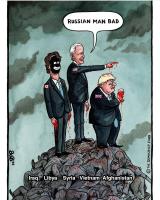 U.S. determination to be the world's hegemon created the crisis in Ukraine. The impacts are felt by working people in this country, who must look outside for solidarity and leadership as…
 International Women's Day has radical roots going back more than 100 years. Caribbean women have always played a pivotal role in political organizing.
 The American public are inundated with anti-Russian war propaganda that is worse than in the days of the Red Scare.
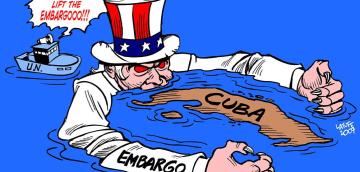 The U.S. claims the right to sanction, to steal from other nations, with one-third of humanity suffering from these crimes. Sanctions are war by other means and cause great suffering…
 In this series, we ask acclaimed authors to answer five questions about their book. This week’s featured author is Lindsey Green-Simms. Green-Simms is Associate Professor of Literature at American…



