End the US Blockade of Cuba and Military Occupation of Guantanamo Bay! An Interview with Manolo De Los Santos
by BAR editor and columnist, Dr. Marsha Coleman-Adebayo
This interview conducted in Matanzas, Cuba. Part Two will follow in next week’s issue of BAR.
“Cuba is a country that has stuck its neck out for Black liberation struggles around the world.”
I met Manolo De Los Santos during a recent trip to Cuba organized by Code Pink, a grassroots peace and social justice movement working to end US funded wars and occupations. The interview took place in the coastal city of Matanzas, one of the sites of the 16th century Euro-American Human Trafficking Trade (termed by European traders and historians as the Trans-Atlantic Slave Trade) at the Matanzas Evangelical Theological Seminary.
Manolo was born in Santo Domingo, Dominican Republic. His family moved to the South Bronx, New York when he was five years old. He first visited Cuba in 2006 with the organization, Pastors for Peace. Pastors for Peace is a project of the Interreligious Foundation for Community Organization (IFCO.) IFCO’s mission is to support the disenfranchised to fight human and civil rights injustices and to end US aggressive policies towards Cuba. The organization seeks to promote peace between the peoples of the US and Cuba. Manolo’s focus at the Matanzas Evangelical Seminary is the study of liberation theology.
This interview takes place during the historic negotiations between to re-establish diplomatic relations between the US and Cuba.
Marsha Coleman-Adebayo: Americans have heard about the negotiations between the US and Cuba regarding the US Embargo. From your perspective, what are the politics of the embargo and do you think there is a chance for a successful completion?
Manolo De Los Santo: The politics of the embargo or blockage as the people of Cuba refer to it, is perfectly stated in 1961 by the US government; the blockade is a policy to deprive and to starve the Cuban people into submission so that they will overthrow their own government. So, (the US government) has sought through all means to make sure that Cubans do not have complete access to different material goods, everything as basic as medicines, food, technology that would allow Cuba to continue to develop itself in other ways.
Marsha Coleman-Adebayo: What do you do in Cuba?
Manolo De Los Santo: I’m here in Cuba, first of all studying. I’m a student of theology at the Evangelical Seminary in Matanzas. I am also here as a staff person for IFCO (Interreligious Foundation for Community Organization) Pastors for Peace working as a liaison between IFCO and the US medical students studying at the Latin American School of Medicine, which has been an amazing opportunity for hundreds of young people from the US, from communities of color, poor communities, to actually be able to study medicine for free here in Cuba.
“We have a responsibility, as people of color worldwide to defend all of the advances that Cuba has made.”
Marsha Coleman-Adebayo: Is Cuba, at this point, even more than perhaps Nicaragua, the front line state against US imperialism and, if that’s true, what does that mean to you?
Manolo De Los Santo: For a long time, Cuba was the front line. It was the sole country, in many ways, challenging US hegemony in Latin America and around the world. But, I think that times have changed precisely because of Cuba’s role. Now we see in Latin America many progressive governments that try to uplift their own people, like what Cuba has done, for the last 55 years. [These governments] are making sure that health care is recognized as a human right, that the right to eat every day is a human right, that education is a human right so times have changed since 1959 (the date of the Cuban revolution) thanks to Cuba’s role in the world.
Marsha Coleman-Adebayo: One of the things that I have been so pleased to see in Cuba is the number of people that I would identify, from a US perspective as Black or African. We have a progressive government about 90 miles from the coast of Florida. How can African-Americans contribute to the promotion and protection of Cuba?
Manolo De Los Santo: Cuba has secured these rights for black people, however… there is still much work to do. We have a responsibility, as people of color worldwide to defend all of the advances that Cuba has made. Cuba is a country that has stuck its neck out for Black liberation struggles around the world, not to mention the liberation struggles in Angola and many of countries and the strong role Cuba played in the liberation of South Africa in freeing Nelson Mandela. One must acknowledge what is currently happening, that Cuba was the first country to step up to fight the Ebola virus. When most countries, only committed money (and we don’t know where this money goes), Cuba actually put up the lives of its doctors to stop the virus. It’s amazing how Cuba has offered scholarships to young black people from all over the African continent and all across the America’s to come study here and become professionals. For example, Cuba has educated more Blacks from Honduras than were educated in their own country. This is an example of the support and strong interest Cuba has in the upliftment of African people across the world.
Marsha Coleman-Adebayo: Can you give us some examples of the impact of the US Embargo against Cuba and its people. Has the US embargo been effective?
Manolo De Los Santo: The typical answer would be that Cuba has lost millions in trade due to the blockage but I like to think about how concretely the blockade has affected the lives of the people. For example, children who suffer from cancer who are receiving chemo-therapy here in Cuba can not always receive the medicines to relieve them of the pain caused by the chemo-therapy because that medicine is made in the US. There is medicine for Alzheimer’s patients that can not be bought by Cuba because the medicine is produced in the US. Day to day life is limited because of this prohibition of trade with the United States. Thereby forcing Cuba to seek these products in markets that are farther and more expensive than the United States.
Part II of this interview will explore American human rights violations against the people of Cuba. For more information and provide donations to Pastors for Peace (IFCO,) please see: http://ifconews.org.
Dr. Marsha Coleman-Adebayo is the author of No FEAR: A Whistleblowers Triumph over Corruption and Retaliation at the EPA, that is available through amazon.com. Dr. Coleman-Adebayo worked at the EPA for 18 years and blew the whistle on a US multinational corporation that endangered vanadium mine workers. Marsha's successful lawsuit led to the introduction and passage of the first civil rights and whistleblower law of the 21st century: the Notification of Federal Employees Anti-discrimination and Retaliation Act of 2002 (No FEAR Act). She is Director of Transparency and Accountability for the Green Shadow Cabinet, serves on the Advisory Board of ExposeFacts.com., and coordinates the DC-based Hands-Up Coalition (www.handsupcoalitiondc.com) Contact Marsha at: MarshaCAdebayo@blackagendareport.com and www.marshacoleman-adebayo.com.

 In this week’s segment, we hear about the ongoing uprising in France against neo-liberal austerity, colonialism, and white supremacy. But first, we discuss a new report that reveals a 25% decline in…
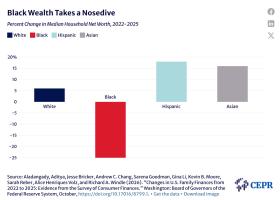 The Center for Economic and Policy Research (CEPR) recently reported on Federal Reserve data indicating that Black people in the U.S. have lost 25% of their wealth between 2022 and 2025. Whites,…
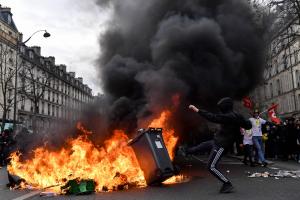 Bouna Mbaye is an activist, writer, and a member of the Pan-African League-Umoja, the Pan-African Brigade for Palestine, and the US Out of Africa Network. He joins us from Paris to discuss the…
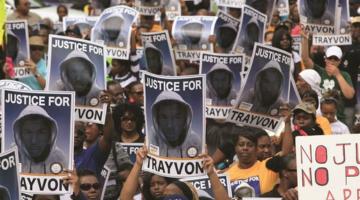 As Black Agenda Report is poised to celebrate its 20th anniversary, we reprint Glen Ford's commentary on the killing of Trayvon Martin and the impunity provided to his killer in a criminal justice…
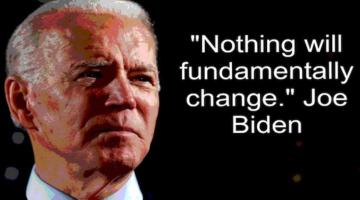 The Democratic Party is terrified of even small liberal reforms and will not abide left leaning democrats thwarting their plans for austerity and neoliberal orthodoxy.


