Selma, the Movie: “White” Washing History
by Candy Gonzalez
“It bends the truth about the events and people that fought for justice and equality in the face of a police state.”
I became a civil rights activist in the 1960s because I saw the injustice of racism and oppression and believed (and still do) that I could not sit around waiting for someone else to do something. I joined demonstrations, sit-ins and picket lines, was arrested over 40 times and beaten up a number of times. In 1964, I joined the Student Nonviolent Coordinating Committee (SNCC) and went to Mississippi. I was part of the nationwide protests in support of the Selma to Montgomery march in 1965.
That is why I was so offended when I saw an interview with the director of the movie “Selma” along with film clips. It bends the truth about the events and people that fought for justice and equality in the face of a police state.
The film diminishes or erases the role people like James Forman and Malcolm X played. Because they can’t erase Martin Luther King, Jr., they create a “white” washed image so we will never relate to him as a man who came to see the struggle against oppression as an international struggle. When he took a position against the war in Viet Nam, he drew the anger of the government as well as members of his own organization, the Southern Christian Leadership Conference (SCLC). He was told to stay in his place, as a non-violent civil rights worker. But he was “increasingly compelled to see the war as an enemy of the poor” which demanded that he attack it as such.
As long as he remained a pacifist working for rights of “negroes,” he was no threat to the power structure. To move beyond, to become a “citizen of the world” was a challenge and he needed to be silenced.
“King concluded that he couldn’t voice objection to the violence of the oppressed unless he spoke out ‘to the greatest purveyor of violence in the world today -- my own government.’”
By 1967, one year, to the day, before he was assassinated, he gave what most consider his most controversial speech, “Beyond Viet Nam” where he described talking to angry, desperate young men telling them that violence did not solve their problems. Their response was to ask “what about Vietnam?” Wasn’t the U.S, using violence to bring the change they wanted? King concluded that he couldn’t voice objection to the violence of the oppressed unless he spoke out “to the greatest purveyor of violence in the world today -- my own government… If America's soul becomes totally poisoned, part of the autopsy must read: Vietnam. It can never be saved so long as it destroys the deepest hopes of men the world over.”
King came to see the Vietnam War as a symptom “… of a far deeper malady within the American spirit”; if we ignore this reality we will see ourselves in the future organizing protests concerning countries in Asia, Africa and Latin America. “We will be marching for these and a dozen other names and attending rallies without end, unless there is a significant and profound change in American life and policy.”
He points to, “a pattern of suppression which has now justified the presence of U.S. military advisors in Venezuela. This need to maintain social stability for our investments accounts for the counterrevolutionary action of American forces in Guatemala. It tells why American helicopters are being used against guerrillas in Cambodia and why American napalm and Green Beret forces have already been active against rebels in Peru.”
The film works to solidify King in the role of the non-violent preacher, ignoring the man he became, a man who could not “adjust to injustice,” the man who said, “Our only hope today lies in our ability to recapture the revolutionary spirit and go out into a sometimes hostile world declaring eternal hostility to poverty, racism, and militarism.” That image is inconsistent with what is acceptable to the powers that be.
“SNCC was about freedom schools and voter registration drives giving people the tools to stand up for themselves.”
The film also tries to minimize other leaders. It portrayed James Forman, the head of the Student Nonviolent Coordinating Committee (SNCC) as a little boy when in actuality he was older than King. By doing this, it eliminates the role Forman played in King’s development. Forman understood that groups that endured were ones that are "group or people-centered" not "leader-centered." With his guidance, SNCC became a formidable organization, challenging the system and organizing people to stand up and take action to change their lives.
Forman and SNCC brought white students to Mississippi knowing their presence would bring media attention to what black people faced daily just for the right to vote, the right to get an education. SNCC was about freedom schools and voter registration drives giving people the tools to stand up for themselves.
I was one of those students. When three civil rights workers were murdered, one black Mississippian and two white northerners, SNCC’s strategy was verified as the national and international attention was focused on what happened. Had the two whites not been there, the death of James Chaney, the black Mississippian, would have gone unreported by the national media like the lives a many black people who stepped out of line.
The movie Mississippi Burning professed to tell the tale of the search for those civil rights workers. The film magically turns the Federal Bureau of Investigation (FBI) into heroes who broke up the Ku Klux Klan and found the bodies. In truth, the FBI supported the white supremacists. Their boss, J. Edgar Hoover, developed a program to destroy groups fighting for justice; it was called the Counter Intelligence Program (Cointelpro) targeting groups and people like Forman, Martin Luther King, Jr. and many others to jail, destroy or murder.
Everyone I talked to who had been in Mississippi and saw Mississippi Burning reacted the same way I did – they stood up in the theatre denouncing it for the lie it was.
The movie Selma is another example of changing history to maintain the status quo.
Candy Gonzalez now lives in Belize, Central America. She and George Gonzalez can be contacted at geocanbz@gmail.com.

 The history and significance of Black August, presidential elections and politics in Kenya, and reflections on the anniversary of the Sandinista Revolution.
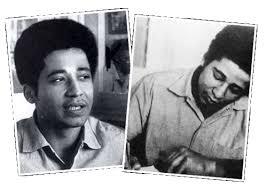 Kalonji Changa is co-founder of Black Power Media and founder of FTP Movement. He joins us from Atlanta to talk about Black August, which has been a fixture of the liberation movement for 43 years.
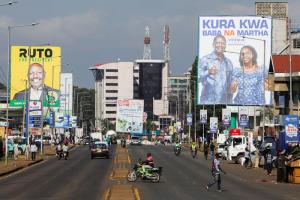 Irene Asuwa joins us from Nairobi, Kenya. She is co-convener of Ecological Justice and supports outreach at Ukombozi Library. We discuss the recent presidential election in that country.
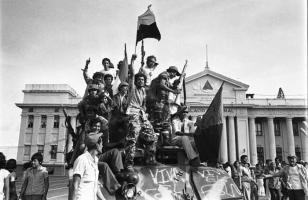 In a recent webinar hosted by the United National Antiwar Coalition (UNAC), Margaret Kimberley discussed what she witnessed during the commemoration events for the 43rd anniversary of the Sandinista…
 Why would Black people laud the FBI or criticize protection against self-incrimination? The FBI search of Donald Trump's home has reawakened Trump Derangement Syndrome.



