Critical Times: The Boston School Bus Drivers and the Necessity of Political Education
by Danny Haiphong
“Local 8751 leaders are found at every Palestine solidarity action and have maintained the position that Veolia's oppression must be stopped from Boston to Palestine.”
In Boston, union activity is being criminalized by the city government and its new partner in crime, the Veolia corporation. The criminalization of working class organization is not a new phenomenon in the US. It is a necessary condition to protect the rule of the capitalist class. Strong unions, and the conditions of the US working class as a result, have been beaten back over the last four decades. USW Local 8751 is struggling against the prevailing conditions of last stage capitalism, where corporations use state power to stabilize the permanently busted profit cycle. Just as the entire nation of Argentina was brought before an American judge for violating the dictates of Wall Street "vulture" hedge funds, so too is the leadership of Local 8751 being brought before municipal criminal court for standing up against Veolia's attempt to break the spirit and strength of Boston’s school bus drivers.
Veolia entered Boston on July 1, 2013, to manage the yellow bus lines for school children in the city of Boston. Veolia immediately proceeded to lockout the bus drivers from the Freeport bus yard and fire four of the union's five rank and file leaders. The corporate media deceptively interpreted the situation as a “wildcat strike” to channel public support toward Veolia. The lockout was short lived, but that hasn’t stopped Veolia from violating nearly every clause of the union contract that it agreed to abide by on June 18, 2013. The contract has since expired and the corporation is pushing for union-busting terms. These terms include the installation of surveillance technology to monitor bus drivers and the elimination of the grievance procedure. Veolia's goal is to drive down the conditions of drivers and, in doing so, dismember the most radical union in the city.

The Boston school bus drivers' struggle against Veolia touches upon the fundamental character of imperialism. Veolia is a French monopoly that accumulates profit from privatizing water, transportation, and waste management systems. The corporation is responsible for dumping toxic waste in the West Bank and running segregated bus lines in occupied Palestine. It has also been involved in numerous union busting campaigns from San Francisco to the UK. As this is being written, Veolia is bidding to take hold of Detroit's water system in the midst of a bankruptcy that has plunged the city into corporate governance under the state-imposed emergency management of Kevin Orr. Veolia's policy of plunder and privatization is a concrete manifestation of imperialism's tendency to monopolize resources and exploit the oppressed on a global scale.
“Veolia is bidding to take hold of Detroit's water system in the midst of a bankruptcy that has plunged the city into corporate governance.”
Imperialism despises strong unions and revolutionary leaders because of the pitfalls both cause to profit and power. Local 8751 possesses each of these despised characteristics. The union has struck 11 times in its forty or so year history to protect the rights of drivers and the safety of children community. It has maintained strong working conditions and benefits despite the anti-union, fascist attack on the oppressed that was officially jump-started by the Reagan era. And, as a union of 90 percent people of color, the leadership has fought for the self-determination of oppressed people all over the globe since the union's inception.
The Boston bus drivers formed out of the struggle against racism in Boston. Many of the workers and rank and file leaders of the bus drivers union were instrumental in pushing the city to end the formal desegregation of the school system in 1974. Forty years later, the bus drivers still participate in the struggle for community control of education through the Coalition for Quality and Equal Education. Furthermore, the fired leaders recently traveled to New York City to stand in solidarity with head of state and former bus driver, Nicolas Maduro. Local 8751 leaders are found at every Palestine solidarity action and have maintained the position that Veolia's oppression must be stopped from Boston to Palestine.
Veolia knows full well that only the destruction of the bus drivers union will give it full power to achieve its privatization agenda. This is why the bus drivers are currently in the midst of negotiations while four of their leaders remain fired. To add insult to injury, the chair of the grievance committee, Steve Kirshbaum, is facing trumped up felony charges from Veolia. These charges are a response to the June 30, 2014, solidarity rally outside of company headquarters. The criminal charges against Kirschbaum are nothing more than an all-out war to weaken the bus drivers at a critical juncture in both the future of the union and the broader fight against Veolia as a whole.
The Boston bus drivers struggle illuminates the need for mass political education campaigns of the revolutionary kind. In these critical times, the conditions of global imperialism have weakened and confused the left movement in the US. The American education system lies to young people. The corporate media lies to all oppressed people. Imperialist institutions reproduce reactionary ideology and exploitation as a means of social control. Oppressed people learn politics from the ruling class and are increasingly being misled by reactionary left organizations that support “humanitarian imperialism” and other variations of liberal white supremacy. So when the oppression inherent in imperialism breeds resistance, it is the task of a revolutionary political force to match theory with practice to effectively break down these barriers to liberation.
Theory and education is devalued by much of the left movement in the US, which prefers "action" over organization. Organization is harder and requires not only an effective response to political conditions, but also the ability to understand the situation in front of the movement. Without the alignment of both of these preconditions, the power of the people can never reach its revolutionary potential. Political education is often equated with study groups. However, political education is not just about studying revolutionary theory, as important as that is.
“The first step toward building mass political education campaigns is to join or create a grassroots political organization.”
Rather, political education is the dual practice of "learning by doing" and "doing by learning." A revolutionary organization asks the difficult questions required for the oppressed lead the way toward a new political path. This can occur both inside of study groups and on the ground in the practical, day-to-day work of an organization. The first step toward building mass political education campaigns is to join or create a grassroots political organization. From there, it is possible to build strong internal structures for political education. These internal structures need to strictly enforce a disciplined study of history, theory, and revolutionary politics.
Martin Luther King Jr's political life is a prime example of the ways in which political education can revolutionize the consciousness of a movement. King was a leader of the SCLC and worked with many mainstream organizations on the question of legalized segregation. However, the Vietnam War and the colonial conditions of Black America in the nation's ghettos forced King to reconsider his stance on non-violence and his relationship to Washington. It was from here that King began to organize with workers and denounce the Vietnam War. King's assassination was the straw that broke the camel's back and influenced many Black Americans and white leftists to support the revolutionary tendencies of the Black liberation movement.
If King never joined an organization or studied the changing conditions of racism in the US and globally, his political transformation may never have occurred. As in King's day, the questions of racism, class exploitation, and war loom large in this period. The Boston bus drivers struggle, Ferguson's and Black America's resistance to police brutality and the prison state, and the renewed US war on Iraq and Syria are all current manifestations of what King called the evil triplets of war, poverty, and racism at the foundation of the US political order. Victory for the Boston Bus drivers, and the liberation of oppressed people, calls for left forces in the US to build mass political education campaigns that build a revolutionary analysis of the interrelated forces of imperialism. This means we should be where the struggle is happening, but also be building the mass movement where it needs to happen: in the streets and oppressed communities.
For more on the bus drivers union and their campaign, please visit http://bostonschoolbus5.org/ and the Team Solidarity Facebook page, search term: Team Solidarity the Voice of United School Bus Union Workers
Danny Haiphong is an activist and case manager in the Greater Boston Area. He can be reached at wakeupriseup1990@gmail.com

 Brazil's indigenous people struggle against an entrenched oligarchy determined to drive them from their lands and a right wing president who is supported by the U.S.
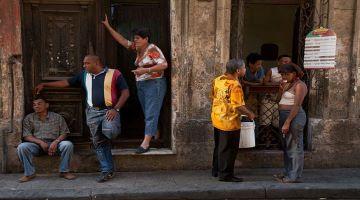 The United States has cut off channels for sending remittances to the island, leaving families who rely on the help – especially during the pandemic – without desperately needed resources.
 Economic recovery is uneven, with Black workers least likely to be employed in the wake of the covid pandemic.
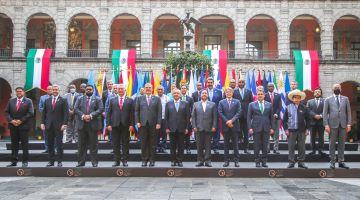 The heads of state of the regional block agreed on a 44-point declaration which addressed the strategy against COVID-19 and climate change and took a stand against the blockade on Cuba.
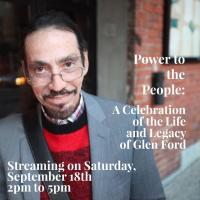 The memorial gathering for Glen Ford was held on Saturday, September 18, 2021 in New York City at the Riverside Church.



