South Africa’s Unfinished Revolution
A Review by Benjamin Woods
The Coming Revolution: Julius Malema and the Fight for Economic Freedom
South Africa: Jacana Media (2014)
by Janet Smith (Author), Floyd Shivambu (Editor), Dali Mpofu (Foreword)
“The EFF defines itself as Marxist-Leninist-Fanonian (M-L-F).”
A new book called The Coming Revolution argues that, contrary to the dominant narrative in western media, the South African Revolution remains incomplete. Even a cursory examination of the current state of affairs in South Africa reveals that the racial and class inequalities have, in fact, increased and the commanding heights of the economy (land, mines, banks etc) are still dominated by a white minority. In short, the masses are still suffering. Since the advent of political democracy in 1994, the ANC government has promoted policies like G.E.A.R. and N.D.P. that liberalize and privatize sectors of the economy. The author boldly states, “the ANC is committed to a right-wing, neoliberal and capitalist agenda which has kept the majority of our people on the margins of South Africa’s economy.”

In the past, ANC Youth League leaders like Nelson Mandela and Robert Sobukwe promoted more militant positions during the liberation movement. More recently, in 2008 at the ANC Youth League 23rd National Congress a resolution passed that declared “the state should control and be in ownership of strategic sectors of the South African economy.” Once Juluis Malema and the ANC Youth League began to organize working class and unemployed Black youth to achieve these objectives, he was expelled for “disciplinary reasons.” This treacherous action demonstrates the unwillingness of the ANC government to live up to the stated goals of the Freedom Charter. At this point, they realized a new independent organization was necessary to complete the revolution.
“The EFF claims a membership of approximately 400,000 and counts 25 members of national parliament.”
Enter the Economic Freedom Fighters (EFF). In response to popular demand by workers, students, traditional leaders, youth, non-profits, and others the former ANC Youth league leaders convened a National Assembly on “What is to be Done?” July 26-27, 2013, to create a constitution and founding manifesto. In its founding documents and actions the organization draws inspiration from a broad revolutionary tradition. The title for its National Assembly is taken from a seminal text What is to be Done? by V.I. Lenin, leader of the Bolshevik Revolution in Russia (1917). The founding date was selected to correspond with the beginning of the Cuban Revolution (July 26th Movement). Even the red uniform of the EFF with matching berets is a nod to historic and contemporary revolutions such as in Venezuela. In this vein, they adopted seven cardinal pillars:
- Expropriation of South Africa’s land without compensation for equal redistribution.
- Nationalisation of Mines, banks, and other strategic sectors of the economy, without compensation.
- Building State and government capacity, which will lead to abolishment of Tenders.
- Free quality education, healthcare, houses, and sanitation.
- Massive protected industrial development to create millions of sustainable jobs including Introduction of minimum wages in order to close the wage gap between the rich and the poor.
- Massive development of the African economy and advocating for a move from reconciliation to justice in the entire continent.
- Open, accountable, corrupt-free government and society without fear of victimisation by State agencies
.
In the book, the EFF references several important African revolutionaries such as Amilcar Cabral and Thomas Sankara who understood the dictum “Without a revolutionary theory, there can be no successful revolution.” Therefore, the EFF defines itself as Marxist-Leninist-Fanonian (M-L-F). M-L-F provides the movement with a scientific method of analysis and practice that identifies political economy as primary.
At the same time, they state: “Black consciousness found a proper home in the EFF and is expressed through its Fanonian character.” In short, the EFF is not a dogmatic Marxist organization that blindly copies the Soviet Union or China. Instead, M-L-F is a living science that acknowledges the psychological impact of over four centuries of colonialism and seeks to build a sustainable cultural revolution. And demonstrating their Pan African dimension they “advocate for the ultimate integration of the African continent through the erosion and eventual elimination of unnecessary borders.” Kwame Nkrumah’s dream lives through the EFF.
After one year in existence, the EFF claims a membership of approximately 400,000 and counts 25 members of national parliament. Read that sentence again. Although EFF has an electoral component, they are clear “the nature and character of our struggle will be that of a grassroots movement – a Protest Movement for fundamental change.” In its short time, they have supported women’s rights, elimination of homophobia, and families of the 34 miners at Marikana. In conclusion, let us hope that the EFF vision of economic emancipation spreads throughout the African continent, the African diaspora, and, eventually, the entire world.
Benjamin Woods is a PhD candidate at Howard University and co-founder of Students Against Mass Incarceration. He can be contacted at benjaminwoods1@yahoo.com, or through his website FreeTheLand.

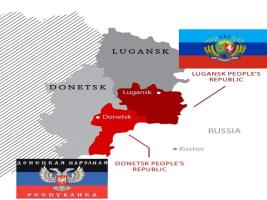 Ajamu Baraka argued that the Ukrainian crisis was a “manufactured crisis” primarily created by the miscalculations of policy-makers in the U.S. and Western Europe who were blinded by the prospect of…
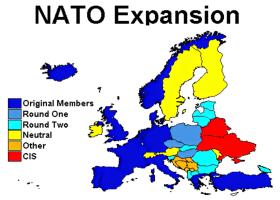 According to Dr. Gerald Horne, greed and shortsightedness convinced the U.S. that it could achieve the strategic objectives of undermining German economic power by controlling the European market,…
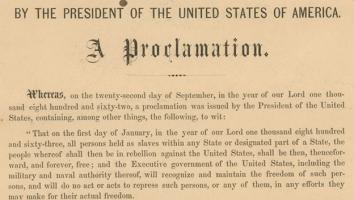 February is the designated month to honor presidents, but Black people should know better than to believe what they are told about any benevolence on the part of George Washington, Abraham…
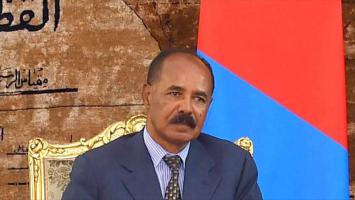 The president of Eritrea gives a wide ranging interview on the U.S. regime change effort against neighboring nation Ethiopia using the TPLF, and long-standing U.S. hostility towards his country.
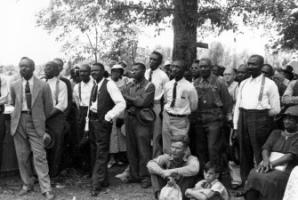 Southern farm workers joined in solidarity during the great depression.


