
Ten Facts About Police Violence in Ferguson Sunday Night
by Bill Quigley
“The police also reported people were throwing Molotov cocktails at police but no one ever saw any.”
While the Governor of Missouri is sending in the National Guard to Ferguson, it is worth considering where the real violence is coming from.
Bill Quigley is a human rights lawyer and law professor at Loyola University New Orleans.
- One. Hours before the 12pm Sunday night curfew went into effect, peaceful nonviolent protestors were legally marching in Ferguson. Then without warning the police turned on the marchers. Purvi Shah, a human rights lawyer with the Center for Constitutional Rights, was marching with hundreds of others and reported just after 10pm: “Just got tear gassed. Eyes burning. No warnings. People running with someone in wheelchair. This is lawlessness. Police fired on peaceful protestors.”
- The police tear gas canisters hit an eight year-old child walking with his mother according to Yahoo.
- Two reporters were arrested at about 10pm Sunday night.
- Reporters in the peaceful march also got a taste of tear gas.
- Police threatened to shoot another journalist in the face because the police thought his camera light was on. Christopher Hayes with MSNBC was told to “get back! Or next time you’re going to be the one maced.”
- There is a serious case to be made that the police got jittery and overreacted thus causing the very violence they decry. The police initially said they had to take action because there were gunshots, but reporters indicate that there were fireworks which were confused as gunshots. The police later retracted the earlier report of gunshots. The police also reported people were throwing Molotov cocktails at police but no one ever saw any and many reports show only protestors throwing back the tear gas canisters which were fired at them by police.
- The reasons for the protests we see in Ferguson is as American as apple pie. Almost 50 years ago, the 1968 Kerner Report on protests, rebellions and riots declared: “police are not merely a ‘spark’ factor. To some Negroes police have come to symbolize white power, white racism and white repression. And the fact is that many police do reflect and express these white attitudes. The atmosphere of hostility and cynicism is reinforced by a widespread belief among Negroes in the existence of police brutality and in a ‘double standard’ of justice and protection—one for Negroes and one for whites.”
- . Sending in the National Guard will never solve this. The USA cannot police our way to the end of the Ferguson problems. The same 1968 Kerner Report identified 6 deeply held grievances of the communities where conflict broke out: police practices, unemployment and underemployment, inadequate housing, inadequate education, poor recreation facilities and programs, ineffectiveness of the political structure and grievance mechanisms. These demand justice, not the Nastop_killing_us.jpgtional Guard.
- The problems shown to the nation by the Ferguson community contain their own solutions. “When all else fails to organize people, conditions will.” – Marcus Garvey
- Police violence and National Guard guns and might will never beat the people. As Purvi Shah, after being tear gassed, tweeted: “To the police: you just organized a bunch of freedom fighters. Thanks.”

 In this series, we ask acclaimed authors to answer five questions about their book. This week’s featured author is Crystal Eddins. Eddins is Assistant Professor of Africana Studies at UNC Charlotte.…
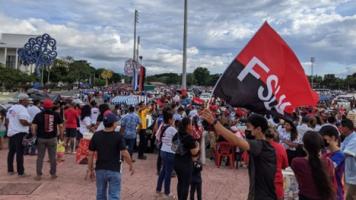 Genuine peoples holidays are hard to come by in the U.S. But in Nicaragua the ongoing revolutionary process is widely celebrated.
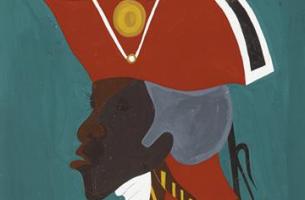 In 1929, Black radical Cyril Briggs penned an essay on Toussaint L’Ouverture and the Haitian Revolution. For Briggs, both provided inspiration for the fight against the U.S. occupation of Haiti. We…
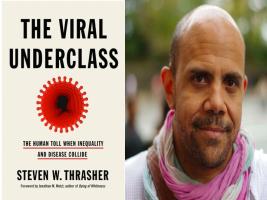 This week’s featured author is Steven W. Thrasher. Thrasher holds the inaugural Daniel H. Renberg chair at Northwestern University’s Medill School, the first journalism professorship in the world…
 The ineffective and unpopular UN Mission to Haiti must end.



