by The Public Archive
For your Summer edification: the works of “Black writers, scholars, artists, and activists” explore how “the policies of the Israel towards the Palestinian people mirror the historic regimes of apartheid in South Africa and Jim Crow in the United States.”
Radical Black Reading: Summer 2014
by The Public Archive
See previous issues at The Public Archive.
Black people have seen in the condition and treatment of the Palestinians a reflection of their own and recent statements by Black writers, scholars, artists, and activists have affirmed the history of Black solidarity with Palestine. Alice Walker, Robin D.G. Kelley, Angela Davis, Ferrari Sheppard, Teju Cole, dream hampton, Margaret Kimberley, Glen Ford, Kevin Alexander Gray, and others have all spoken to the sheer brutality meted out against the Palestinian people by the State of Israel. They have foregrounded the historical parallels between the everyday practices of violence, the modes of legal disenfranchisement, the normalization of racism, and the forms of segregation and containment through which the policies of the Israel towards the Palestinian people mirror the historic regimes of apartheid in South Africa and Jim Crow in the United States. And they have been at the forefront of calls for international solidarity with Palestine and for support of the boycott, divestment, and sanctions movement against Israel – calls that have taken on an added urgency in light of the current Israeli offensive against Gaza.
For background on the history and politics of the Israeli occupation and the Palestinian quest for self-determination, The Public Archive recommends a number of recent texts. In The Battle for Justice in Palestine, Ali Abunimah, editor of the Electronic Intifada, places the complex local politics of the conflict into global context while describing the impact of the neoliberal turn on the practices of occupation. The collection Palestine, compiled by Funambumlist editor Leopold Lambert as part of his fantastic publication series, offers a critical take on the cartographic, spatial, and architectural elements of settler colonialism. In Nablus: City of Civilizations [pdf] architect Naseer Rahmi ‘Arafãt conjures a meticulous oral and architectural history of the city of Nablus, a cross-roads of Arab civilization that has witnessed almost complete destruction as a result of occupation. The late Edward Said’s The Question of Palestine remains an eloquent and ethical classic while in the Idea of Israel: A History of Power and Knowledge, Israeli historian Illan Pappé, author of the earlier The Ethnic Cleansing of Palestine, provides an uncompromising investigation into the ideology of Zionism and its manifestation in the practices of Israeli settler colonialism.
For more on the specific question of Black solidarity with Palestine, the Black on Palestine Tumblr is a must-follow archive of videos, links, essays, and excerpts. In Black Liberation and Palestine Solidarity, published by the excellent Atlanta-based autonomous publishing house, On Our Own Authority! Publishers, Lennie Brenner and Matthew Quest offer a clear-eyed and unflinching read of the politics and rhetorics of the Black freedom movement in its encounter with Israeli settler colonialism. The longer and broader history of the question of solidarity between the African diaspora and the Arab world is recounted in Alex Lubin’s comprehensive The Geography of Liberation: The Making of an Afro-Arab Political Imaginary. Sohail Daulatzai’s Black Star, Crescent Moon: The Muslim International and Black Freedom Beyond America examines how African Americans have seen themselves as part of what Daulatzai calls the “Muslim Third World” and shows how radial, internationalist, and anti-imperialist modes of Blackness, from an era stretching from the Cold War to the War on Terror, have found alliance with Muslim struggles for freedom.
A number of recent monographs have approached a different question of solidarity, alliance, and affiliation within the Black World: the question of solidarity through the history of sound. Shana Redmond’s Anthem: Social Movements and the sound of solidarity in the African diaspora, examines Black song and Black citizenship in the soundtrack of Black protest. Tsitsi Ella Jaji’s Africa in Stereo: Modernism, Music, and Pan-African Solidarity reads the reverberations of African American music across the Black Atlantic through its influences in Senegal, Ghana, and South Africa. Gaye Theresa Johnson writes of solidarity and sound in The Public Archive’s new favorite city: Los Angeles. In Space of Conflict, Sounds of Solidarity: Music, Race, and Spatial Entitlement in Los Angeles, Johnson explores the history of racial conflict and inter-racial alliance between Blacks and Chicanos in L.A. from the 1940s to the present and the sonic and spatial strategies of solidarity. Meanwhile, a more traditional group of texts have recovered the history of Black Internationalism and pan-African struggle of the of the Interwar years: Hakim Adi’s Pan-Africanism and Communism: The Communist International, Africa and the Diapora, 1919-1939, Gerald Horne’s Black Revolutionary: William Paterson & the Globalization of the African American Freedom Struggle, and Holger Weiss, Framing a Radical African Atlantic: African American Agency, West African Intellectuals and the International Trade Union Committee of Negro Workers, a book whose use of Soviet archives is unprecedented.
Finally, two recent texts look at the impact of revolutions in the Caribbean on the practices of solidarity in the international theatre of the Cold War. David Scott’s Omens of Adversity: Tragedy, Time, Memory, and Justice considers the history and historiography of the collapse of Grenada Revolution and its impact on the Caribbean left. In Visions of Freedom: Havana, Washington, Pretoria, and the Struggle for Southern Africa, 1976-1991, Piero Gleijeses examines the resonances of the Cuban victories in Angola and Namibia on the struggles to dismantle apartheid in South Africa. Scott offers an account of failed revolution; Gleijeses one of success. Both offer lessons for Palestine and the Palestinian solidarity movement.
Enjoy the summer.
The Public Archive’s prior readings lists: Radical Black Reading: 2011. 2012. 2013. Reading Haiti: 2011. 2012. Radical Black Cities: 2012.
« Match Jamaique-Haiti, Port-au-Prince, 1926

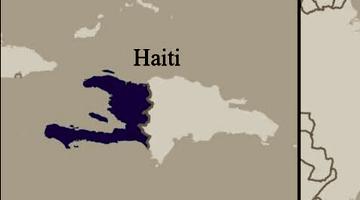 The US has a 10-Year Plan to pacify and occupy Haiti using tactics that try to hide its imperial motives. Last week, it was deleted from the website of the US Embassy in Haiti.
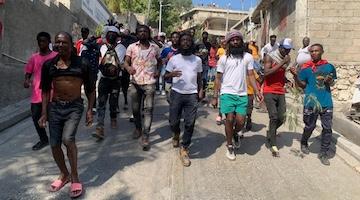 Ann Garrison spoke to Professor Danny Shaw, who speaks fluent Haitian Creole and returned from his last trip to Haiti one month ago.
 "Sitting Shiva in South Florida for Our souls/slivers of democracy …" is the latest from BAR's Poet-in-Residence.
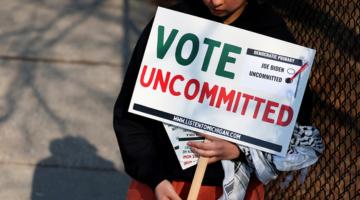 Politicians and the liberal media cite "voter apathy" as the cause of reduced voter turnout, but the reality is that their devotion to corporate interests over those of the people creates a seeming…
 Settler colonialism has caused the destruction of indigenous lands around the world and, as a result, the environment in which we all live. The path forward is an global struggle against these forces.


