by Danny Haiphong
Barack Obama took his presidential oath on Dr. King’s bible, but has spent every day in office fighting against MLK’s legacy. “If King were alive today, he would be on the streets opposing each and every one of Obama’s neo-liberal economic policies and imperialist wars.”
Remembering the Politics of Martin Luther King Jr. in the Age of Obama
by Danny Haiphong
“He ended his life embracing a radical vision of US society that included an end to US war-mongering, racism, and poverty and the beginning of a truly egalitarian society.”
Martin Luther King Jr. would have been 85 this year. King’s birthday passes each year with most people in this country lacking a more complete understanding of King’s political significance. A proper celebration of King’s birthday is the continuation of the struggle against war, poverty, and racism. However, we cannot apply King’s vision to our historical moment without correctly studying King’s politics beyond what we are taught by the US corporate media, government, and school system.
The US government was indicted of murdering Martin Luther King in his family’s civil case in 1999. What made the US government do it? King was one of many Black activists targeted by the FBI’s COINTELPRO operations in the 60’s and 70’s. King’s opposition to US militarism, as well as his solidarity with poor and working class Black people, grew out of favor with the Johnson Administration. In the two years before he was assassinated, King’s speeches moved away from calling for Black integration within a system ruled by white and toward a struggle against what he called the three evils of militarism, materialism, and racism. King opposed the Vietnam War and questioned his own his position of non-violence in the wake of US savagery in Vietnam and the racist police violence poor Black youth experienced in US cities.
Martin Luther King went from shaking hands with US politicians to being murdered by them. When he was shot that faithful day in Memphis, King was preparing to stand in solidarity with striking sanitation workers. He was raising critical questions about the US capitalist economy and proposed radical policies such as a universal income and full employment. Although Martin Luther King did not endorse violent revolutionary upheaval, he ended his life embracing a radical vision of US society that included an end to US war-mongering, racism, and poverty and the beginning of a truly egalitarian society.
“The sanitization and domestication of King’s politics lends legitimacy to the US ruling circle.”
Remembering the radical Dr. King is critical in the age of Obama. US imperialism has washed away King’s radicalism in its ideological war against Black anti-establishment politics. Those who hated King when he was alive now romantically praise him as a champion of white forgiveness and Black pragmatism. Mainstream conversations about King rarely deviate from fond memories of his “I Have A Dream” speech and his great love for all people, even his oppressors. The sanitization and domestication of King’s politics lends legitimacy to the US ruling circle as it continues to exploit humanity and Black people in particular.
For the US imperialist system, revising King’s legacy is a useful weapon against the oppressed. In January of 2013, millions watched as Barack Obama was sworn into his second term on Martin Luther King’s bible. This symbolic act by the commander-in-chief of US empire linked the ascendency of Barack Obama to the heroic struggle of Martin Luther King. For four-plus years, the ruling classes have constructed the idea that Martin Luther King Jr’s “dream” was accomplished through the election of Barack Hussein Obama. But If King were alive today, he would be on the streets opposing each and every one of Obama’s neo-liberal economic policies and imperialist wars. Indeed, King’s belief that the US government was “the greatest purveyor of violence in the world” would remain unchanged fifty plus years later. It is this King we need to revive in both mind and spirit as we continue the struggle for justice he gave his life for.

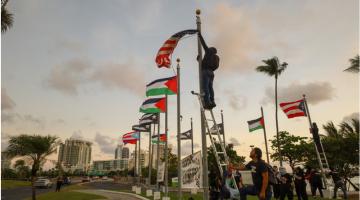 Puerto Ricans protested Harris’ visit citing the ongoing US occupation of Puerto Rico and support to Israel’s genocide against the Palestinian people.
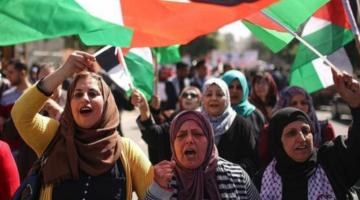 In the fight for the liberation of Palestine, reject the reactionary politics of bourgeois feminism and embrace a liberatory struggle led by Palestinian women.
 This week we hear about right wing forces in San Francisco who worked with the Black democratic mayor to criminalize poverty. But first Dr. Gerald Horne discusses Gaza and Ukraine, the contradictions…
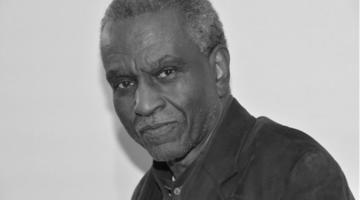 Dr. Gerald Horne joins us to discuss US/Israeli policy driving the war crimes and genocide in Gaza. We also discuss the U.S. proxy war in Ukraine and other international issues.
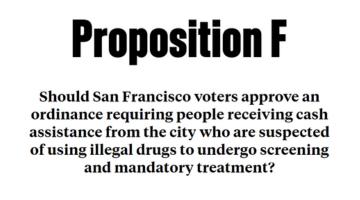 Jemma Decristo joins us to discuss the passage of Proposition F in San Francisco and the criminalization of poverty and drug use.


