by BAR managing editor Bruce A. Dixon
Is Moral Monday “sweeping the nation”? Is it the beginning of a new movement, or the revival of an old one? Or is it a sad, cynical and partisan attempt at renewing the brand of the black political class as fighters for justice and representatives of the oppressed?
Moral Monday A Branding Exercise Blaming Republicans for Stuff Democrats Helped Them Do
by BAR managing editor Bruce A. Dixon
To hear the flock of Democrat media and civil rights spokespeople tell it, it's sweeping the country, or at least the South. “Moral Monday” may be coming to a state capital near you. It's this, it's that, it's hot, it's holding Republicans governors and state legislators accountable for the gamut of their heinous policies against the poor and people of color. It is, they say, the beginning of a new movement or the revival of an old one.
If only this were true.
The problem of course, is not that Moral Monday's core demands – expanding Medicaid coverage under the Affordable Care Act, raising the minimum wage, and doing something about hunger, are bad things. The problem is that Democrats enabled and helped Republicans to enact the immoral policies which Moral Monday spokespeople inveigh against in the first place. White House and Congressional Democrats did these things to please their campaign contributors, mostly the same wealthy donors who give to the Republicans. But now, the Democratic president who proposed and invented the sequester, the Democratic president and Democrats in Congress who voted to cut food stamps and not extend unemployment last year, the Democrat in the White House who campaigned saying he'd increase the minimum wage and enable unions to organize but did nothing when he had majorities in both houses of Congress – these Democrats need to pose as champions of the people fighting callous, the greedy and the evil Republicans. The immoral Republicans.
The inescapable truth is that President Obama and Congressional Democrats created the opportunity for Republican governors in the South, where the majority of uninsured poor African Americans live, to exclude them from Obamacare's Medicaid expansion when they chose not to fight for the single payer Medicare For All health plan their constituents wanted and many of them campaigned on. Democrats, including many so-called “progressives” proposed food stamp cuts to the Republicans, who responded with even more savage ones. Congressional Democrats freely chose not to fight to keep unemployment benefits intact, and the president kept his veto pen in his bully pulpit or wherever he keeps those things. On one of these occasions, the chair of the Congressional Black Caucus declared that he and his allies had voted for a "satan sandwich." But for all this, Moral Monday wants us to exclusively blame Republicans.
Why? Because Moral Monday is a cynical branding exercise. Branding is the indispensable tool of marketers. The aim of branding is to deliberately evade rational thought on the part of its target audience, and to evoke within them them real or imagined memories, feelings, tastes and attachments which can be powerfully felt but not rationally justified. In this case, what's being marketed is the Democratic party's and the black political class's “brand” as fighters for the oppressed in general and “representatives” of black folks in particular.
Moral Monday, at least in Georgia where I live, run by the state conference of the NAACP, the heart and brain stem of the same black political class that has run Atlanta since the 1970s. Moral Monday is a partisan branding exercise, a flag around which Democrat and allied activists can rally a docile crowd at the state capital every week that legislative Democrats can step outside for photo opportunities at its head.
Moral Monday Georgia is all about providing a flag for diehard Democratic party activists to rally the faithful around, without demanding that Democrats in actual positions of power to do much of anything in particular.
Moral Monday Georgia won't address the privatizing and gentrifying black Democrat who is the mayor of Atlanta. Maybe privatization and gentrification aren't really immoral. It won't question the black Democrats in the legislature who last year co-sponsored bills that allow Atlanta public schools to be replaced with privately owned charters any time charter operators fund a small petition drive in a school district, because Moral Monday's leaders will be supporting those same Democrats this November. It won't demand the restoration of the pensions Atlanta's black mayor has savaged, or question Democratic support for the bipartisan project of privatizing Atlanta's public transit. Morality can only go so far, after all.
Moral Monday won't stand up for the residents of Shell Bluff, whose community has been poisoned and irradiated by Georgia Power's Plant Vogtle nuclear reactors or the millions of Georgia ratepayers who are billed each month for reactor costs because Georgia Power is an equal opportunity campaign contributor, generously giving to Democrats as well as Republicans, black legislators as well as white ones. A former Georgia Power president even headed up SCLC's building fund drive, so nothing they do can be immoral, right?
It's been three years since black, brown and white Georgia prisoners went on a hunger strike demanding education and justice behind the walls. Moral Monday isn't demanding accountability from Georgia's prisons either. It's not on their moral horizon.
To the extent that Moral Monday captures the energy of some well-intentioned folks, it's not the beginning of a new movement, or the revival or an old one. It's an exercise in messaging, a triumph of branding over substance. It's a weekly photo opportunity, to shore up the fading brand of black Democrats who pretend to stand for justice, but really don't stand for much at all.
Bruce A. Dixon is managing editor at Black Agenda Report and a member of the state committee fo the GA Green Party. He lives and works in Marietta GA and can be reached via this site's contact page, or at bruce.dixon(at)blackagendareport.com.

 The view that we have no future allows those on the planet with privilege to continue with their ideology of disposability.”
 Singh’s book argues that we have yet to understand critically and dynamically how dangerous all forms and practices of mastery are.
 If we don’t get serious about stopping the U.S. war machine, we could lose the biggest battle of our lives.
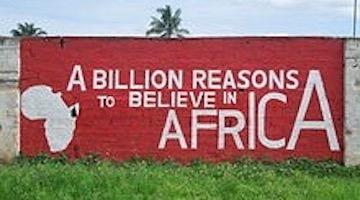 A Pan-Africanist politics is necessary because weak neo-colonial states are incapable of assuring their own survival or of negotiating how their country is inserted into the world system.
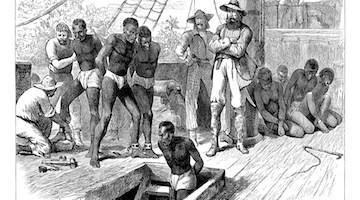 As the world ignores the ignominious 500th anniversary of the buying and selling of slaves between Africa and the Americas, historians uncover its first horrific voyages.



