by BAR columnist Jemima Pierre
Nelson Mandela certainly led an inspirational life, but the “liberation” of South Africa has been the continent’s most spectacular failure. Mandela and his party “reneged on their own Freedom Charter which promised that land, the national mineral wealth, the banking systems, as well as all other industry and trade be nationalized and used to the benefit of South Africa’s majority.”
Reconciliation is Not Decolonization
by BAR columnist Jemima Pierre
“True decolonization for Africa demanded no less than the full uprooting of the bifurcated colonial structure: decoupling whiteness and power.”
It doesn’t take away from Nelson Mandela’s radical work with his African National Congress (ANC) comrades to say that the “new” South Africa under “Black rule” epitomizes the most spectacular failure of Africa’s decolonization project. The formal end of racial apartheid in South Africa was to be the culmination of African triumph over white European rule. In South Africa Blacks were inheriting the biggest economy on the African continent, an economy built through their stolen land, resources, and labor power. But as of 2008, the poorest 50% received only 7.8% of total income and while 83% of white South Africans and only 11% of Blacks were among the top 20% of income receivers. Things have gotten worse since the global financial crisis as there has been increased suffering among the Black population, the supposed victors at the end of racial apartheid.
So what happened? And what can the South African experience teach us about the failure of African decolonization more generally?
In the new South Africa the maintenance of white power was explicit, even as it was hidden beneath the veneer of Black political empowerment. The details of the transition to Black political control in South Africa have been discussed by a number of journalists, academics, and politicians. But some of these details – most importantly, the economic ones – bear repeating. In a recent interview, South African scholar Patrick Bond reminded us that some key compromises made by the leaders of the African National Congress at the moment of negotiations with the racist regime locked the new Black-run nation in a destructive relationship with former rulers and beholden to global white capital.
Consider just some of these compromises: the acceptance, by the ANC leadership, of an IMF loan which depended on the standard structural adjustment conditions that plagued African and other third world nations of the time; laws that solidified whites’ property rights, effectively allowing them to keep stolen land; the maintenance of the undemocratic structure of the central bank; and the agreement by ANC leaders to absorb and repay apartheid era debt incurred by the racist government, to the tune of $25 billion! In agreeing to these compromises, the ANC leaders sold out their people. In particular, they reneged on their own Freedom Charter which promised that land, the national mineral wealth, the banking systems, as well as all other industry and trade be nationalized and used to the benefit of South Africa’s majority. As Glen Ford recently reminded us, with the “sunset clause” agreement, ANC’s Black leadership allowed the economy to proceed as before, with whites keeping their jobs in the “bloated bureaucracy” that had served as welfare system for, especially, the Boer whites. Thus, the ANC’s leadership chose “a change in regime, but not a change in the relationships of economic power.”
“European economic supremacy and structural racial privilege were the true victors in the decolonization experiment in Africa.”
It is easy to consider the failure of the ANC and Black rule more generally, as unique to South Africa. But, just as racial apartheid and economic exploitation was the default structure of the colonial state throughout the continent, so too was the failure of decolonization. True decolonization for Africa demanded no less than the full uprooting of the bifurcated colonial structure: decoupling whiteness and power. But that never happened – anywhere on the continent. Example after example demonstrate that most leaders of African decolonization, eager to avoid the violence that real transformation of power would have brought, negotiated deals that provided blackface cover for the maintenance of the white colonial power structure, with its control of the best lands, mines, manufacturing plants, and financial institutions. South Africa is only the most prominent and disappointing example.
As historian C. L. R. James said of Kwame Nkrumah’s Ghana during its negotiations with its former colonial master: “the British government gave nothing, handed over nothing, fought to the last second to retain everything that it could, and when it was forced to retired, left the Gold Coast tied up in knots which Ghana will have to spend a long time untying.” The truth of the matter is that the European colonial powers had more to gain by ceding some political control in order to maintain the structure of economic domination.
In effect, European economic supremacy and structural racial privilege were the true victors in the decolonization experiment in Africa. It is this context that is important to remember as we watch the western elite fawn over Mandela’s “reconciliation” and “forgiveness.” As Amai Jukwa and Garikai Chengu recently pointed out, “what appears to be love for Mandela is actually self-love, a subconscious act of white self-preservation.”
Black African self-preservation and renewal is another matter.
While we mourn Mandela’s passing we would do well to remember that decolonization has not occurred – and that a new radical and uncompromising movement is needed to end the enduring racial and economic apartheid in Africa and the Black World.

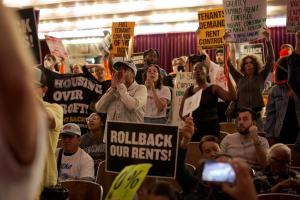 Many apartments in New York City are protected by rent regulations which determine how much rent can be charged and how much increases, if any, can be.
 On June 8th, a knife attack in Belfast, Northern Ireland, in the UK, was seen on video. The assailant was an African asylum seeker, and the victim was a local white resident. In the following days,…
 The Black Alliance for Peace and other organizations have called for a boycott of the 2026 World Cup being held in the United States. Before any matches were played, the U.S. banned players, fans,…
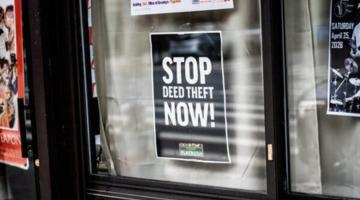 It is true that the New York Knicks' journey to a championship brought disparate communities together, but gentrification remains the norm in the city that is the capital of capital. Black people are…
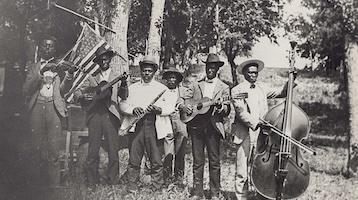 “Without the help of the American Negro, the abolition movement would have been impossible.”


