by Sikivu Hutchinson
The 19-year-old Black woman had just gotten a job at the Ford Motor Company when she was shot in the face with a shotgun by a white homeowner after seeking help after a car crash. Her killing “is part of a long legacy of black female murder victims who have been devalued in a misogynist apartheid system of state-sanctioned violence that thrives on the urban/suburban racial divide.”
In Cold Blood: The Murder of Renisha McBride
by Sikivu Hutchinson
“In the justifiable national focus on the criminalization of black men, black women’s daily criminalization—on the highway, in stores, in schools and in the workplace—is minimized.”
A white family grieves in outrage after their teenage daughter has been gunned down by a black homeowner in an African American neighborhood. In this parallel universe the killer walks free, enjoying the benefit of being viewed as having defended his home from a violent intruder, while the big city D.A. decides whether or not to charge him.
It is no revelation to many black women in neo-apartheid Americana that being white and female pays deep dividends in everyday life. Among these dividends is the ability to be seen as an innocent victim under dire circumstances and to have the weight of the American criminal justice system behind you upholding that perception. Another is the advantage of secure access to elite suburban enclaves without fear of criminalization. Stranded in the early morning hours after a car crash in a predominantly white suburb outside of Detroit, nineteen year-old Renisha McBride had no such benefits. A recent high school graduate, McBride had just gotten a job at the Ford Motor Company when she was brutally shot in the face by a white male resident after seeking help from the crash. Her family described her as warm and loving. As of this writing her killer has not been apprehended nor charged.
McBride’s killing is part of a long legacy of black female murder victims who have been devalued in a misogynist apartheid system of state-sanctioned violence that thrives on the urban/suburban racial divide. In 2010, seven year-old Aiyanna Jones was murdered by a Detroit police officer in her own home during a botched police raid. In 1999, a homeless fifty-four year-old 5 feet tall black woman named Margaret Mitchell was killed by LAPD officers in an affluent Los Angeles retail district after a dispute over a shopping cart. The officers in the Mitchell case were not charged. The officer in the Jones case was recently granted a retrial after the jury in his initial involuntary manslaughter trial deadlocked. Civil rights activists and community protestors have compared McBride’s killing to that of Trayvon Martin, Emmet Till, Oscar Grant and Amadou Diallo, globally known black male lynching victims whose white killers never saw jail time. But the problem with these comparisons is that they unintentionally minimize lesser known black female victims of white supremacist violence such as Mitchell, Jones, Eulia Love, Eleanor Bumpurs, Alesia Thomas and Mitrice Richardson. Although the circumstances of these women’s deaths were quite different, the lack of sustained national and global attention (relative to black men who have been murdered under similar circumstances) unites them. National civil rights activists and feminist organizations must ask themselves why these names have not become as prominent or high profile in national activism. Mainstream civil rights organizations have long had a sexist, patriarchal blind spot when it comes to critical consciousness about the specific gendered and racialized ways in which black women are demonized, sexualized and criminalized in the U.S. Historically, much of the language around black civil rights uplift has been oriented toward redeeming black men and pathologized black masculinity. In K-12 education, students are typically taught about American history in general and the modern civil rights movement in particular as though they were merely a procession of events spearheaded by Great white men, a few exceptional men of color and Rosa Parks. From MLK to the Black Panthers, black women’s self-determination was never part of the mainstream civil rights’ social justice calculus or platform. Thus redressing the epidemic of intimate partner violence and sexual assault in African American communities has never been a major part of African American civil rights organizing. Nor has the skyrocketing number of black women in prison and the ways in which this regime has led to the exponential increase of black children that are homeless or in foster care.
“Mainstream civil rights organizations have long had a sexist, patriarchal blind spot when it comes to critical consciousness about the specific gendered and racialized ways in which black women are demonized, sexualized and criminalized in the U.S.”
McBride’s murder underscores how gender, race and segregation intersect in the everyday experiences of black women as policed female bodies. Black women, unlike white women, do not have the social privilege and advantage of the dominant culture’s belief in their feminine “innocence”, “fragility”, gentility or right to be protected from men of another race. But in the justifiable national focus on the criminalization of black men, black women’s daily criminalization—on the highway, in stores, in schools and in the workplace—is minimized. Next to black boys, black girls are the most suspended and expelled student group in the nation. They are typically charged with posing a “threat” or exhibiting “willful defiance.” Black students receive harsher punishments for non-violent offenses than do whites who commit identical or even more serious offenses such as theft or assault. This disparity is a linchpin of the school-to-prison pipeline. Consequently, one of every nineteen black women will be imprisoned during their lives; an atrocity that has had a devastating impact on black families and communities.
The national groundswell of support for Marissa Alexander, a young African American woman who, despite invoking Florida’s stand your ground defense, was sentenced to twenty years in prison after attempting to protect herself against an abusive spouse—has shed a long overdue spotlight on the specific ways in which black female victims of violence are criminalized. Alexander’s well-documented history of spousal abuse didn’t prevent her from being slapped with a mandatory minimum sentence. Conversely, McBride’s killer is still walking free as the Wayne County D.A. “assesses” and “investigates” whether he should even be charged.
McBride was buried this weekend, violently branded as guilty until proven innocent.
Sikivu Hutchinson is the author of Godless Americana: Race and Religious Rebels.

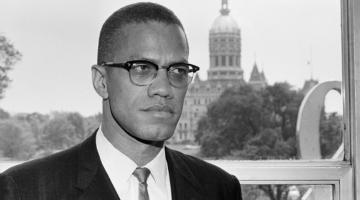 Every year, people around the world honor Malcolm X. Though he was taken from us prematurely, his memory and impact remain. With that memory, there is a mandate that we accept and carry on the legacy…
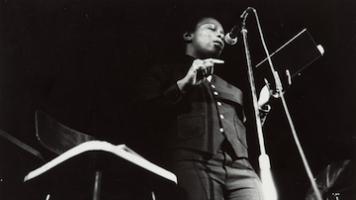 Pat Parker warns us that cowardly acquiescence to fascism is deadly for us all.
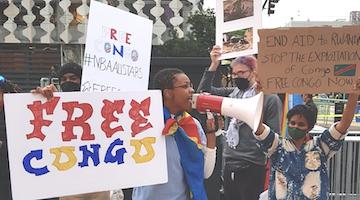 As Rwandan troops tightened their grip on the capitals of DRC’s Kivu Provinces, activists protested the National Basketball Association’s close collaboration with the Rwandan regime.
 The deal for a prisoner exchange proposed by the El Salvadoran president presents a dangerous threat to incarcerated people in the U.S. The continued outsourcing of the U.S. penal system…
 The economic stress on African American people shows itself in phenomena like marriage rates. What once was a benefit to Black communities and a path to the middle class, marriage is becoming…


