By BAR managing editor Bruce A. Dixon
The black political class, whose leaders will be on the podium at this week's 50th anniversary observation of the March on Washington are not going to lead any movement to roll back mass incarceration or the prison state. It's just not in them, not even to use the limited power that they do have to curtail its most savage abuses.
Who Will Lead A Movement Against the Prison State, If Not the Formerly Incarcerated?
By BAR managing editor Bruce A. Dixon
Let's get real. Our black political class are not going to lead a movement against mass incarceration. Since signing the Fair Sentencing Act of 2010, President Obama and Attorney General Eric Holder have proved unwilling even to enforce the retroactive reduction in sentences passed by the Congress and upheld by federal appeals courts. The 43 member Congressional Black Caucus hasn't called them on it. The Houe Progressive Caucus, the biggest caucus in that body, is also silent, as is the Hispanic caucus. In fact, out of thousands of black state legislators, judges, mayors, sheriffs, state and county officials of all kinds, none that we know of has publicly demanded that the president and attorney general do their jobs and stop fighting to keep these thousands of unjustly imprisoned people in jail.
For the black political class, protecting their own is the prime directive, and the president is nothing if not one of them. On the other hand, prisoners, their families and their communities are disposable.
The black political class though, is more than just the elected officials. For whatever historical reasons, black preachers are leading figures, and they too have been silent. The same goes for the corporate funded “civil rights” organizations like Al Sharpton's National Action Network, the Urban League, and the NAACP, even though all of them derive their legitimacy from the claim that they somehow “represent” the interests of people like those who fill the prisons and jails.
This video by Robert Greenwald of Brave New showcases the work of our friends in Alabama, The Ordinary Peoples Society, led by Rev. Kenneth Glasgow, himself a formerly incarcerated person and a leader in the national movement of the formerly incarcerated. It's an 11 minute segment of a longer production which we have not yet seen.
Near the end, Michelle Alexander makes the most important point of the 11 minutes when she affirms that the movement against mass incarceration must and will ultimately be led by the formerly incarcerated themselves, not by the black political class, its elected officials, its preachers or its corporate funded “civil rights” organizations.
In part this is because inside the black community, the prison state preys chiefly on a certain economic and social stratum in our communities, leaving the college grads and the better off largely alone. When it comes together, this movement must embrace the prisoners who are still in prison, and their families. It must draw large parts of its energy and its leadership from the imprisoned, and from their families, and from the communities, which are not defined exclusively by race, but often by class within race, from whom the prisoners come. The current black political class isn't part of that stratum. They may look like us, some of them surely came from among us. But they belong to another world, one with entirely different priorities.
Bruce A. Dixon is managing editor at Black Agenda Report and a member of the state committee of the Georgia Green Party, living and working in Marietta GA. Contact him via this site's contact page, or at bruce.dixon(at)blackagendareport.com.

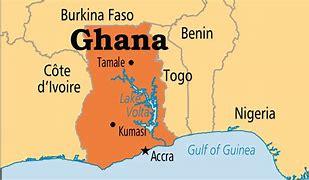 Why would the government of Ghana allow a U.S. military base on its territory? Kwesi Pratt Jr., a journalist and leader of the Socialist Movement of Ghana explains.
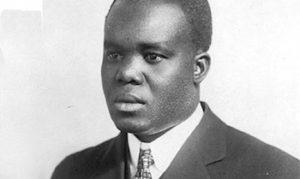 Hubert Henry Harrison was one of the foremost Black socialist and nationalist thinkers of the early 20th century. He was known as "the father of Harlem radicalism." This is the last of a three-…
 The election victory of Gustavo Petro and Francia Marquez in Colombia has implications for relations with other nations, such as neighboring Venezuela.
 The Security Council must say no to continuing interference in Haiti's affairs through the United Nations Integrated office in Haiti (BINUH). BINUH is just the latest iteration of colonial control…
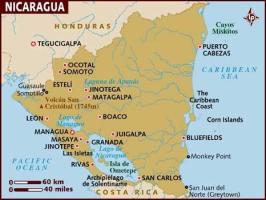 The U.S. corporate media loyally follow the state's narrative about other countries. Nicaragua has instituted rules similar to those in the U.S. regarding governance of NGOs. But destabilizing that…



