by Benjamin Woods
There is no mystery to the appeal of Quentin Tarantino’s blockbuster film. “The enthusiastic response that Django has provoked from Africans demonstrates the desire for art that inspires a culture of resistance.”
A Few Thoughts on Django Unchained
by Benjamin Woods
“It is imperative that young African intellectuals and organizers familiarize themselves with Black art that has explicitly political objectives and emphasizes collective liberation.”
Django Unchained is one of the most talked about films among Africans in the US. Any Hollywood film in which an enslaved African kills Europeans on screen is bound to generate a favorable response in the Black community. At the same time, Africans have developed an independent tradition of revolutionary art that stretches back to the antebellum period. Of course, the similarities among Black art over time are not the product of a metaphysical or unconscious influence but instead primarily represent similar responses to the same social environment.
In fact, two antebellum novels share a similar plot with Django. In 1852, Frederick Douglass published The Heroic Slave. A novel about an enslaved African who attempts to rescue his wife from enslavement then leads a successful revolt on a slave ship. Although Douglass is often likened to a nineteenth century non-violent MLK, in fact, he advocated armed rebellion in his speeches, this novel, and flirted with emigration to Haiti in 1860.
A few years later, in 1861, Martin Delany published the novel Blake or the Huts of America. Blake is about an enslaved African who, after his wife is sold into enslavement in the Caribbean, organizes an armed Black revolution. In the course of his travels, he organizes freedom fighters in the US South, Western Africa, and the Caribbean. Remember both of these novels were written when slavery was the law of the land. What enterprising young Black filmmaker will make a movie based on these novels written by two of our greatest abolitionists? Only time will tell.
“Africans have developed an independent tradition of revolutionary art that stretches back to the antebellum period.”
If enslavement could not stop the production of revolutionary Black art neither could legal American apartheid. In 1899, Pan Africanist author Sutton Griggs wrote the militant novel Imperium in Imperio. Imperium is about a secret underground Black organization. The novel climaxes when the organization decides to takeover the US navy and liberate Louisiana and Texas to form an independent Black state. To a large extent, Griggs and his work have been forgotten but his attempt to create a national Black literature lives on.
The Black Power movement produced a cultural renaissance in creative expression that is still revered but has some overlooked aspects. The Lost Man (1969), Uptight (1969), The Spook Who Sat by the Door (1973), The River Niger (1976) are all feature length films which include Black radical organizations engaged in armed shootouts with the police. For example, the entire film Final Comedown (1972), starring Billie Dee Williams, is an armed shootout with the pigs wherein the main character has flashbacks to show how society pushed him to become a revolutionary.
The so called ‘blaxploitation’ period produced several films that could be considered revolutionary or reactionary. The film Boss Nigger, written and produced by a Black man, features a formerly enslaved Black Bounty hunter who arbitrarily makes himself sheriff of an all white town. The tagline of the film is “White Man’s Town, Black Man’s Law.” Hmmm, a Black bounty hunter who kills white people on screen…sounds eerily familiar.
The enthusiastic response that Django has provoked from Africans demonstrates the desire for art that inspires a culture of resistance. Simultaneously, it is imperative that young African intellectuals and organizers familiarize themselves with Black art that has explicitly political objectives and emphasizes collective liberation. They are the vanguard of, not only the political, but the cultural revolution, as well.
Benjamin Woods is a PhD candidate at Howard University. He can be contacted at benjaminwoods1(at)yahoo.com, or through his website FreeTheLand.

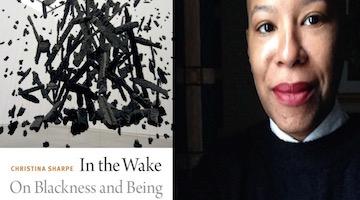 There was no way to make light of this daunting book and its effects on me, no matter how much I thought I knew it.
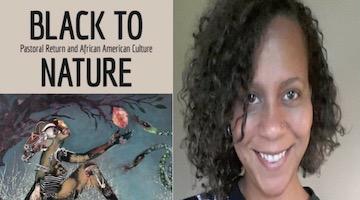 The author explores various social, political, and cultural sites that explore and highlight the Black pastoral experience.
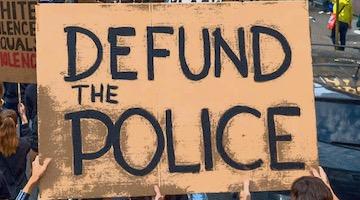 In the past year or two, the proposition of defunding or abolishing police and prisons has travelled from incarcerated-activist networks into mainstream conversations.
 Biden promises popular progressive policies, then quietly reneges while the corporate press turns a blind eye and falls silent.
 The corporate media is second only to the police in spreading falsehoods about the nation’s best known political prisoner.


