by Benjamin Woods
If African Americans are – finally – prepared to fight their way out of the current crisis, they “must develop a set of tactics, strategies, and objectives to improve their deteriorating condition, particularly in the arena of mass incarceration.” A “human rights” strategy would serve us well.
Human Rights, Neo-liberalism and Mass Incarceration
by Benjamin Woods
This article originally appeared on Mr. Woods’ website, FreeTheLand.
“Not only is the United States Constitution in direct contradiction to the very notions of equality and freedom it claims to represent but international law as well.”
After billions of dollars in campaign donations and thousands of negative ads, the 2012 elections left the legislative and executive branch virtually unchanged. The Obama campaign energized a coalition of Blacks, unions, white women, and Latinos. The day after the election, several Latino groups stated explicitly that Obama owes his second term to them and should pass comprehensive immigration reform. Unlike in 2008, Black people should not be pacified with the symbolism of a Black president but must develop a set of tactics, strategies, and objectives to improve their deteriorating condition, particularly in the arena of mass incarceration.
In 1948, the US became a signature to the United Nations Declarations of Human Rights. Similar to previous generations, this document can be used to demonstrate the gross human rights violations against US Blacks. For instance, the 13th amendment to the US constitution states “neither slavery nor involuntary servitude except for crime whereof the party has been duly convicted shall exist within the United States.” In short, enslavement did not legally end in the US but was only regulated by the government. Mass incarceration is slavery.
This runs counter to article 4 of the UN Declaration which states “No one shall be held in slavery or servitude; slavery and the slave trade shall be prohibited in all their forms.” This means that not only is the United States Constitution in direct contradiction to the very notions of equality and freedom it claims to represent but international law as well.
“We should demand the immediate transfer of private prisons into public hands.”
Due to neoliberal economic policies over the past thirty years, prisons and other areas of social life have become increasingly privatized. For example, in 2010 two private management prison companies had a combined revenue of almost $3 billion. We should demand the immediate transfer of private prisons into public hands. In addition, a “New” New Deal, that includes a guaranteed job for ALL including the formerly incarcerated. Specifically, we demand re-entry programs that provide a job and housing upon release from prison.
An organization that should be studied to achieve these objectives is the National Negro Congress. NNC was a united front composed of fraternal and religious groups, civil rights, unions, etc. under the leadership of the Black Left. In fact, the President and Executive Secretary were Communists. The primary tactics used were mass demonstrations and direct action. Their successes include the establishment of a civilian review board for District police, dealing a death blow to debt peonage, and no police murders of Blacks in DC during their high point of organizing against police brutality in 1938-39.
The inherent limitations of this strategy are obvious: ending neoliberalism does not end white supremacy or the economic system that created it and the UN is to a large extent controlled by major Western powers. But a critique of neoliberalism does provide space for a more thorough critique of capitalism and a human rights paradigm gives US Blacks a common framework and possibility for alliances with other oppressed people. In addition, this strategy allows us to publicize our case at the international level. The time of symbolism has ended and movement building has begun.
Benjamin Woods is a PhD Candidate at Howard University. He can be contacted at samiathu@gmail.com.

 “Black freedom” as a claim, as a possibility, challenges us to imagine and to produce new modes of life.
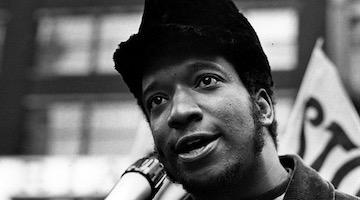 That all this time later we are still learning new information about Hampton’s killing is testament to the sheer volume of the effort aimed at this young revolutionary.
 Well-meaning whites think its quite alright to steal Black activists’ words – as long as their intentions are good, which is up to them to decide.
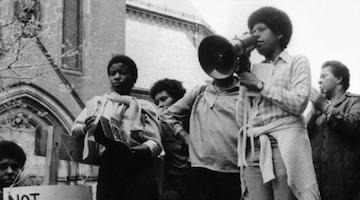 The CRC never defined identity politics as exclusionary or intended to mean that only those who experience a certain oppression can fight to end it.
 South Africa is leading the way into the horror of policing for profit.



