by BAR editor and senior columnist Margaret Kimberley
The Emancipation Proclamation left Blacks in the slave states that had not seceded from the Union still in chains, and might better have been called “the emancipation but not for everyone proclamation.” African Americans have often been forced to take steps backward for every few steps forward. As a result, “we have been prone to celebrate the smallest act of consideration as monumental victory.”
Freedom Rider: Emancipation
by BAR editor and senior columnist Margaret Kimberley
“Black Americans still suffer from hoping that a particular president will be a savior, magically changing their lot.”
This September marks the 150th anniversary of the signing of Abraham Lincoln’s preliminary Emancipation Proclamation. It is among the many civil war sesquicentennial events of note, but they have largely been ignored in the black community. It is sad that this is the case, because our ancestors’ experiences during that time have much to teach us today.
For decades we were told that Abraham Lincoln was the great emancipator, an implacable enemy of chattel slavery and a great friend to black people. Then much needed revisionist history told a far different story. Lincoln was openly racist and often advocated that the 4 million black people in the United States at that time be colonized to some far away foreign country.
At the war’s beginning any enslaved person who escaped to union lines was returned into bondage. The preliminary draft of the proclamation included provisions for compensating slave holders for their lost human property. It is important to note that Lincoln was rebuffed by a system so profitable that the very notion of compensation was completely laughable.
This information is important to know, but the unfortunate reaction to this new knowledge was to throw out the baby with the bathwater so to speak, and in the process of rejecting the Lincoln myth, black people took themselves out of the Civil War narrative altogether. The Civil War was a fight about slavery and black people are the narrative. It isn’t clear when or if slavery would have ended in this country without the military defeat of the slaveholding powers.
Study of the civil war is an imperative for anyone wishing to understand the political conditions we are living in today. Abraham Lincoln was but the first of many presidents who gave to black people with one hand while taking with the other.
“Lincoln was openly racist and often advocated that the 4 million black people in the United States at that time be colonized to some far away foreign country.”
The proclamation declared that the enslaved in the Confederate states were “forever free” but slavery also existed in states such as Maryland, Missouri and Delaware which did not secede from the union. In an effort to prevent secession, Lincoln left slavery intact in those states. Perhaps the Emancipation Proclamation should be called the emancipation but not for everyone proclamation. Lincoln made a conscious decision to leave thousands in bondage.
Yet it cannot be said that the proclamation was irrelevant. It established that black men would be able to fight for the Union army. The forces that became the United Stated Colored Troops (USCT) eventually numbered 180,000 and played a key role in numerous engagements which culminated in the eventual surrender of the South in April 1865.
As in the 1860s, black Americans still suffer from hoping that a particular president will be a savior, magically changing their lot. Our oppression has been so constant, such a given in the minds of the majority culture, that we have been prone to celebrate the smallest act of consideration as monumental victory.
Abraham Lincoln surely could have been worse. He might have been among the pro-slavery faction in the North. He might have given up on defeating the South after months of a stalemate that killed hundreds of thousands yet with no evidence of victory in sight. It was the beginning of a pattern which continues to this day. Any step forward is such a cause for celebration that the steps back are minimized or perhaps even ignored.
“It isn’t clear when or if slavery would have ended in this country without the military defeat of the slaveholding powers.”
Now we see the saddest political situation of all in the person of one Barack Obama. Obama is beloved despite the fact that he publicly declares himself “not the president of black America.” Unlike any of his predecessors he need not even go through the motions with black people. His presence alone is a substitute for any tangible change.
The final Union victory in 1865 brought about an end to slavery, but also the beginning of lynch law terror, a slavery-like convict labor system, share cropping, and crimes too numerous to innumerate. Words like freedom and emancipation are problematic for black people. Every victory seems pyrrhic and results in hatred and opposition precisely because of success in gaining some measure of rights and opportunity.
The Civil War was followed by Reconstruction which was followed by the destruction of Reconstruction by the South and the acquiescence of the North. The Civil Rights Movement was followed by yet another backlash and white flight from the Democratic Party.
Everything old is new again and critical readings of history make that clear. There are many stories to tell about the Civil War era that resonate and can teach many things about our lives today. There will be various 150th anniversary celebrations related to the war until 2015. Hopefully they will be used as opportunities to understand our present as well as our past.
Margaret Kimberley's Freedom Rider column appears weekly in BAR, and is widely reprinted elsewhere. She maintains a frequently updated blog as well as at http://freedomrider.blogspot.com. Ms. Kimberley lives in New York City, and can be reached via e-Mail at Margaret.Kimberley(at)BlackAgendaReport.com.

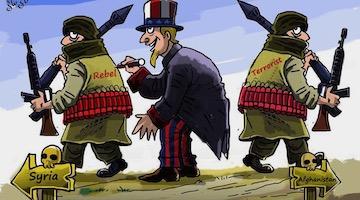 If independent media want to be a real counterweight to establishment media, they must challenge the status quo in its entirety.
 Much of the nation may be repudiating white supremacy, but not Montgomery County, Maryland, which is paving over sacred Black ground in an attempt to bury its own racist history.
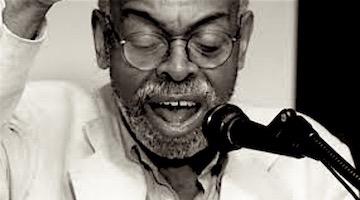 Who tolt us ‘bout an unknown 19th of June— who the TikTok teens cast as buffoon? Who? Who say Douglass alive and doin’ good work— who turn the War House into a grifter perk? Who?
 Many who took to the streets were out there to engage in a form of mass group therapy.
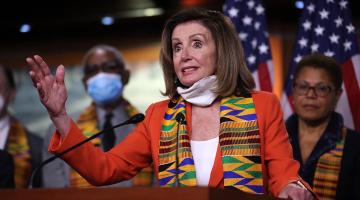 This week community control of police and the failings of the Biden campaign were on your minds.


